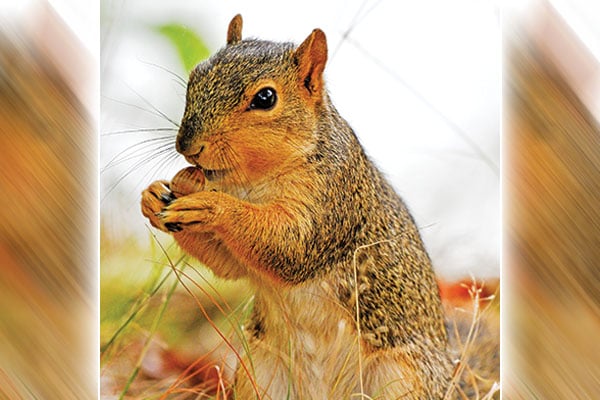
Columbus — The Ohio DNR (ODNR) Division of Wildlife reported strong production in red and white oak trees during its 2025 acorn mast survey. The survey found an average of 72% of red oaks and 56% of white oaks on 20 wildlife areas bore fruit this year.
A single oak tree can produce thousands of acorns, feeding a diversity of wildlife such as white-tailed deer, wild turkeys, blue jays, ruffed grouse, squirrels, raccoons, woodpeckers, and foxes.
Wildlife seeks out and eats acorns throughout the fall and winter. Each summer, Division of Wildlife employees scan the canopies of oaks at select wildlife areas to determine the percentage of trees that produced acorns as well as the relative size of the acorn crop. This was the 21st year the Division of Wildlife completed the mast survey.
Red oak results
2025 average of red oaks bearing acorns: 72%
2024 average of red oaks bearing acorns: 68%
Long-term average of red oaks bearing acorns: 56%
White oak results
2025 average of white oaks bearing acorns: 56%
2024 average of white oaks bearing acorns: 34%
Long-term average of white oaks bearing acorns: 38%
Acorn abundances vary by region. All results, including tables and historical numbers, are available at wildohio.gov.
MORE COVERAGE FROM OHIO OUTDOOR NEWS:
Ohio Insider: Cincinnati’s Rob Beckman nominated as candidate for NRA board of directors
Ohio’s Morgan County could be added to deer bag-limit reductions due to EHD
Stunning killdeer photo wins Ohio’s Legacy Stamp competition
This year’s survey classified each tree’s acorn crop as none, light (acorns visible on a few branches), moderate (acorns present on many branches and fairly easy to see), or heavy (acorns abundant across most branches and clearly visible).
Of the red oaks producing fruit in the 2025 survey, nearly half of them, 47%, were categorized as yielding a moderate or heavy crop. About 80% of the white oak trees with fruit were classified as producing a light crop.
Acorns come in two basic types: red and white, coming from the red and white oak tree groups. Red oak acorns take two years to develop, and the acorns are bitter, containing a large amount of the chemical tannin. White oak acorns take only one year to develop and have a sweeter taste for wildlife. White oak trees have leaves with rounded lobes and tend to drop their acorns in late summer and early fall. Red oak trees have leaves with bristled lobes and often drop their acorns later than white oaks, even into winter. These differences cause periodic fluctuations in statewide acorn abundance. Low mast production years are a normal part of this cycle, and wildlife readily adapt to find alternative food sources.
As a critical food source for many forest wildlife species, acorn abundance has been linked to body condition, winter survival, and reproductive success. A year with low acorn abundance causes deer and other wildlife to move around more in search of food. In areas with poor acorn production, wild animals are more likely to feed near agricultural areas and forest edges.
Deer hunters can use acorn survey information to improve hunting success. In areas where acorns are an important part of the deer’s diet, mast availability can affect deer movements and ultimately hunter success. In poor mast years, deer are forced to use other food sources, and travel distances between feeding and bedding areas may be longer. Hunters may key in on travel corridors and alternate food sources. In regions with a strong acorn crop this fall, either from red or white oaks, hunters may find success hunting in or near oak stands.
Oak trees have value beyond food and shelter for wildlife. Collect mature acorns in the fall and place them in a bucket of water. Keep the ones that sink and discard any that float, as those won’t germinate. Store the remaining acorns in the refrigerator or outside for at least eight weeks in the winter months. Plant the acorns under a shallow covering of soil in the early spring, water regularly, and enjoy seeing your new oak trees grow.
Ohio’s squirrel hunting season is open now and will remain open through Jan. 31, 2026. Deer archery season is also open now.