




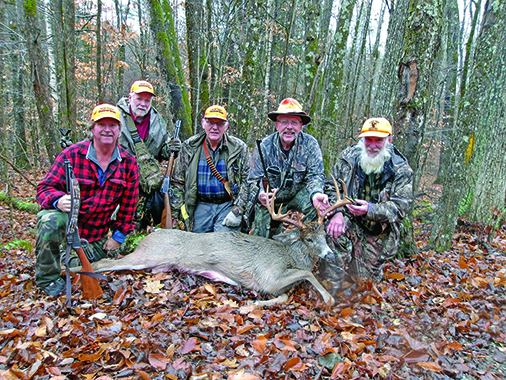
Our hunting crew, the Iron Sight Gang, had some serious plans for the Saturday before Thanksgiving.
What is typically a productive time in the woods for us would feature eight or 10 hunters putting on two, three or maybe even four deer (and perhaps bear) drives over some rugged, but certainly accessible public land hills and swamps in the eastern Adirondacks. But when we gathered that morning at a roadside pull-off, there were just five of us. For one reason or another, there were drop-outs.
We always have a back-up plan, which any public land hunter should, so we opted to head for an oak-laden ridge and adjacent swamp that could be easily pushed by two hunters, with the other three watching. Nearby, were several other smaller hills we could tackle if the first push wasn’t successful.
The oak ridge wasn’t loaded with acorns, but there were some along with plenty of deer sign. When I dropped off the ridge to navigate the swamp, the fresh rubs started showing up, eventually followed by a good scrape. Shortly after I exited the swamp, towards the later part of the drive, a shot rang out. It was my cousin and fellow driver, Joe, who had just knocked down a dandy 10-point buck that was trying to avoid the watchers (sometimes referred to as standers or posters) and cutting back into the drive. The buck never saw Joe, who took him with a .308 lever gun at a short distance.
As much as I hate to admit it, days like this where the hunting party shrinks is becoming more common. The responsibilities and realities of life just get in the way. We like to make drives throughout the season, and when we have a big crew – and especially the right crew – our confidence soars when we hit the woods. But the truth is that we are seeing this happen less often.
Those of us who do show up and want to enjoy the pleasures of hunting in an area like the Adirondacks, together, as a group, have to make due with what and who we have. If you find yourself in a similar situation, don’t give up a good day in the backcountry just because you have a smaller hunting party. If you know the territory, know how deer use it and have good woodsmanship skills, you can be extremely productive.
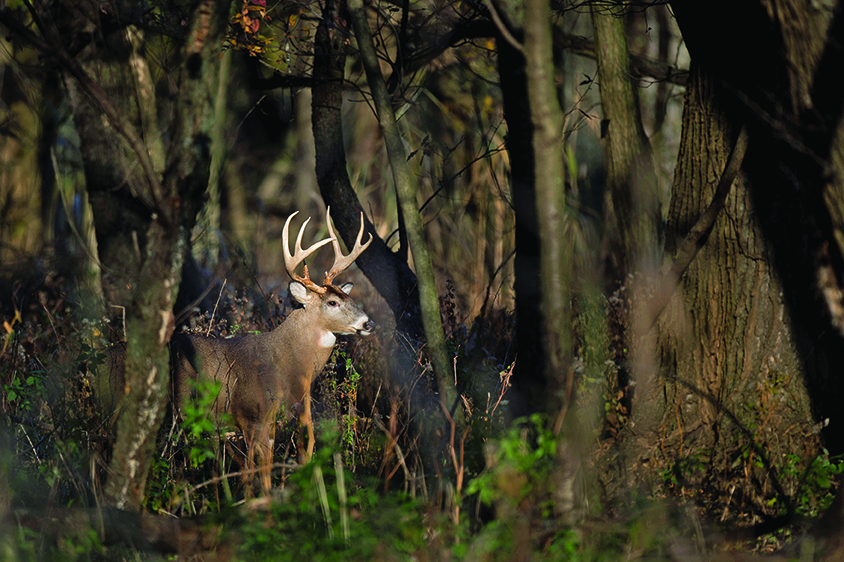
Think small
Smaller parties mean smaller drives, but not necessarily as short as you might imagine. The layout of the terrain will dictate this and every hill, knoll, ridge or swamp is different. Think about the places you hunt where the deer, when pushed, seem to go nearly every time and be sure to have as many of these “hot watches” covered as you can.
One year, it was just my two cousins Joe (again), Kyle and myself hunting together during a week off from work. This particular drive, popular with our regular crew, features two smaller ridges coming together as one bigger one. We opted for a two-on-one scheme with Joe stationed on one of the key watches, which happens to be a funnel. With fresh scrapes and running tracks on both ridges Kyle and I each knew we had deer moving and pushed an 8-pointer right to Joe. Four days later Kyle was on the same watch while myself and another hunter made the same push. The result was also the same: another 8-pointer for Kyle almost identical to Joe’s.
In all of our hunting areas we have smaller ridges or swamps conducive to smaller parties. We will hunt them with the bigger crew, especially when we feel there are bucks around, but we rely on them with the smaller parties. Sometimes they actually work out better with a smaller, quieter crew and take less time to set up.
One such hill comes to mind where last year we pushed it in opposite directions on two different days, both times with a smaller crew. We didn’t kill a buck on either, but just two drivers got deer moving and pushed them past the watchers each time. Sooner or later, a buck or bear, which are common here, will show itself.
On smaller hills and drives be cautious with the noise you make while getting on watch, as your quarry can be close by. Let the drivers get the deer moving and don’t be afraid to slow things down or have the drivers zig-zag through the area to cover as much of it as possible. Even though the drivers are making noise, it’s also not uncommon for them to push deer to each other.
The “slow” aspect is a good approach for muzzleloading. Several years ago myself and two other hunters sat tight one cold late muzzleloading season morning for as long as we could. The plan was for when one of the hunters got cold to work his way over a small ridge toward the other two. He pushed a fine 6-point buck and doe to me. I took the buck at 20 yards with a 50-caliber CVA Hawkens-style front-stuffer.
MORE WHITETAIL COVERAGE FROM OUTDOOR NEWS:
Target staging areas in late October for better bowhunting; here’s what they look like
Strange deer stands: A classic tale of going after one spooky Halloween buck
Dealing with hunting pressure is often inevitable during a gun opener; here’s how to deal with it
Playing the odds
We have plenty of examples throughout the years of parties from two-to-six hunters scoring on bucks by hunting certain portions of hills we would hunt entirely with a bigger hunting party. We’re simply rolling the dice on what part of the hill to push and where to place our watchers. Knowing the terrain and how deer have used it in the past pays big dividends here.
Again, we all have those drives that have “hot” watches, so cover them first. From there it’s a matter of the drivers getting the deer moving.
There is a hill we hunt that has one special watch that nearly every year produces a shot at a buck. And it happens with parties large and small. I shot a buck here several years ago on what was a four-man hunt. Sometimes we don’t have any luck on his hill even though we get deer moving. They might cut back or come out to a spot where we don’t have a watcher. But, we’re just taking a chance here and can always adjust the next time, which has paid dividends as well. It’s amazing how deer will change their patterns in places like this from year-to-year, or even during the season as food, brush leaf cover, weather conditions and especially hunting pressure dictate.
More parts thereof
Among our most productive areas are the bigger mountains we hunt, sometimes longer than they are tall. Covering them with a big crew always lends itself to an optimistic hunt. But knowing there are bucks there keeps us in these areas all season long, no matter how large the crew is.
One of these bigger mountains has been a late season magnet for deer, especially when the acorns are on and there’s not a lot of snow. Pressure sends them there and food keeps them there. We try to find them. Again, hunting such hills with a smaller party often means hunting parts of the terrain, such as the top, the middle or the lower valley or swamp. Watchers are placed accordingly.
One late season hunt several years ago we had just a four-man crew on a weekday hunt. Two hunters hiked around the back side of this long mountain, went over the top and pushed the upper part of the other side back to me and our friend Jack. It was Jack who shot first, taking a small buck. Roughly 20 minutes later a 7-pointer came by me, which I shot. I spotted several other deer, including what I thought was another buck further out. Sure enough, one of the drivers killed what was likely him near the top of the mountain. Three bucks, with four guys; talk about a memorable hunt!
There’s a gradually declining ridge we don’t hunt much, but when we do it’s usually with a bigger crew. I personally like it in here and often still-hunt it solo. One afternoon my brother Bill and I set up a slow, patient drive that had me zig-zagging through part of the ridge down toward him. We were lucky, for sure, as I stirred up a mess of deer. One was a big 9-pointer that ran by Bill who shot it with our grandfather’s vintage Winchester .30-30.
This hunt was, once again, proof that a small hunting group can have success in the big woods. You just have to show up, hunt strategically with a solid plan and perhaps have a dose of luck.
Where do big bucks go when they vanish?
Over the course of our three-months-plus bowhunting season, seeing just one wall-hanger buck can be cause for celebration. Trophy proportioned
WI Daily Update: Tips for catching cohos on river mouths of Superior
This is a great time of year to chase coho salmon on the river mouths on Lake Superior. Tim Lesmeister
Minnesota DNR celebrates diamond anniversary of Wildlife Management Area system
The Minnesota DNR celebrated the 75th anniversary of the state’s wildlife management area (WMA) system, inviting past leaders to celebrate
