




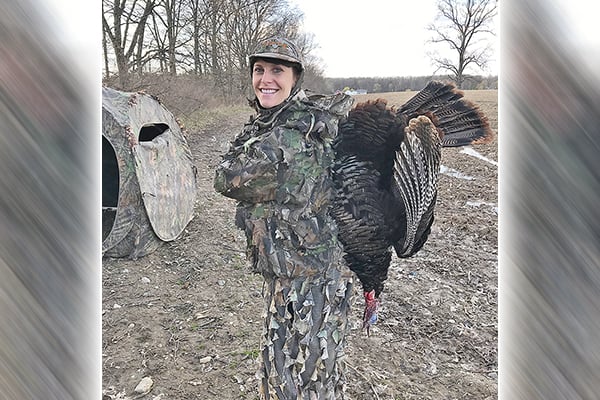
The Michigan Department of Natural Resources has recommended some of the most significant changes to spring turkey season since almost ever.
The Natural Resources Commission is expected to act on the recommendation at its Nov. 6 meeting in Lansing. The recommendation has four goals: to simplify regulations, streamline procedures, improve hunting opportunities, and protect the wild turkey population, said Adam Bump, the DNR’s upland game bird specialist.
The DNR conducted an email survey through Michigan State University, asking turkey hunters what they valued most about spring turkey hunting and what factors determined their satisfaction level. Bump said he followed up with discussions with DNR field biologists and stakeholder groups – most notably the Michigan Wild Turkey Federation and Michigan United Conservation Clubs – before developing the recommendations.
“The majority of hunters want a one bird limit – something like 25% wanted a two-bird option – and they want a lengthy enough season to have time to find time to hunt, as well as more geographic flexibility,” Bump said.
The DNR recommended continuing the one-bird limit, making some minor season changes, and dramatically expanding the geographic parameters. It recommends the current 14 spring turkey hunting management units be reduced to three including the Upper Peninsula, the northern Lower Peninsula, and the current ZZ Hunt unit, which is basically the southern Lower Peninsula.
“We don’t want to make too many changes at one time so we can keep an eye on hunter satisfaction, hunter success rates, and turkey population trends,” Bump said. “I don’t expect anything we’re doing will impact populations, but it’s always good to make sure.”
MORE TURKEY COVERAGE FROM OUTDOOR NEWS:
How to use your dog effectively for fall turkey hunting
A quick chat with wild turkey expert Dr. Michael Chamberlain
Fall turkey hunting is worth stepping down from the deer stand for
About the only blowback Bump said he anticipates is disappointment from those who wanted a second bird. MUCC is on record as supporting some second-bird opportunities. But Bump said some of the DNR field staff said “if it’s not broke, why fix it?”
Still, spring turkey regulations traditionally have been quite complex and some short seasons could be dramatically affected by the weather. I remember Tom Washington, the long-time executive director of MUCC and two-term president of the National Rifle Association, complaining about the complexity and suggesting turkey season should be like deer season: a free for all.
Washington died in 1995.
The Upper Peninsula will remain largely unaffected by proposed changes. There will be a six-week season, still subject to the drawing and quota system. The Upper Peninsula licenses typically are sold out and that’ll likely remain that way.
“We are not proposing increasing the license quota up there,” Bump said.
The biggest change in the Northern Lower Peninsula is that Area K, a popular turkey hunting area on the west side, commonly referred to by turkey hunters as the Cadillac District, will now have a two-week first season instead of the traditional one-week early season.
“Now all of the northern Lower Peninsula will have a two-week early system,” said Bump, who added he does not anticipate any problems with hunters getting licenses. “For most of those hunt areas, we’ve had leftovers after we sold leftovers.”
To determine the quota for next spring, Bump said he took the average number of licenses sold over a six-year period and added 10% to that.
“There are more licenses available than what people were actually buying,” Bump said.
In southern Michigan, hunters will have four choices: buy a private land-only license for a six-week season (Hunt 301), but there will not be a quota as there was in 2024; buy the 234 hunt, a four-week season that is good for private land-only in southern Michigan but can also be used to hunt any land in northern Michigan; or apply for a two- or four-week license that is good for public land (and private land) in the ZZ area.
“It’s complicated, but once you see it in print, it will be way less complex than previously,” Bump said. “My expectation is that there will be more people who apply because they want the opportunity to hunt a public game area. There is no license available over the counter for public-land hunters in the southern Lower Peninsula.”
The quota was set the same way it was in the northern Lower – an average of recent license sales plus 10%.
“I think it will be a lot easier for everyone with the new structure,” Bump said. “It gives people in southern Michigan a lot more flexibility; they can scout or try out way more public land than they used to be restricted to.”
Mentored youth will be allowed to hunt the entire six-week season anywhere in the state, Bump said. The DNR plans to develop an online reporting system, similar to the deer hunting reporting system, something that was recommended by the stakeholder groups. The DNR will continue its mail survey for comparison purposes for the next several years, Bump said.
About 100,000 hunters buy a spring turkey license, but only about 75% of them actually go. Their success rate is usually in the mid-40 percentiles, Bump said. In 2024, it was 48%.
Seventy-three percent of turkey hunters rate the experience good, very good, or excellent. Most hunters report minimal interference from other hunters, Bump said.
Summing up?
“We give hunters more time to find time, more opportunities to buy a license without a drawing, and bigger units with more room to move around,” Bump said.
And those are all good things.

Fall is the perfect time to catch Lake Erie’s giant walleyes; here’s what to focus on
Anglers who are prepared to face some colder weather can catch lunker walleyes. For the past decade, walleye fishing derbies
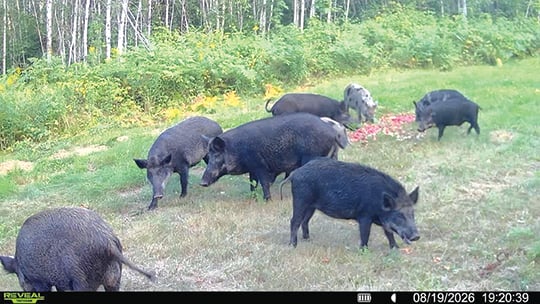
Upper Peninsula landowner provides evidence feral pigs have established there
A population of feral pigs that escaped from a game farm have become established in southern Marquette County, based on
Big waterfront project in Lorain, Ohio, to benefit anglers
When the Hot Waters Boat Launch reopened in the City of Lorain on May 22, it was just one milestone

1 thought on “Bob Gwizdz: Michigan’s proposed spring turkey regulation changes make sense”
Just as long I can hunt a public land because I don’t have private land to hunt in southern lower