





For many upland bird hunters, ring-necked pheasants are their gold standard. Most years, there’s significant variations in the Upper Midwest states that hold a population of these charismatic birds, but this year there seems to be optimism in all the primary pheasant-producing states.
As always, the components of top-notch habitat and good spring weather to pull off strong nesting efforts and high percentage chick survival is the determining factor in each fall’s hunting success. Here’s a breakdown of what hunters can expect this fall in pheasant-producing states.

South Dakota
No one will argue South Dakota has the reputation of being one of the best, if not the best, pheasant hunting state in the nation.
In 2024, 140,000 hunters harvested more than 1.3 million roosters, the highest harvest in 13 years, with an another 380,000 birds shot on private preserves. All indications are 2025 will meet or surpass the impressive 2024 numbers.
“It’s looking like it will be the best fall in a long time,” said Matt Gottlob, Pheasants Forever’s South Dakota coordinator.
Record bird numbers last year, with a solid carryover due to a mild, dry and open winter are a significant part of the equation, while good rains at the right time got things growing.
MORE UPLAND BIRD COVERAGE FROM OUTDOOR NEWS:
A 2025 grouse tour? Minnesota has more options than you might realize
Sub-gauges for upland game? Here’s what to consider
High-volume, low-regulation, big fun… we’re talking pigeon hunting
Another plus for hunters is the addition of two public land opportunities awaiting hunters this fall. A Conservation Enhancement Program (CREP) in 18 counties in eastern South Dakota created additional opportunities, while the Pheasant’s Forever’s Public Access to Habitat (PATH) aims to enroll lands in long-term conservation programs while bolstering participation in the walk-in program. Add this all together and it appears to be another great year in this premier pheasant state.
South Dakota’s traditional season that’s open to all hunters runs from Oct. 18 to Jan. 31, 2026, with a daily bag of three roosters. The first week of the season is for residents only.

North Dakota
A second easy winter with little snow and mild temperatures resulted in pheasants overwintering successfully in this northern pheasant producing state.
“We basically have had two really easy winters, especially by North Dakota standards, with not much snow and really nice temperatures,” said R.J. Gross, North Dakota’s upland game management biologist. Add timely rains into the equation and there’s reason for some feathered optimism in North Dakota this fall.
Excellent nesting and brood-rearing habitat conditions were experienced throughout the state, with the southwest and southeast showing particularly strong results.
Crowing counts this spring makes the upcoming season look promising, with a 6% increase from last fall. The southwest region showed 31.1 crows per stop, up from 28.8 in 2024, the highest since 2016, while the southeast also showed strong gains. Pheasants are even appearing in the northeast corner of the state, an area not considered prime pheasant habitat.
The bottom line is even in this northern state, the recent mild winters means upland hunters should consider this a destination this fall.
North Dakota’s pheasant season runs from Oct. 11 to Jan. 4, 2026, with a daily bag of three roosters, and a possession limit of 12 birds.
Minnesota
As with neighboring states to the west, Minnesota expects to see a banner year for pheasant hunters, with weather and habitat once again being the primary influences.
Pheasant numbers in the Gopher State’s August roadside survey were up nearly 50% from 2024 and 21% above the 10-year average, according to the Minnesota Department of Natural Resources.
“The increase in pheasant numbers across the state is great news,” said Steven Woodley, acting upland game research scientist. “Our mild winter likely helped the over-winter survival of hens. The drier and warmer spring created better conditions for nesting and brood-rearing relative to last year.”
There were 75 birds per 100 miles of roads driven during the survey, compared to 51 in 2024, with pheasant numbers increasing in every region compared to last year.
The southeast region’s 189% increase from last year was the highest; the east-central region was next with an 82% increase. The survey also showed there were 81 broods per 100 hens this year, an increase from 77 broods per 100 hens in 2024.
“The increase in brood numbers is welcome after their decline last year due to wet spring conditions,” Woodley said.
Through state and federal programs, there was a net gain of 106,000 acres of protected wildlife habitat compared to 2024. This is good news for pheasant hunters, although long-term, there’s nothing to suggest some the increase in pheasant numbers in some areas will continue as a trend. This means 2025 is a good year to take advantage of the upward spike in numbers.
Minnesota’s season runs from Oct. 11 to Jan. 4, 2026, with a two-bird daily limit and a possession limit of six until Nov. 30. Beginning Dec. 1, the bag limit increases to three roosters with a possession limit of nine until the season ends.

Wisconsin
As seen in other states, the Wisconsin DNR reported a significant increase in the spring crowing count survey from 0.62 per transect stop in 2024 to 0.81 this spring, marking the second consecutive year above the five-year average.
Once again, the northwestern part of the state saw the highest abundance of pheasants, while the east-central region had the lowest.
Wisconsin also stocks about 75,000 pheasants from the state game farm on more than 80 properties statewide. Depending on production levels, pheasants are released once before the season, and then twice a week for the first two to three weeks of the season.
After that, birds are released about once a week until the opening of the deer gun season. The DNR also stocks about 2,800 pheasants on 25 state properties across central and southern Wisconsin over two days during the week of Dec. 16. The DNR also provides about 16,000 day-old rooster chicks to conservation clubs enrolled in the program. Club members commit to releasing birds on land the public can access.
Unfortunately, enrollment in the U.S. Department of Agriculture’s Conservation Reserve Program has declined significantly. CRP pays landowners to retire their cropland for 10 to 15 years and plant permanent cover like grass or trees. A long-term decline in stable grassland cover across the state has contributed to a long-term decline in pheasant populations.
Wisconsin’s pheasant season runs Oct. 18 through Jan. 4, 2026, with a bag limit of one rooster on opening weekend and a two-rooster bag limit from Oct. 19 through the end of the season.

Iowa
Last winter was the fourth least snowy winter in 138 years, and spring was normal for rainfall and temperature, which are predictors of a pheasant population increase, according to Todd Bogenschutz, a biologist for the Iowa DNR.
“When we have early nesting years as we’ve had this year, we typically have the highest number of chicks,” said Bogenschutz, who hopes the pheasant booms seen in 2023 and 2024 may really explode this year.
In 2023, there were 590,000 pheasants harvested; in 2024, 463,000 birds went into the bag, the most since 2007. There’s hope the 2025 season will be as good or better, thanks to the excellent winter and spring weather.
Iowa’s season runs from Oct. 25 through Jan. 10, 2026, with a daily bag limit of three and the possession limit is 12.
Nebraska
Hunters traveling to the Cornhusker State can look forward to another good pheasant hunt in 2025.
There was a 189% spike in the harvest over recent years. The southwest region’s crowing count was 150% above last year, while the April mail carrier survey also showed big increases in the northeast and central regions. All these indicate there was great production last year.
The spring and summer conditions have been outstanding for pheasant recruitment.
“We started off super dry for most of the state, but come late May the gates opened up and the rains came,” said Bryan O’Connor, of the Nebraska Game Fish and Parks. “I’m optimistic of a good year of hunting.”
Nebraska’s season runs from Oct. 25 through Jan. 31, 2026, with a three-bird bag limit and a possession limit of 12.
Michigan
Michigan’s 2025 pheasant forecast wasn’t available as of press time, but hunters should look to the agricultural areas of the Thumb Peninsula and southern Lower Peninsula for the best hunting, as habitat is the key to success. The overall outlook is not expected to be terrible.
Michigan’s pheasant season is split into three zones in the Lower Peninsula, with Zone 1, the Upper Peninsula, running Oct. 10-31, while zones 2 and 3 in the Lower Peninsula open Oct. 20 and run through Nov. 4. There is a late season in a portion on Zone 3 from Dec. 1 through Jan. 1, 2026. The bag limit is two roosters, with four birds in possession.

Kansas
The Kansas spring pheasant crowing counts followed the same trend as other states, with a 49% increase from last year, although the weather was all over the board.
“Last summer’s rains – combined with above average winter precipitation – created ample cover and soil moisture coming into this spring to prime the pump. However, we’re not sure what to expect given we received heavy rainfall across much of the state during nesting season, which can reduce nest and brood success. I’m optimistic we’ll see improved numbers across most regions, but may not realize the potential of a large increase,” said Jeff Prendergast, of the Kansas Department of Wildlife, Parks and Tourism.
The Kansas season runs from Nov. 8 through Jan. 31, 2026, with a daily bag limit of four roosters and a possession limit of 12 birds.

Wisconsin Mixed Bag: DNR’s Madison service center to close
The Wisconsin Department of Natural Resources (DNR) announced that with the sale of the GEF2 building on Webster Street in
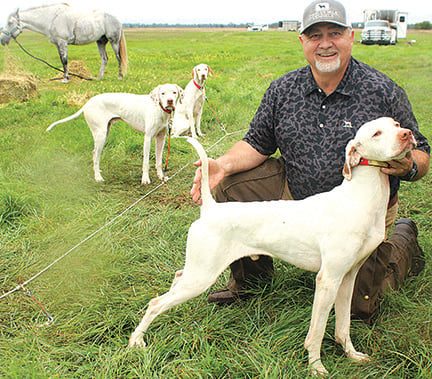
Wisconsin’s Buena Vista Grasslands and its prairie chickens entice handlers, pointing dogs
As far as John Mathys is concerned, there’s nowhere he rather be than with his dogs and horses in a
Solar farm pact protects prairie chickens in Wisconsin’s Buena Vista Wildlife Area
A large solar farm under construction in Portage County’s town of Grant isn’t expected have a significant effect on Wisconsin’s
