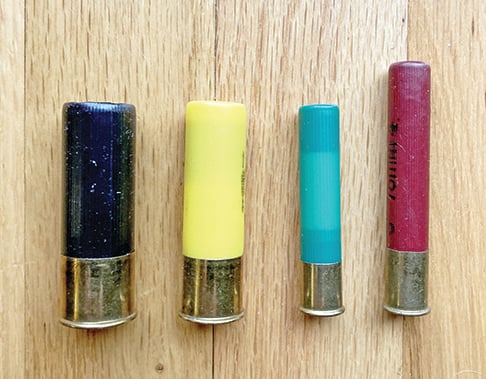
Sub-gauges, are they viable choices for upland game or just a commercial gimmick? Using one has become more of a reality with advances in powder, shot, wads, and loading techniques.
Concerted efforts have increased the odds for the smaller gauges. Each one, the 20-, the 28-, and even the .410 bore, can be effective, within limits.
Determining your needs or following your interest can help you decide on a purchase. Start with weight. Long-distance hunters feel every ounce as the hours of walking add up. Not everyone cares to walk all day with a 12-gauge anymore. The ammunition is heavy, too.
Toss in water for you and the dog, maybe snacks, and your jacket is loaded down. You may find less freedom to swing on a flushed bird.
Without a doubt, the 12-gauge is a popular choice for small game, turkeys, and upland birds, but do you need all that gun? Yes, under the average waterfowl conditions, but some are taking the plunge. Turkey hunters, too, are dropping the gauge sizes of their guns and liking it.
HUNTING FEATURES FROM OUTDOOR NEWS:
Hunting in comfort: Is a box blind the best option for your top deer spot?
Tips and tricks to take advantage of early teal and goose seasons
From backwaters to oxbows, here’s how to hunt waterfowl on the mighty Mississippi
The shotguns are advancing as well. The .410s I used to shoot felt as if they were designed for kids. The pump guns fit me better than the other models, but jammed too often. Others fit and functioned well enough, but some patterned poorly.
The patterns from some of the fixed chokes were poor at times. Either the pattern hit too far from the point of aim or the quality of the pattern was unacceptable. You were stuck, no switching the choke tube to try to improve the situation.
The newest .410s, those intended for turkey hunting, are different. A few companies modified existing models to satisfy adults interested in serious hunting. Fit is better, and you have more options with finish and accessories, such as choke tube, vent rib, and optics mount for a red dot type sight.
For those wondering if the .410 is a practical upland gun, you need time and practice with hunting shells to learn the advantages and disadvantages. Practice on clay targets is an effective check of your swing, and will show the effective range of the shells.
The 28-gauge is becoming more popular. For one, it is more gun than a .410, without much increase in weight and recoil. The 28, on average, produces more efficient patterns than you see from a .410, but not without its own challenges.
A gun can be too light. One weighing less than 6 pounds may prove more difficult to swing with smooth follow through, whippy as some describe. Longer barrels add weight, extending the sighting picture.
A 28-gauge excels when you have bird dogs that hold point. The shooting is close and expected. Hunters save money by hand loading, especially if they want higher velocity and heavier 1-ounce loads.
The 20-gauge is most popular of the subs. Guns and ammunition are plentiful, and less expensive. Low recoil is not a given; you can end up with a hard kicking 20, if you mix light guns with straight stocks and powerful shells. The 7⁄8-ounce shell is a standard load.
Those buying their first double gun may fret over having extractors versus ejectors. An extractor pops the shell up from the chamber. An ejector kicks the shell out of the gun. If you want to recover your empties for reloading or carry out the empties, extractors are the way to go.
The argument against extractors is they make the gun too slow. The thinking is having to pull the empties takes more time. Ejectors allow you to put fresh shells in and shoot again.
Extractors are not too slow. It is unrealistic to think there is enough time with ejectors to reload for a second round at flushed game.
Some buttpads catch on my jacket, mostly the rubberized ones. If I am going to use a gun for upland birds, I prefer a plastic butt plate. Hard plastic is less prone to drag against clothing. I check the length of pull for use with heavy clothing; you never know what the weather will be where you are going.
If you are partial to the older side by sides, those with double triggers and a pistol grip can pinch your fingers. The recoil of 12-gauge guns caused this in my case, not so much the lighter gauges. Modern guns with an English stock (straight with no pistol grip) or a single trigger with pistol grip usually prevent this.
All in all, the sub gauges are fun and more effective than before. Is it time for you to give one a try?