





Springfield — Hunters killed 18,309 deer in the state’s 21 CWD counties during the 2023-24 season, lending creed to the Illinois DNR’s contention that harvests in affected areas have remained consistent – the 5-year average harvest for the same counties stands at just below 18,000.
But now there is new math to consider. Because there are now 25 CWD counties.
DNR announced in April that cases were detected in four new counties: Adams, Marshall, Peoria, and Putnam. At the time, DNR promised public meetings would be called prior to the 2025-26 deer season to share information and updates with hunters.
Those meetings begin Sept. 18.
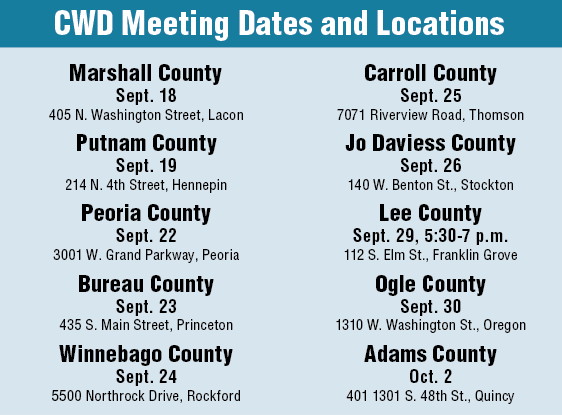 “DNR staff will be available to discuss current management strategies and answer questions about CWD,” DNR noted on
Aug. 12. “Landowners, hunters and concerned citizens are encouraged to attend. CWD remains an important issue and a priority in Illinois’ future deer management discussions.”
A total of 10 meetings have been scheduled in west-central and northern parts of the state. Nine will be held in September, with one set for Oct. 2.
Unless otherwise noted, each of the meetings will begin at 6 p.m. with a 45 to 60-minute presentation. Open discussion will follow DNR’s presentation.
Affected counties now include Adams, Boone, Bureau, Carroll, Cook, DeKalb, DuPage, Ford, Grundy, Jo Daviess, Kane, Kankakee, Kendall, Lake, LaSalle, Lee, Livingston, Marshall, McHenry, Ogle, Peoria, Putnam, Stephenson, Will, and Winnebago.
DNR, which this year launched a 5-year pilot program to assess its efforts to fight the spread of the disease, is particularly concerned with the Adams County case, which is “the first documented case recorded outside of the leading edge of the CWD endemic region of northern Illinois,” the agency explained.
MORE COVERAGE FROM OUTDOOR NEWS:
Remains of huge bucks found locked together on unique public prairie in Wisconsin
Minnesota DNR reviews AIS aquatic plant treatment protocol due to concern for native habitat
Here are your best bets for bronzebacks in southern Ohio
DNR’s releases an annual report on CWD in the state that is based on the fiscal year. Last year’s report, which was based on CWD cases between July 1, 2023, and June 30, 2024, was released on Sept. 15. It put the total number of CWD positive deer confirmed during the fiscal year at 459, a significant increase over the 365 cases the previous fiscal year.
The number of CWD-positive deer increased about 18% last year, DNR’s FY 2024 report noted. The bump in cases “reflects geographic expansion and increasing CWD prevalence within the endemic area of northern Illinois,” the report states.
Two new counties were added in FY 2024, which means there have been six new counties added in the past two calendar years.
More alarming is the fact the report concluded the “disease prevalence among adult male deer (8.9%), adult female deer (5.0%), and across all sex and age classes of adult deer (7.2%) during FY2024 were 11% to 65% higher than the previous two years.”
In all, including the first 14 cases confirmed by DNR back in 2002-03, Illinois had a total of 2,188 confirmed cases. This year’s CWD Report is expected to push that number much higher, as the list of CWD counties grows.
Despite the recent spikes in cases, Illinois is still considered a model state in the effort to fight CWD. In neighboring Wisconsin, CWD has spread to more than 75% of counties. Wisconsin DNR reported that 1,786 deer tested positive for the disease last year, representing more than 10% of 17,399 deer sampled. A vast majority, or 89%, of positive cases were in deer from southern Wisconsin.
Tom Hauge, co-chair of the wildlife work group for Wisconsin’s Green Fire, and a former director of the Wisconsin DNR’s wildlife management program, was quoted by Wisconsin Public Radio this spring saying, “CWD is winning” in his state.
“We’re doing a good job of documenting that spread, but we’re missing in action in terms of putting plans in place or attempting to try to address how we can slow down the spread, as well as how can we reduce the prevalence where it’s high.”
Hauge pointed out that “states like Illinois have worked with landowners to harvest more deer in CWD-infected areas, and western states have increased harvest of bucks that have higher rates of the disease.”
“The next plan for the state of Wisconsin, I think, really needs to include some research pilots to see what will work in our state,” Hauge said.
For more information contact Chris Jacques at 773-636-0819 or at chris.jacques@illinois.gov.
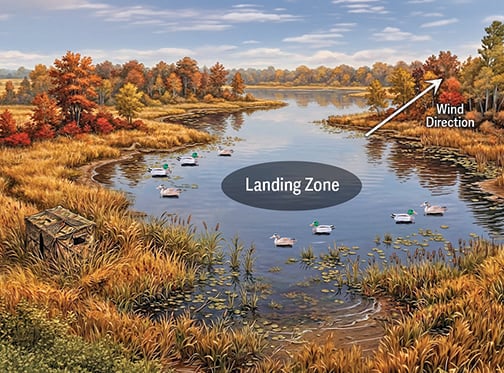
Mastering early season duck decoy spreads; a time when less is more
It was better than Christmas morning – opening day of duck hunting. I had just turned 14, and with a
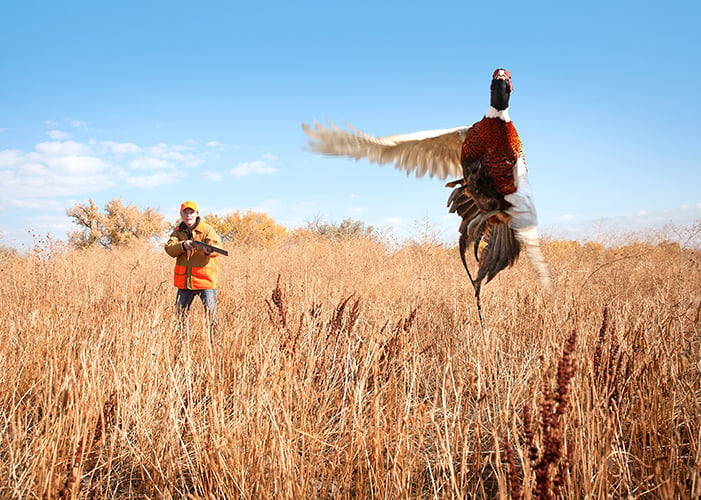
WI Daily Update: DNR budget constraints lead to fewer stocked pheasants this fall
Wisconsin pheasant hunters will see fewer stocked birds and a shorter release schedule this fall. Here’s why, along with what’s
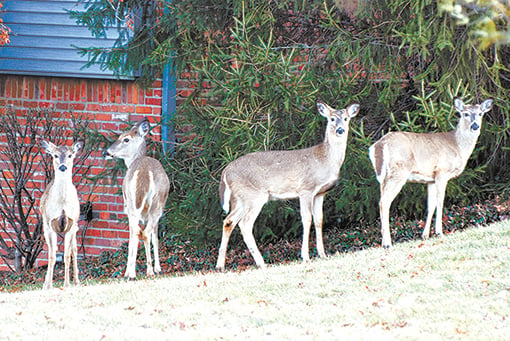
Suburban deer management expands in southwest Pennsylvania
Oakmont is the latest in a growing number of suburbs around Pittsburgh to adopt a controlled archery program to manage
