




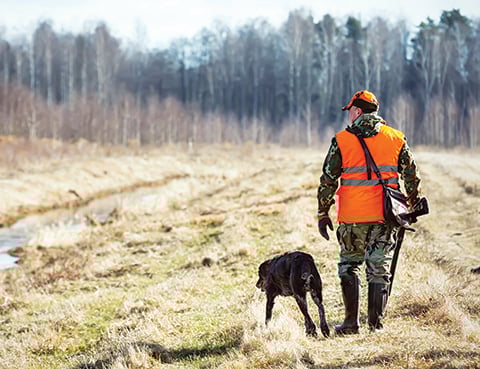
A common thread when reviewing ruffed grouse hunting populations and opportunities in the Upper Great Lakes states revolves around habitat. The number of acres of older, more mature forests that turkeys might prefer are increasing in public and private forests, while the young forests grouse and many other wildlife species need to survive in this region are decreasing.
Drumming reports in some of the primary grouse hunting states are interesting for hunters to study, but increases in drumming doesn’t always mean better hunting in the fall. Warm spring temperatures with dry conditions favoring good nesting success and chick survival are more important indicators of population trends.
In the Upper Great Lakes states of Minnesota, Wisconsin, and Michigan, grouse chicks typically hatch in late May and early June. Grouse nesting conditions were generally favorable early in the cycle, but a cold and rainy few days in the second week of June was not ideal, although any negative impact of that weather will remain unknown until the wildlife agencies in those states begin their brood surveys in August.
On a brighter note, another mild winter across the Upper Midwest states should have improved over-winter survival for adult grouse going into the breeding and nesting period.
The bottom line is the hunting could be at least as good as past years, especially in the western Great Lakes states with abundant public land. Hunters who put in the time will have a good chance of getting into decent numbers of the king of game birds.

Ruffed grouse are the most popular game bird in Minnesota for a good reason; the Gopher State produces the most grouse in the nation.
These impressive numbers are because of the 11 million acres of public hunting land and more than 500 hunting areas in ruffed grouse range that cover nearly 1 million acres of hunting habitat. Throw the 600 miles of hunter walking trails into the mix and it’s clear why many consider Minnesota the grouse hunting capital of the country. This public land access helps explain the annual harvest of between 200,00 to 500,000 birds.
Minnesota’s spring drumming survey has a 73-year history. Drumming counts were 1.8 statewide this year, down from 2.3 drums per stop last year. The drop was not unexpected, DNR officials say, because 2024 was the highest 10-year cycle population peak for ruffed grouse since 1972.
“I think it is important to remind hunters that the drumming counts no longer forecast the fall numbers, and the survey hasn’t been able to forecast the fall season for about 20 years,” said Charlotte Roy, the Minnesota DNR’s grouse project leader. “The drumming counts provide information about the spring breeding population in April and early May, but are only one piece to consider in fall bird numbers.
“It is also important to consider nest survival and chick survival, which also contribute to fall numbers. Most of the birds hunters see in the fall are young birds, so if production is low over the spring and summer due to heavy rain during nesting or when chicks are young in June, predation, disease, or other factors, then fewer birds will be available in the fall,” Roy said.
MORE UPLAND BIRD COVERAGE FROM OUTDOOR NEWS:
Patrick Durkin: Unpacking what Wisconsin grouse, pheasant numbers look like by region
Minnesota’s spring count of ruffed grouse dips, expectedly
A quick chat with Ben Jones of the Ruffed Grouse Society
Minnesota Ruffed Grouse Society Forest Wildlife Specialist Stefan Nelson had some insight into the Minnesota grouse population.
“Anecdotally, last fall hunters indicated they had mixed success. The annual RGS National Grouse and Woodcock Hunt suggested local areas in northeast Minnesota appeared to have had lower than average brood success last fall, which was likely influenced by the excessive rains across northeastern Minnesota in late May and early June of 2024. That said, the last two years worth of spring drumming counts were high, so it (wasn’t) unreasonable to expect a decline in drumming counts this year in continuation of the 10-year grouse cycle.
“Overall, the best way to maintain ruffed grouse across the landscape and mitigate challenges they face from predation, extreme precipitation and poor winter snow roosting from mild winters is by conducting targeted habitat management to provide multiple age classes of forests in proximity to each other. Ensuring a healthy and diverse mixture of young, middle-aged and older forests can facilitate higher survival, increase brood success and healthier body conditions,” Nelson said.
Northeast Minnesota resident and avid grouse hunter Mike Bartz, who had good hunting last fall, thought there were reasons to be cautiously optimistic this year, too.
“Last year’s season was pretty good, but it didn’t come close to the 2023 season. That was a once-in-a-lifetime experience. In 2024 birds weren’t as plentiful. I didn’t put many juvenile birds in the bag and that indicates recruitment wasn’t very good. Adult birds are a lot smarter than juveniles, so the ratio diminishes precipitously. I’m looking forward to this season because the nesting and brooding conditions in northeast Minnesota are looking quite good,” Bartz said.
Minnesota’s ruffed grouse and spruce grouse season runs from Sept. 13 through Jan. 4, 2026, statewide. There’s a daily bag limit of five spruce or ruffed grouse combined.
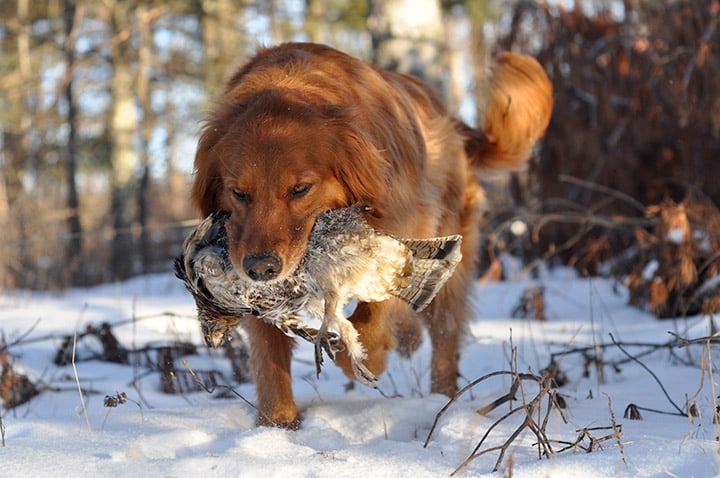
 Besides millions of acres of public forests, Michigan also offers GEMS to grouse hunters.
GEMS, or Grouse Enhanced Management Sites, are large blocks of land with young forests designed to raise and hold grouse. On GEMS, old logging roads are used as hunter walking trails to provide easier access into the areas. There are 19 GEMS across the Upper Peninsula and northern Lower Peninsula, along with other land open to public hunting.
Michigan DNR’s Upland Game Bird Specialist Adam Bump was cautiously optimistic about this fall’s ruffed grouse season.
“Drumming rates have been up the last couple of years, suggesting we are on the upward part of the cycle. I expect the fall of 2025 season to be as good as or better than 2024,” Bump said. “In the northern Lower Peninsula, we had a very significant ice storm that damaged huge swaths of forest land. This storm blocked roads and damaged timber, so there may still be some access issues by fall. It’s hard to know what the impacts may be on grouse numbers, although in the medium term, I would guess it could be a net positive by opening the canopy and having more regenerating forest stands. There will be salvage and increased timber harvests as well again, likely with long-term positive impacts on grouse. Hunters in 2025 may find access more challenging and may find damage to some of their favorite covers.”
Bump also was optimistic the winter and spring conditions this year shouldn’t be much of a factor.
“There’s been nothing too extraordinary, either plus or minus, for grouse and woodcock survival and breeding. I don’t anticipate any major swings from spring or winter weather conditions,” he said.
Regarding information on last year’s hunter’s experiences, Bump said his agency doesn’t have that data.
“It’s a challenge for us to get good samples of small game hunters these days with our current license structure and lower participation in mail surveys. While we don’t have hunter survey results from 2024, we did in 2023. An estimated 194,484 people hunted a variety of small game that year, with an 8% decline in ruffed grouse hunting effort. An estimated 15,495 hunters spent a total of 45,615 hours hunting grouse and woodcock in GEMS,” Bump said.
“As always, localized numbers can vary from the statewide trends, but if hunters aren’t finding birds in their typical spots or the first covers they try, chances are they will be able to try some new and different areas and get into birds,” Bump said.
Regarding woodcock, Michigan’s population has generally declined since the 1960s, with an average annual decrease of about 1%. Michigan has traditionally been a top woodcock production state, but this decline is consistent with a broader trend in the Upper Midwest. Overall, there’s little doubt hunters in Michigan will find birds that will provide them with opportunities this fall.
The Michigan ruffed grouse season has several zones, so season start and ending dates vary across the state throughout the fall. Hunters are advised to check the current regulations before a hunt.

The Wisconsin DNR’s 10-year ruffed grouse plan prioritizes habitat management into three areas.
Data from spring drumming surveys was categorized by these new management areas to better reflect habitat and priorities for grouse management. Statewide drumming activity decreased 6.6% from 2024 based on the roadside breeding survey results. The northern forest area saw an 8.3% drop in number of drums per stop, whereas the central and southwest areas saw increases.
“We ran 77 transects this spring to detect changes in abundance between 2024 and 2025.
Transects were considered to have ‘changed’ from the previous year if the change was greater than two drums per transect,” said Aliana Roth, DNR ruffed grouse specialist. “The number of those transects with decreased drumming was 23, compared to 23 routes that showed increases and 44 that were unchanged. There was a 250% increase in mean drums per stop in the Driftless Region, but the sample size was low and thus wide swings in percentages should be taken into context.”
According to Roth, while grouse populations fall and rise on a nine- to 11-year cycle, there’s been an overriding downward trend since this survey began. “Changing land use patterns and the longterm aging of Wisconsin’s forests are likely contributing to these changes,” Roth said. An exception to this trend was the unexpected 57% increase in drumming activity in 2024 compared to 2023.
“Not surprisingly, what I heard from hunters was that this certainly led to an increase in harvest and opportunity last year. We had two dry nesting and brooding seasons in 2023 and 2024 and other than the last bout of wet, cool weather, 2025 was on track to be dry, too. It’s too early to know if that affected broods or not,” Roth said. “We can’t manage for dry weather during the nesting season, but we can manage for vital young forest habitat. That’s something we and our county forests and other land types partners continue to work on. We’re lucky in northern Wisconsin to still be able to sell aspen timber sales and continue to create high quality young forests. Unfortunately, we’ve lost 1.4 million acres of zero to 20-year-old forests since the early 1980s. It’s important for us to continue to push for habitat management to avoid losing more ground. To help with this, biologists and technicians in the north are creating wildlife openings and trails that provide open areas rich in forbs and insects important for nesting and brooding grouse.”
Jared Elm, of the Ruffed Grouse Society, saw his first brood of chicks on June 5. “They couldn’t fly yet, but as of today (June 6), I don’t think we’ve had any adverse weather that would inhibit successful winter survival or nesting. Typically, in years ending in ‘5’ would indicate the bottom of the 10-year grouse cycle, but we’ve seen a disruption in this starting in 2018.
It will take another 10 to 20 years before we know if the cycle still exists as it has in the past,” Elm said. “There isn’t as pronounced a cycle in the Appalachia grouse range south of us and it’s possible we’re beginning to have a similar trend.”
Iron County DNR Wildlife Biologist Jenna Malinowski’s drumming survey ran from April 20 through May 15. “I’ve never run a survey this early before and I had only four drums where 20 was common, but the week of May 5 drumming started to pick up. When I finished up with the last week of the survey, I found an average number of drumming. The route I ran with only four drums increased to 19. I did see a brood during the survey period which is very early. Overall, I believe our grouse are doing well. Hunters should be happy with numbers this year as long as the weather doesn’t pull a fast one us,” Malinowski said.
Wisconsin’s season in Zone A runs Sept. 13 through Jan. 5, 2026, and in Zone B from Oct. 18 through Dec. 8. The Zone A bag limit is five per day while Zone B is two ruffed grouse per day.

The “king of gamebirds,” as the ruffed grouse is called in Pennsylvania, has been the Keystone State’s official state bird since 1931.
Unfortunately, this title hasn’t resulted in significant increases in their numbers. As in other ruffed grouse states, habitat is the most important factor affecting the size of the state’s population.
Healthy young forests that are less than 20 years old are the key to this.
The main metric used to track population trends in Pennsylvania is the fall flush rate where volunteer hunters keep track of time spent in the field and the number of grouse they encounter. Surveys have shown a long-term decline using this metric, a decrease of roughly 70% has been seen since the 1960s. Recent trends show the indices of abundances, like flush rates per hour and summer sightings, have been at or near record lows since 2017.
Pennsylvania has found the ruffed grouse population decline to be due primarily to aging forests. On a brighter note, a genetic analysis of ruffed grouse revealed that the Pennsylvania state bird has more genetic diversity and connectivity than expected. This means the iconic game bird could be maintained in persistent numbers if appropriate protections are implemented. The goal of the state’s grouse management program, as it is in other grouse states, is to support statewide population recovery by carrying more birds into the spring breeding population.
Pennsylvania’s ruffed grouse season opens Oct. 18 and runs through Dec. 24, with various splits. Sunday hunting has been limited in Pennsylvania, although there have been some changes hunters will see in their regulations. The daily bag limit is two birds, with a possession limit of six.

Although the New York Department of Environmental Conservation states ruffed grouse are the second most popular game bird behind turkeys in the state, the ruffed grouse population has been in decline over the past 40 years.
The state also has a remnant population of spruce grouse, although they’re on the state endangered species list and hunters are urged to be sure of their target when ruffed grouse hunting.
New York depends on hunters to track grouse population trends. The state has established a hunter survey form that asks turkey hunters how many grouse they heard drumming while turkey hunting. In addition to the drumming survey, they also ask hunters to record their grouse hunting efforts and the number of birds flushed. This allows biologists to monitor changes in the populations.
The most recent available surveys show a flush per hunting trip rate varies from a best of 3.5 flushes to 0 to 2.0 per trip in the majority of the state. Drumming rates have been dropping also, with an average of 0.20 per stop.
Northern New York’s grouse season runs from Sept. 20 through Feb. 28, 2026, while southern New York’s season is from Oct. 1 through Feb. 28, 2026. The daily bag limit is four birds in both zones.

Historically, the Hawkeye State offered good ruffed grouse hunting for upland hunters, but now there are only a few pockets of birds remaining, primarily in the northeast corner of the state.
Major changes in the state’s landscape, primarily related to farming practices and deforestation, have dramatically changed hunting opportunities. From the late 1970s through 1990, grouse hunters harvested between 5,000 and 24,000 grouse annually, but not any more.
According to the Ruffed Grouse Society, only a few hundred hunters pursue grouse each year and from anecdotal reports, those numbers continue to dwindle.
Iowa’s grouse season runs from Oct. 4 through Jan. 31, 2026, with a bag limit of three birds.

As in other states that had sustainable grouse populations years ago, Illinois has seen a dramatic decline in ruffed grouse numbers.
Development hasn’t been the cause, but rather declining habitat related to agricultural and forestry practices that preclude timber cutting are the primary factors. Ruffed grouse need young forests to protect them from predators, avian and mammalian, and to provide of food base for them. Sadly, they’re considered nearly gone from the state.
Illinois has had no grouse season in recent years and it’s doubtful there will be one this year either.

Ruffed grouse inhabit Ohio’s heavily forested eastern and southern areas, but are not plentiful.
As in other states, they prefer young forests that grow after logging operations and abandoned farmlands and, unfortunately, although total forest cover has increased over the years, young forests preferred by grouse have decreased by more than 65%.
A limited ruffed grouse season will be run in 17 southern and eastern Ohio counties from Nov. 7 through Nov. 30, with a daily bag limit of one bird per day.
$10,000 bond set for Wisconsin deputy in shooting that injured turkey hunters
Bond was set at $10,000 for the Racine County Sheriff’s Department deputy who faces four felony charges after his 3-year-old

Wisconsin Mixed Bag: DNR’s Madison service center to close
The Wisconsin Department of Natural Resources (DNR) announced that with the sale of the GEF2 building on Webster Street in
Wisconsin’s Buena Vista Grasslands and its prairie chickens entice handlers, pointing dogs
As far as John Mathys is concerned, there’s nowhere he rather be than with his dogs and horses in a
