





In 2024, the Wisconsin Department of Natural Resources (WDNR) counted just 288 male prairie chickens on 37 leks, or breeding sites, in the state. All were on state-owned properties in central Wisconsin, with 73% of the birds on the Buena Vista State Wildlife Area.
On Jan. 16, 2025, the Public Service Commission of Wisconsin issued a final decision approving plans for the state’s largest solar farm, a 10-square-mile behemoth, directly adjacent to the wildlife area. Because prairie chickens avoid structures (most likely to reduce predation risk), the “green” solar development will have negative, and perhaps catastrophic, effects on the birds.
True to form, the developer has offered to pay for research positions at the University of Wisconsin to study the effects (translation, to document the likely extirpation of the chickens) and to provide $2.1 million to the WDNR to help it implement the state’s prairie chicken management plan.
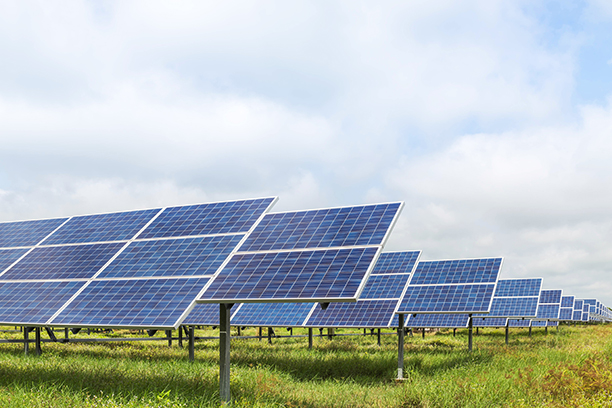
Wisconsin isn’t the only state where wildlife conservation is being (or has been) sacrificed to promote renewable energy. For example, Pine River is the largest wind project in Michigan. Situated along both sides of Route 127, its footprint extends right up to the Maple River State Game Area – one of the most significant waterfowl breeding areas in the state.
Worth noting, neither the Wisconsin nor the Michigan Departments of Natural Resources vigorously objected to either project despite the high probability of negative effects.
In part, this reflects the political nature of modern departments of natural resources. Politically appointed and therefore at-will agency directors rarely cross the governors who appointed them, conservation implications be damned.
Yet there are other factors at play as well.
MORE COVERAGE FROM OUTDOOR NEWS:
Michigan legislation would require COs to use body cameras, search warrants
Ohio fisheries chief looking forward to angling retirement
Among these are that wildlife management relies on science. In turn, science relies on facts and evidence-based inferences. Unfortunately, facts can be complicated (they’re always more complicated than declarations about green energy as good/bad).
Because complications always require explanations, they’re usually ignored in partisan communications. The reason is simple: “If you’re explaining, you’re losing” (Ronald Reagan).
It goes without saying that wind and solar energy generation are renewable, yet “renewable” isn’t the same as “green,” despite vigorous marketing to the contrary. Most evidence shows that wind and solar can have negative (and sometimes significant) impacts to migrating birds (especially raptors), federally or state endangered species like sage or prairie grouse (via enhanced nest predation and habitat loss), and to bats including several federally endangered species.
The frustrating part is that energy developers could avoid or mitigate many of these threats to wildlife by not building in (or next to) critical habitat, or in some cases, through the development of operating standards that minimize direct mortality risks (e.g., not operating during peak migratory periods).
The fact that meaningful concessions rarely are offered reflects the fact that siting plans are dictated a priori by economic and logistical factors that include distance from existing or planned electrical transmission lines, availability of dependable wind or solar resources, federal and/or state financial incentives, and the availability of sufficient land for the development.
When wildlife considerations do arise, the steps taken typically reflect the least possible effort (e.g., pre- or less commonly post-construction surveillance for direct mortalities). Little or no thought is given to the mitigation of other possible consequences like effects to mating and nesting success, habitat degradation, or enhanced predation risks.
In those rare instances where wildlife impacts are considered, it’s usually the case that mitigations are confined to public lands where federal land management agencies are statutorily required to conduct environmental impact assessments, something that does not typically apply to privately owned land.
Worth noting is that federal regulatory agencies and the renewable energy industry are well aware of these problems. Yet, as illustrated in Wisconsin, the typical “resolution” is funding for more research, perhaps coupled with a little blood money for a species management plan or two.
These (cynical) “rear-guard actions” provide grant funding to academics and non-governmental organizations to clarify effects, even though those effects are easily guessed, fairly well documented, and largely predictable. Even when research generates practical and therefore useful results, it’s revealing that the data are rarely translated into less harmful management practices.
To be sure, there is nothing surprising (or necessarily wrong) about industry seeking ways to maximize profit. Likewise, it’s not news that regulatory agencies are both ponderous and frequently incompetent.
Because most people are susceptible to the “illusion of information adequacy” (i.e., the acceptance of perspectives despite incomplete understanding), the green-washing of renewable technologies is rarely challenged while the benefits are broadly proclaimed. Unfortunately, ignoring biological facts never makes them go away and almost always makes outcomes worse.
Right or wrong, most natural resource and wildlife conservation issues are luxury concerns for most of the general public and ill-suited to dialogue where explanations are the key to understanding.
The problem, of course, is that the outcomes of bad decision-making are expensive to remediate (often at public expense).
On the topic of renewables, uninformed popular opinion, elected politicians, and, most importantly, the environmental movement (who should know better) are slouching towards easily foreseen and avoidable negative consequences.
Unfortunately, too few care and those who do are divided.

Retired couple maintains commitment to Illinois Natural History Survey’s insect collection
What began as volunteer work became something more: a family commitment to preserve one of North America’s oldest and largest
Minnesota Valley National Wildlife Refuge will celebrate 50 years
The 14,000-acre refuge protects wildlife habitat and provides outdoors recreation. It’ll host a public birthday bash on Sept. 26
Steve Sarley: Keep or release? It should be up to the ‘catcher’
There are some words and terms that are so basic, they really don’t have to be explained. I am sure
