





Hunters and anglers are a funny bunch. We take in a few points of data, such as seasonal timing and weather, and we draw big conclusions. The easiest way to frame this is when it comes to the whitetail rut.
As October starts to give way to November, the chatter in deer-hunting circles is always the same: Are they chasing yet? Is it going to be early this year? Then as the rut progresses, we use our personal experiences to fill in the blanks. If we arrow a stud buck during the first week of November, we are likely to declare the rut right on time.
If we didn’t get to witness the chase-fest we expected, then, of course, it was a late-rut kind of year. By the springtime, we forget all of that and watch as the fawns show up right on time. Which is pretty good evidence that the rut occurred just like it always does.
A mini version of this happens with shed antlers. We know that January is the month that shed season kicks off, and that there are antlers out there. But how many? Is it worth it to put in the miles? Well, that’s up for debate, but it doesn’t have much to do with the timing of the antler drop.
MORE WHITETAIL COVERAGE FROM OUTDOOR NEWS:
Ohio’s record buck kill already set during 2024-25 season with time remaining
Want to take the plunge into buying land for deer hunting? Here’s three things to know
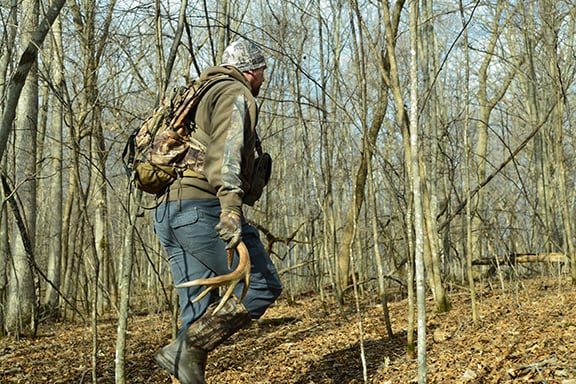
Too early, or too late?
The first reports of antlers hitting the ground usually arrive in late-December. These are the deer that might be stressed from a wound during the season, or they might just be genetically predisposed to drop at Christmas.
They are also the exception, and not the rule – just like the bucks that seem to carry right up to the cusp of the turkey season. Nature doesn’t follow its own rules all of the time. Or, a better way to look at it would be that we don’t quite understand how much the rules vary by individuals.
With shed antler timing, you have maybe five months during which antlers could, and do, hit the ground. But if you want to maximize your time and get the most out of the mileage on your boots, there is a timing window during which to make that happen.
The best month
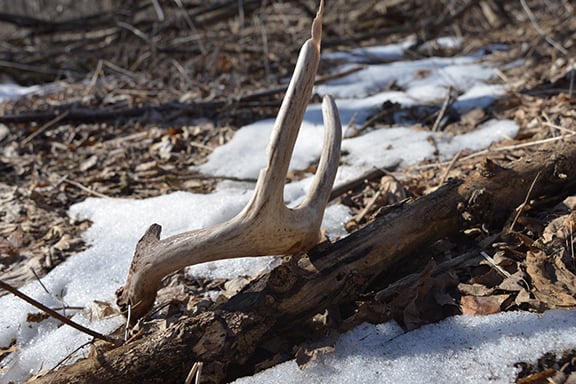
February is prime time to search for antlers. By the end of the month, most of the deer will have cast their headgear, and it’s your job to find them. There are a couple of caveats here, however.
If the snow comes in waves and buries antlers, your best bet will be much closer to late March or even April. If not, you might want to concentrate your efforts on the last two weeks of February.
One other big caveat to consider is how many other folks have access to your spots. If you’re competing with a slew of temporarily laid-off construction workers or just antler addicts in general, you might not want to concede your best routes to the competition until well after Valentine’s Day.
In this case, it’s not so much about timing of when the antlers come off of bucks’ heads, but is instead a consideration of how many other folks might find what’s out there first. You can still direct the bulk of your efforts to the seasonal timing, but understand that in this instance, the early bird gets the bone.
Weekly timing
Just like when you’re hunting public land, or really any pressured ground, weekly timing plays a huge role in success. No one with any deer-hunting acumen would choose to hunt a Saturday afternoon in October when they could hunt a Thursday afternoon.
Sure, hunters play the weather game and try to work with the deer as best they can, but it’s the pressure that affects their success more than anything.
The same rule applies to shed hunting on ground with other antler scoopers. If you have the option, timing your walks during the midweek will result in more sheds. This is true whether you start in January, or wait until the kids are on spring break in March.

Pennsylvania’s archery elk hunters do better than in previous years
Twenty-two lucky hunters drew tags for Pennsylvania’s archery elk season Sept. 12-27, which included three Sundays for the first time.

Pennsylvania Mixed Bag: Allegheny National Forest, U.S. Forest Service donate firetruck
The U.S. Forest Service recently strengthened community safety and local partnerships through the donation of a fire engine from the
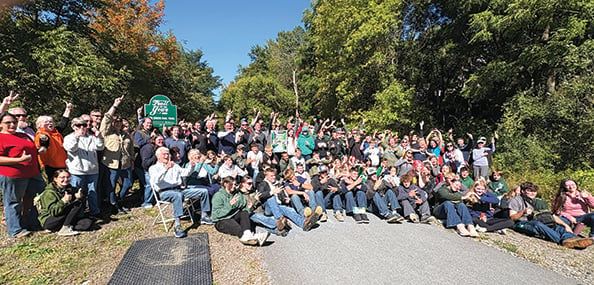
Pennsylvania’s Pine Creek Rail Trail celebrated as state’s Trail of Year
Locals and visitors gathered in this town at the northern terminus of the Pine Creek Rail Trail the weekend of
