




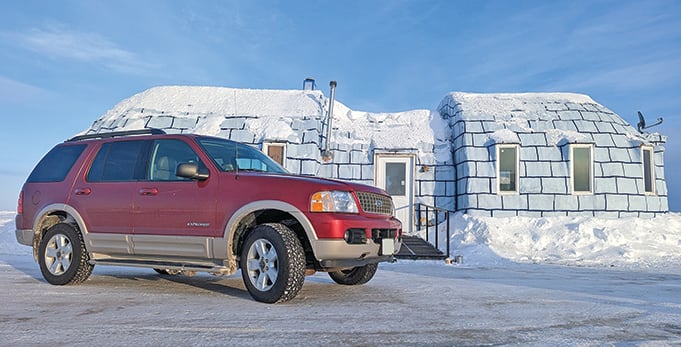
Early this winter, anglers across much of Minnesota, Wisconsin, and Michigan faced uncertain ice conditions on lakes that in most years offer solid footing and even drivable ice shortly after New Year’s Day.
That was not the case last winter on Minnesota’s Lake of the Woods, where plowed roads, heated icehouses, and two well-provisioned on-the-ice taverns welcome anglers from near and far.
A variety of fish species, too, are available in good numbers and sizes from toss-back to would-you-look-at-that-now!
Last January, a posse of outdoor media types convened just north of Baudette, on Minnesota’s northernmost lake for several days of ice fishing, networking, and camaraderie, organized by the Association of Great Lakes Outdoor Writers (AGLOW).

Our group consisted of Steve Griffin, of Midland, Mich.; Minnesotans Bret and Dan Amundson, and Brady Laudon; Wisconsinites Carrie Zylka, Jonathan Small, and this writer; Dena Vick, of Houston, Texas; Lacy Jo Jumper, of Benton, Ark.; and Sid Dobrin, of Gainesville, Fla.
River Bend Resort, one of several dozen outfits strung along the American shoreline of Rainy River and Lake of the Woods, was our base camp. Paul and Brandi Johnson operate River Bend in the Northwoods tradition of family-run resorts. This tradition is rapidly disappearing, as more and more small resorts are gobbled up by remote corporate owners. Bucking this trend, the Johnsons greet visitors in person, treat them well, and line them up with guides who can get them safely on and off the ice.
We targeted walleyes, but welcomed the chance to catch perch, crappies, northerns, or burbot, as well. There is no minimum size limit on walleyes or saugers, but fish 19 1⁄2 to 28 inches must be released. The bag limit is six per person, including one over 28 inches.
Drivable ice was not an issue during our trip. A mild start to January gave way to more typical weather later in the month, and several below-zero nights locked up Grand Traverse Bay under 2 feet of ice. On both days the air temperature was 27 below when we drove onto the ice at daybreak.
“We tell our guests they’ll be comfortable here,” Paul Johnson said. “You’ll go from a heated cabin to a heated car and then to a heated icehouse.”
Johnson was telling the truth, as long as we remembered to start our vehicles before breakfast.
A network of plowed roads provides access to fishing locations. The icehouses are grouped in little villages, with side roads leading to each village and propane tanks on skis here and there to keep icehouse heaters fueled.
MORE FISHING COVERAGE FROM OUTDOOR NEWS:
Winter steelhead fishing: Lake Erie-area tributaries surprisingly accessible this time of year
Strong cisco year-class benefits Lake Superior’s lake trout
Spoon-fed: Here’s when and what to use when it comes to ice fishing with spoons
Each morning at sunrise, we caravanned about eight miles out, following guide Alex Peterson. Most of us wore the warmest outfits we owned. Peterson wore jeans, a light hoodie, and a ball cap.
The first day, Jon and I shared an icehouse with Vick and Jumper. Our icehouse, set over 30 feet of water, featured two long benches and two folding chairs. A wall-mounted heater kept the shack toasty warm, and 16 drilled holes awaited our rods.

As this was a turnkey outing, with tackle provided by sponsors and bait by the lodge, we brought only two locators, trusting the rest to our hosts. Vick had given everyone a Smith’s Mr. Crappie fish bag packed with baits, fillet knives, jaw spreaders, two rod/reel combos, and other gear.
Minnesota allows two lines per ice angler. We each rigged one rod with a Mustad LiveTarget rattle bait and the other with a simple jig. We tipped our lures with fathead minnows. Emerald shiners are the natural forage here, but shiners are hard to come by in winter. Peterson provided each icehouse with a five-gallon pail for fish, a trash bag, and a small bucket of fatheads.
Peterson set up a Garmin LiveScope to supplement our locators. He instructed us to set one line as a dead stick, a foot or so off bottom and to jig our other lure slowly and watch for fish coming up to look at it.
“If you see a single mark suspended well off bottom, reel up to it quickly,” he said. “Those are big walleyes cruising for food.”
Our individual flashers marked the bottom, our baits, and approaching fish. The LiveScope revealed the relative size of incoming fish and tracked their movement from one end of the shack to the other. Jon called it “video-game fishing.”
Shortly after Peterson left to check on the rest of our group, Jon caught the day’s first fish, a 12-inch sauger. Throughout the day, we caught a dozen or so saugers and walleyes. We judged five of them big enough to fillet.

The next day, Jon and I joined Griffin, Dobrin, and AGLOW Executive Director Mark Smith in an icehouse set over another spot at about the same depth.
The action was sporadic, but the fish averaged a little bigger than those from the day before. Most of our fish hit the LiveTarget lures, but Griffin surprised us with a cisco (or tullibee, in Minnesota speak) on his dead stick.
We came north for various reasons. Dobrin, who chairs the English Department at the University of Florida and the American Sportfishing Association’s Advocacy Committee, has fished from Florida to Alaska and written several books on fishing, but had never ice fished. Griffin is updating his 1985 book, Ice Fishing Methods & Magic.
“We wouldn’t photograph walleyes this size back home,” Griffin told us. “But Saginaw Bay isn’t frozen yet.”
Jon and I ice fished regularly when he was a boy, but this was his first time in a vehicle on a frozen lake since we put Roger LaPenter’s truck on the bottom of Lake Superior back in 1987. Jon insisted on driving because the passenger window on my Explorer doesn’t open.
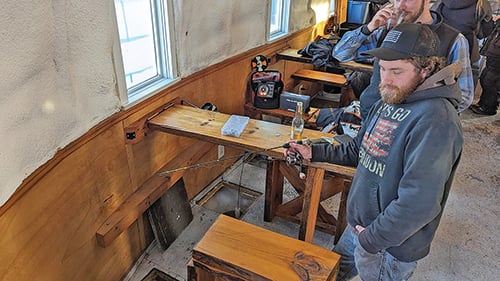
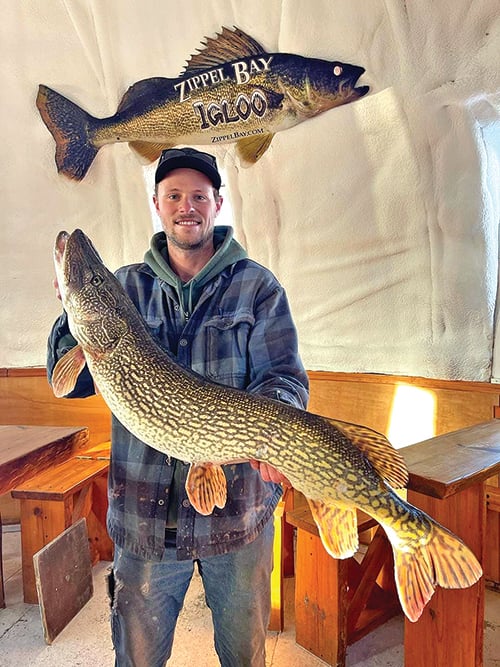
We capped our second day with a visit to the Igloo Bar, a structure shaped to look like its namesake located about two miles off Zippel Bay Resort. Here, anglers can relax with a beverage and snacks and keep fishing, thanks to holes drilled next to every seat in the place.
Why would someone come this far to fish?
“You’ll catch a lot of walleyes,” Peterson said. “And you have a better chance of catching a 30-incher here than anywhere else in the state.”
We did not see a 30-inch walleye, but we did mark several big fish on Peterson’s LiveScope. We might have to schedule a rematch for this winter to see if we can coax one to bite.
LOW ice firming up; fishing is under way
Ice fishing has begun on most areas of Lake of the Woods this winter. Resorts and outfitters have been checking ice conditions, chopping down ice, dragging the trails and other ice maintenance in their fishing areas.
Many resorts and outfitters have placed ice houses and are fishing. Others who have not started fishing will check the ice in a matter of days and make an assessment for the area they are fishing.
To say Lake of the Woods is a big lake is an understatement. It covers 950,400 acres of water in Ontario, Manitoba, and Minnesota, with 307,000 in the U.S. It has 25,000 miles of shoreline. Ice conditions can vary from area to area, so it is important to work with locals.
Lake of the Woods veterans suggest following weight limits on ice roads to avoid cracking ice and drawing water to the surface, which can slow the progression of a good ice road for everyone. Keep speeds to less than 15 mph. When traveling on ice, a wave forms in front of the vehicle under the ice. This wave, at all times of the year, but especially during early ice, can mess up the ice.
Stay on marked trails.
Resorts and outfitters start marking trails early in the year, understanding where there are springs, cracks, and ice heaves. Don’t stay out late – with the lake’s stained waters, the best ice fishing is during the day. Coming off the lake at a reasonable hour can help avoid problems that could arise when traveling across the ice when nobody else is around. It’s also a good idea to keep a cell phone charged in case of getting stuck or a vehicle doesn’t start. Carry a remote battery to charge up your phone while on the ice.
Minnesota has a new law this year that forbids anglers from leaving any garbage on or under the ice. Garbage must be kept in a fish house, vehicle or in a container.
Ice fishing has begun on Lake of the Woods. The fishing reports so far have been good. The resorts are doing a nice job of staying on fish.

Retired couple maintains commitment to Illinois Natural History Survey’s insect collection
What began as volunteer work became something more: a family commitment to preserve one of North America’s oldest and largest
Minnesota Valley National Wildlife Refuge will celebrate 50 years
The 14,000-acre refuge protects wildlife habitat and provides outdoors recreation. It’ll host a public birthday bash on Sept. 26
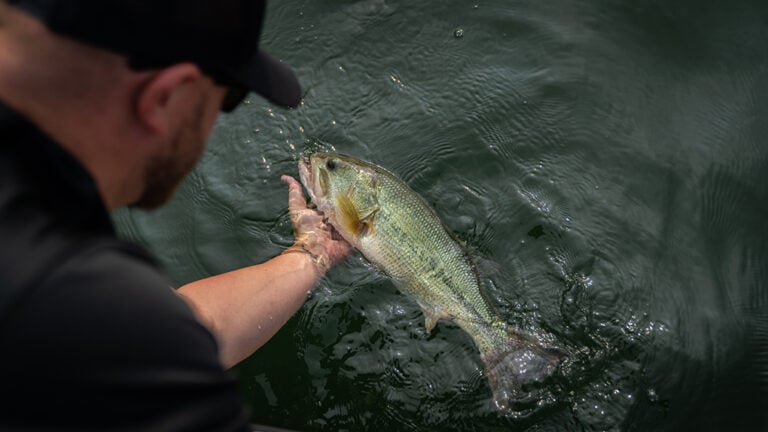
Steve Sarley: Keep or release? It should be up to the ‘catcher’
There are some words and terms that are so basic, they really don’t have to be explained. I am sure
