





Shed hunting is, at least on the surface, among the most benign outdoor activities going. Deer (and elk, and moose) drop last fall’s antlers, we search long and hard to find them and, in the process, hopefully find some of the coolest natural treasures out there.
And even if we’re unsuccessful we get some great exercise and enjoy some good, clean fun, right?
Well, most of the time. While shed hunting is an awesome and eminently enjoyable activity, you can – intentionally or not – get in a whale of trouble if you screw up.
How can that be, you ask?
Read on.
Fail to register deadhead
Shed hunt long enough and invariably you’ll stumble on a “deadhead,” a buck that died, often long before he cast his antlers, which remain attached to his skull and are lying there for you to find. The most natural thing in the world is to pick up the remains and tote them home, especially if the buck is one you know.
Trouble is, in many states you’d need a possession tag to even move that skull. While shed antlers are considered fair game for collectors in virtually all states, antlers connected to skulls are not. I actually learned this by mistake many years ago, when I found a dead buck in the woods behind my home.
Hunting seasons were closed when I found the pretty 10-point, dead from unknown causes. I wanted to keep the rack and, since the area warden is my friend, decided to call him so I could find out if there was a proper way to proceed.
“Thanks for checking,” Tom said when I told him what I’d found. “Just leave him there and I’ll mail you a possession tag. As soon as you receive it you can take the head.” Until that call, I wasn’t sure it was illegal to move a “found” buck after the season, but now I never touch a deadhead until I inform a warden.
And as I’ve talked to shed hunters from all over, I’ve learned that moving deadheads is generally a no-no. Check the regulations in your state, but as a rule, call the area game warden first.
Hunt out of season
Folks from the Midwest, East and South – where it’s legal to scoop up deer antlers as soon as they drop – might be shocked to learn that there are actual shed hunting seasons in many Western states. While this might seem like government overreach at first glance, shed hunting seasons protect wintering animals from harassment by eager shed hunters.
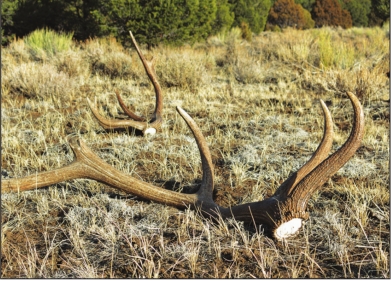
Here’s the deal. Winters in the mountains can be brutal. It’s not unusual for mule deer and elk to herd up in areas that help them survive. Obviously, yarded animals create a shed hunter’s dream, but moving in on these critters (which many western shed nuts do with snowmobiles and other snow vehicles) causes them to flee and exert energy they were trying to conserve.
While the first blasts of winter get all the attention, the truly stressful period of the year for most wintering wildlife is the very end. By February, March, and April, bucks and bulls are running on the last fat reserves of the year. They don’t need any more escape activity (stress) if they’re going to make it to spring and start growing another set of antlers.
Consequently, states like Wyoming and Colorado don’t allow any shed hunting until well into spring. Starting in 2018 the Colorado Parks & Wildlife made shed hunting illegal from Jan. 1 through April 30 (https://cpw.state.co.us/antlershed). Pick up an antler before April 30 – even if you’re out on an innocent hike and stumble across one – and you could face fines of up to $137 per antler and possibly other charges.
Wyoming, which has become a go-to shed hunting state for folks wanting nice mule deer and elk antlers, prohibits shed hunting until May 1. Anyone caught wandering the state’s big game refuges before that date should expect a ticket and a hefty fine.
Trespassing
I used to think ginseng diggers and morel mushroom hunters were more tempted to trespass on private property than most (relax folks, I am a member of both groups so I am not disparaging you if you like to dig shang or pluck ’shrooms, and do so legally), but I have to add shed hunters to the group. I don’t get what’s so tough to understand about getting permission to enter someone’s private property for any reason, but apparently the allure of finding deer antlers makes some folks feel they can wander anywhere in their pursuit.
Absolutely not true.
Of course this should go without saying and in a perfect world I wouldn’t have to write this, but you need permission to venture on private property for anything, including going after that 200-inch nontypical set you can see from the road with your binoculars.
Seeking permission is not only the legal thing to do, it’s the right and ethical thing as well. Just a few years ago, my friends in southern Iowa were the only ones I knew of who had a problem with “shed poaching,” but lately this disturbing practice seems to have sprouted wings and flown everywhere. So, yeah, take the time to contact landowners before you go on a horn hunt.
Don’t set a trap
I first heard of “antler traps” only a handful of years ago and immediately thought “that is nuts.” In case you’re unfamiliar with shed traps, they come in several forms, but they’re typically a latticework of metal rods or bungee cords placed above a baited site. The goal of the shed trapper is that a hungry buck (with antlers ready to pop off) goes for the bait, gets his rack tangled in the trap and, as the deer jerks away from the trap, leaves his antlers behind.
Of course even a sixth grader can recognize that a shed trap is a disaster waiting to happen. If a buck isn’t ready to shed, he’s suddenly caught in a web and all kinds of bad – up to and including the death of the buck – things can happen. Even worse, shed traps can snare other deer (and critters) and cause injury by snagging some errant body part and causing the animal to struggle.
Sound ludicrous? Well of course it does, but apparently shed-trapping is bad enough that state game agencies like the Louisiana Department of Wildlife and Fisheries have had to create laws banning the contraptions.
So, if your shed hunting addiction has grown so severe that you’re considering methods to rip antlers off a buck’s head before he’s ready to give them up … just don’t.
Minnesota’s black bear kill rises to largest total in over two decades
Minnesota’s 2026 bear season now ranks among the tops in state history, with the highest harvest totals in two decades.<br

South Lake balances panfish, pike, and big bass in Michigan’s Washtenaw County
Ten-inch redear sunfish aren’t what most anglers expect to find at the end of their line, but South Lake has
Michigan’s Outdoor Calendar
A look at upcoming outdoor-related events from across Michigan published in the Oct. 23, 2026 edition of Outdoor News.
