




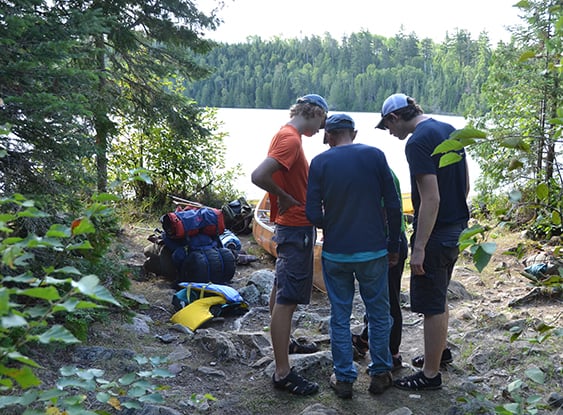
The U.S. Senate vote that repealed the moratorium on sulfide-ore copper mining in the Boundary Waters watershed last week felt inevitable after Donald Trump was elected president in 2024. Leading up to last Thursday’s action, insiders were telling me they had the votes to stop the repeal, then the White House got involved, twisted some arms, and the measure passed 50-49.
 I waited 24 hours to call Lukas Leaf, the executive director of Sportsmen for the Boundary Waters, a friend with whom I have paddled around the Boundary Waters several times. Leaf wasn’t licking his wounds post-vote. He was angry, and the atmosphere among his friends and membership shifted immediately last week, he said – the political equivalent of kicking a hornet’s nest.
“This reaction is different. People are fired up and are seeing now that the mask is off. The vast majority of the GOP does not care about public lands protection, period,” Leaf said last Friday. “They decided, for whatever reason, to ignore the will of the people – hundreds of thousands of calls and messages from stakeholders across the political spectrum imploring these elected officials to vote no – and they still did it. I hope they feel good about it today.”
Land Tawney from American Hunters and Anglers also didn’t mince words. He noted the steady lip-service emphasis we hear about the outdoors being nonpartisan. There’s even a group called “Nature Is Nonpartisan.”
A who’s who of outdoors groups – from the Ikes to Backcountry Hunters and Anglers to SFBW – opposed the measure last week, but it passed the Senate with 50 Republican votes. Just two Republicans, including one who’s retiring at the end of the year, joined 47 Democrats in opposing it. That looks pretty partisan. Tawney also pointed out that a solid percentage of the votes in the House and Senate on this matter came from members of the Congressional Sportsmen’s Caucus.
MORE COVERAGE FROM MINNESOTA OUTDOOR NEWS:
Results from FFS study part of talkers at MN-Fish Summit in Alexandria
Flood project dispute slows progress for conservation projects in Minnesota
Field notes from a mesmerizing spring waterfowl spectacle
Meateater’s Steve Rinella wrote last week: “It’s crushing that party loyalty speaks louder to our reps than free and individual thinking. There are rumors that senators who knew their vote was wrong and admitted it but they had to do what they were told.”
I’ve written before about my love for the BWCA. All four of my kids have enjoyed multiple trips deep into the nation’s most-visited wilderness, and my boys have built great fishing memories off the Fernberg and the Gunflint with their granddad.
I’ve hunted deer, grouse, and moose in this chunk of public land. This scribe would genuinely like to believe that sulfide-ore copper or nickel mining can happen safely and bring hundreds of high-paying jobs to Ely. We’ve run letters to the editor documenting the need for more year-round positions in the area to support hospitals and schools.
But I also know the history of this type of mining, and the track record isn’t pretty. Read up on the Berkeley Pit in Butte, Mont. That copper mine closed in 1982 but since the mid-1990s, its water-filled open pit has had a waterfowl protection plan in place to haze birds from landing there. In the past, hundreds of snow geese have died in the pit thanks to exposure to the acidic metalliferous water.
That Montana Superfund site is an extreme example, and mining technology has improved in 50 years. I’m not suggesting that loons are going to evaporate in a puff of smoke if they land in the BWCA a decade from now, and again (though water flows downhill), the mine would be outside the wilderness.
But these are the purest waters left in the Lower 48, and as Ron Schara said in an episode of his TV show, we just don’t know the extent of the risk.
“Mine supporters promise more jobs and pollution control, but what if they’re wrong? What if the mine accidentally poisons the waters of the wilderness?” Schara asked in the “BWCA At Risk” Minnesota Bound episode that re-aired this past weekend. “Is a mine with jobs worth the risk? We can create jobs in other places. We can’t create another Boundary Waters.”
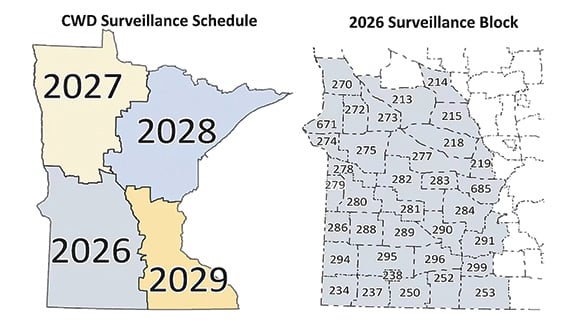
Minnesota DNR reminds firearms deer hunters to prepare for CWD sampling
Sampling is mandatory for southwest Minnesota the opening weekend of firearms deer season Nov. 7-8

Short on walleyes, but long on muskies: Beers Lake in Minnesota’s Otter Tail County
Otter Tail County’s Beers Lake is an excellent walleye fishery – nope. Beers is loaded with good-sized panfish and northern
Minnesota’s Outdoor Calendar
A look at upcoming outdoor-related events from across Minnesota published in the Oct. 23, 2026 edition of Outdoor News.
