




Lansing — The Michigan DNR has outlined its 2027 funding request for lawmakers, including $29.4 million in the governor’s budget from hunting and fishing license fee hikes.
For the third year in a row, DNR officials called on lawmakers to “right-size the costs of hunting and fishing in Michigan” to counter rising costs from inflation and address increasing demands and changing uses.
“Everything costs 30% more than it did the last time we went through license restructure” in 2014, DNR Deputy Director Shannon Lott told lawmakers on the House Appropriations Subcommittee on Agriculture and Rural Development and Natural Resources on March 11.
The presentation highlighted a Fiscal Year 2027 budget request that aims to increase spending from $543.1 million to $606.7 million, with about $29.4 million coming from proposed license fee increases.
The plan is part of a broader $88.1 billion budget proposed by Gov. Gretchen Whitmer that includes about $800 million in new or increased taxes, as well as $400 million from the state’s rainy day fund, to cover a projected $1.8 billion revenue shortfall.

“Basically, what’s in the executive recommendation from the governor’s office is a placeholder, the revenue has to be generated from hunting and fishing license fees,” Randy Claramunt, DNR fisheries chief who testified, told Michigan Outdoor News of the $29.4 million.
“About half of the $29 million would be allocated to fisheries,” he said.
Keith Kintigh, assistant chief of the DNR’s Wildlife Division, pointed to deferred infrastructure needs of over $80 million, a 40% reduction in the division’s operating budget and 20% reduction in full time staff over the last seven years that has led to reduced work on habitat improvements and invasive species control.
He also outlined how hunters and anglers, through license fees and excise taxes on equipment, largely fund the DNR’s work, accounting for most of its budget.
“In the absence of alternative sources of conservation funding, we have no choice but to continue to rely on hunters, anglers, and sports shooters to carry this responsibility, yet in the last 25 years Michigan’s hunting and fishing license fees have only been increased two times,” he said, arguing the state’s licenses are “tremendously undervalued” compared to other states.
Claramunt testified about the mounting costs in the Fisheries Division, where the state’s six fish hatcheries alone have an outstanding maintenance, equipment and capital outlay needs that exceed $150 million.
The financial challenges have curbed the division’s operational capacity by 30%, restricted staff travel, and resulted in a sharp reduction of fish stocking statewide, he said.
“Skeleton field crews are now staffed at a level where one person is responsible for a half a million acres of fresh water,” Claramunt testified. “In any other state, a fisheries staff member would be responsible for 15,000.”
MORE COVERAGE FROM MICHIGAN OUTDOOR NEWS:
Michigan’s ‘Omer Suckerfest’ is time for anglers to unite – and for white suckers to run
Commentary: Claims of ‘more bears than deer’ rings true for some Michigan hunters
What to know about restoring wetlands for fish, fowl
Fish stocking, he said, “declined from over 40 million fish we used to stock to now under 20 (million) and declining.”
Claramunt pointed to legislation currently pending in Lansing to change the dynamic.
The legislation includes Senate bills 276 and 277, which cleared the upper chamber with bipartisan support in October.
The bills, sponsored by Reps. John Cherry, D-Flint, and Jon Bumstead, R-Norton Shores, aim to generate more than $29 million per year for the DNR via fee increases that vary by license type.
Under the legislation, resident base hunting licenses would increase from $10 to $15, resident deer combo licenses would go from $40 to $50, and a resident all-species fishing license would increase from $25 to $30.
Other increases for nonresidents are much larger, with a nonresident hunt/fish combo license jumping from $265 to $355, and deer combo license increasing from $170 to $225.
The legislation would also increase what’s currently a $1 surcharge to $5, and provide discounts on senior, youth, and antlerless deer licenses. The surcharge would go to educate the public about wildlife management, efforts to recruit hunters and anglers, and the Sportsman Against Hunger Fund, which would be renamed Hunters Feeding Michigan Fund.
SBs 276 and 277 are now pending in the House, where lawmakers have introduced legislation backed by 140 angling groups, House Bill 5093, that takes a different approach to funding DNR fisheries.
The proposal, sponsored by Rep. Curt VanderWall, R-Ludington, includes a $2 base fishing license fee increase that covers all species of fish not stocked by the DNR, as well as a $5 hatchery stamp that would be required for stocked fish.
In exchange, HB 5093 authorizes anglers to “run additional rods when trolling from a boat in Great Lakes waters,” Ed Blissick, president of the Great Lakes Salmon Initiative, previously told Michigan Outdoor News.
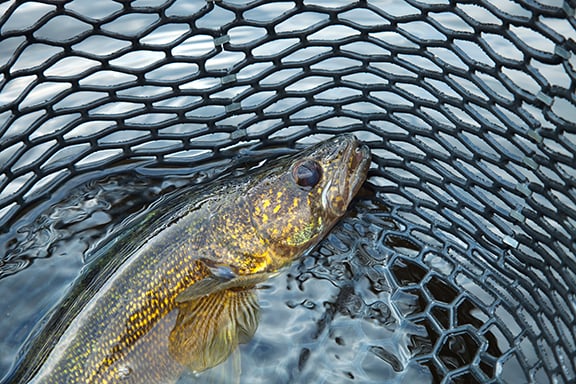
“There would be no rod limits on the Great Lakes,” he said. “The money from that hatchery stamp is going to go back to the stocking program” to produce 1 million more walleye and tens of thousands more muskie for inland waters.
HB 5093 also aims to increase what’s now about 55% of fishing license revenue dedicated to the fisheries division to 100% for the first five years, before a reduction to 80% in perpetuity.
The Republican House majority has vowed to oppose hunting and license fee increases, and have focused oversight on the DNR over a variety of issues, including a plan to euthanize Canada geese, efforts to clear cut state forests for solar development, “legal attacks” on hog farmers, over-regulation of taxidermists, and the Open Field Doctrine, which allows for warrantless searches of private land.
“One thing we’re never going to have is increases in our hunting and fishing fees,” House Speaker Matt Hall, R-Richland, Twp., said at an October news conference following Senate approval of SBs 276 and 277. “We’re never going to have that as long as I’m speaker.”
Among the most outspoken critics of the license fee hikes is Rep. Ken Borton, R-Gaylord, chair of the House Appropriations Subcommittee overseeing the DNR’s budget.
“This is absolutely ridiculous,” Borton said of Whitmer’s $29.4 million line item for the DNR when the governor introduced her budget last month. “What we’re talking about here is an unacceptable new tax on Michiganders for attempting to enjoy the outdoors. If the DNR is truly in such a desperate need for more funding, I would love a public explanation with receipts as to where all the current money is being spent.”
SBs 276 and 277, as well as HB 5093, are currently pending in the House Committee on Natural Resources and Tourism chaired by Rep. David Martin, R-Davison.

WI Daily Update: State stamp contest winners announced
Three Wisconsin artists have earned a place on the 2027 turkey, pheasant and waterfowl stamps. Here are the winners and
Pennsylvania Game Commission’s chief of wildlife recovery glad to return to state
Forestry is very much a part of Scott Bearer’s family tree.
The Pennsylvania Game Commission’s new chief of wildlife

MN Daily Update: DNR prepares to move its headquarters to new location
After more than four decades at the same location, the Minnesota DNR is preparing to move its headquarters to a
