




Minnesota Mixed Bag: Early antlerless season, statewide youth deer hunt set for Oct. 16-19

St. Paul — Hunters may participate in an early antlerless-only deer season from Thursday, Oct. 16, through Sunday, Oct. 19. The season increases opportunities for hunters in deer permit areas where deer populations are above population goals.
Permit areas open during the hunt are 213, 214, 215, 218, 219, 221, 222, 223, 225, 227, 229, 236, 240, 277, 341, 601, 605, 642, 643, 645, 646, 647, 648, 649, and 661.
Before participating, hunters should review important information about bag limits, blaze orange requirements, and other regulations on the Minnesota DNR early antlerless-only season webpage.
That same weekend, the Minnesota DNR offers an opportunity for experienced deer hunters to share their knowledge and traditions with youth ages 10-17 during the statewide youth deer season. The four-day season coincides with statewide teacher workshops, when many Minnesota schools are closed for fall break.
Information about license and safety requirements for youth hunters and their accompanying adults is available on the Minnesota DNR youth deer season webpage. General deer-hunting information is available on the Minnesota DNR deer hunting webpage.
MORE COVERAGE FROM MINNESOTA OUTDOOR NEWS:
Plenty of water means scouting will be key to success for Minnesota waterfowlers on opener
A judge’s first-hand account from the 2025 federal waterfowl stamp contest
Minnesota’s James Hautman wins 2025 Federal Duck Stamp Art Contest for a record seventh time
ZEBE LARVAE CONFIRMED IN PHALEN CHAIN IN RAMSEY COUNTY; ZEBES ELSEWHERE
St. Paul — The Minnesota DNR has confirmed the presence of zebra mussel larvae in Lake Gervais and Spoon Lake, part of the Phalen chain of lakes between Little Canada and Maplewood in Ramsey County.
Water samples from Lake Gervais, Kohlman Lake, Keller Lake, and Spoon Lake were analyzed for zebra mussel larvae, called veligers. While veligers were detected in Lake Gervais and Spoon Lake, the DNR has not found adult zebra mussels in any of the Phalen chain of lakes to date. However, the presence of veligers suggests reproducing zebra mussel populations. For that reason, Lake Gervais and Spoon Lake will be listed as infested for zebra mussels. Kohlman Lake and Keller Lake, which connect to Lake Gervais and Spoon Lake, will also be listed.
Because Round Lake and Lake Phalen are much farther downstream, they will not be listed for zebra mussels at this time.
The DNR will sample Round Lake and Lake Phalen for veligers during peak season next year and as needed beyond that.
The DNR also confirmed the presence of a zebra mussel in Turtle Lake, near Shoreview in Ramsey County. Ramsey County staff contacted the DNR last fall after finding zebra mussel environmental DNA in Turtle Lake. Environmental DNA is DNA released from an organism into the environment and is now detectable at very low concentrations.
During a recent three-hour scuba search in Turtle Lake, Ramsey County and DNR staff observed one adult zebra mussel.
And, the DNR confirmed the presence of zebra mussels in Bass Lake, near Cohasset, in Itasca County.
Itasca County Soil and Water Conservation District invasive species staff contacted the DNR after finding adult zebra mussels attached to settlement samplers on the north and south shores of Bass Lake. Itasca County SWCD staff deployed the settlement samplers as part of their prevention and early detection efforts. DNR invasive species staff confirmed the presence of zebra mussels at multiple other locations in Bass Lake.
More information is available on the aquatic invasive species page of the DNR website.
STARRY STONEWORT CONFIRMED IN BENEDICT LAKE IN HUBBARD COUNTY
St. Paul — The Minnesota DNR has confirmed the presence of the invasive algae starry stonewort in Benedict Lake, near the town of Benedict in Hubbard County.
A Cass County aquatic invasive species technician contacted the DNR after finding starry stonewort near the Benedict Lake public water access. DNR aquatic invasive species specialists confirmed starry stonewort in the public access area and will work with local entities to assess potential management options.
Since it was first found in Minnesota in 2015, starry stonewort has been confirmed in 37 water bodies in the state. Starry stonewort can form dense mats, which can interfere with recreational uses of a lake and compete with native plants.
More information is available on the aquatic invasive species page of the DNR website.
CLARIFICATION: A DIFFERENCE BETWEEN STATES’ PHEASANT SURVEYS
Plymouth, Minn. — Last week’s (Aug. 19, 2025) edition of Outdoor News included a column by Ron Schara regarding pheasant counts during August surveys. Included was a comparison between Iowa and Minnesota, with the former reporting a statewide average of 28 pheasants per route and the latter an index of 75 per route.
It should be noted that routes in Iowa are 30 miles long; in Minnesota they’re 100 miles long, which wasn’t included in the column. Both counts, however, were increases from last year’s surveys.
We thank a reader from Benson for bringing it to our attention.
SUBSCRIBER CONTENT
Read this article now.
Create a free Outdoor News account.
Create a free account below to get instant access to this article, thousands of Outdoor News stories, and our digital editions. Your 1-month trial starts the moment you sign up.
No credit card required
No credit card required
Subscriber? Login Here.
Share on Social
Hand-Picked For You
Way less land for hunting spurs action from Pennsylvania Game Commission
Pennsylvania’s hunting license sales down so far this year
Origin of road-killed armadillo in southwest Ohio a mystery
Sportfishing group sounds alarm on tariffs
South Dakota Fishing Report – September 16, 2026 – video
Bowhunt gets started in Ohio with additional opportunity in CWD surveillance area
Related Articles
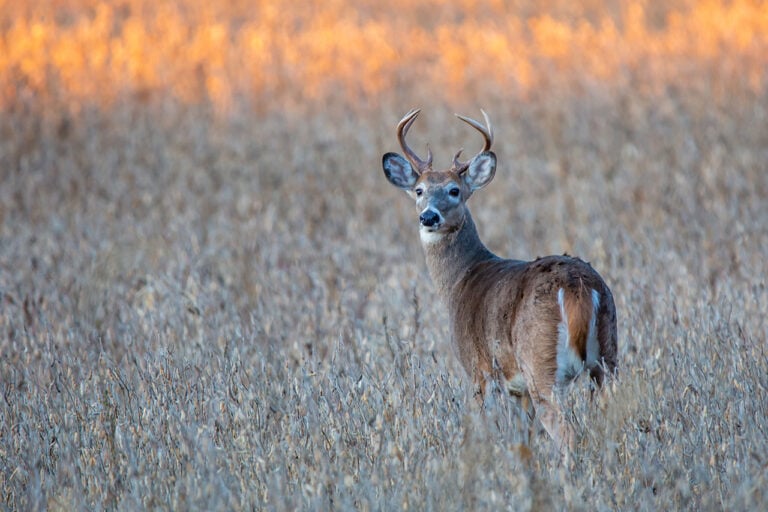
Way less land for hunting spurs action from Pennsylvania Game Commission
The Pennsylvania Game Commission has overhauled its Hunter Access Program this year in an effort to boost declining landowner participation
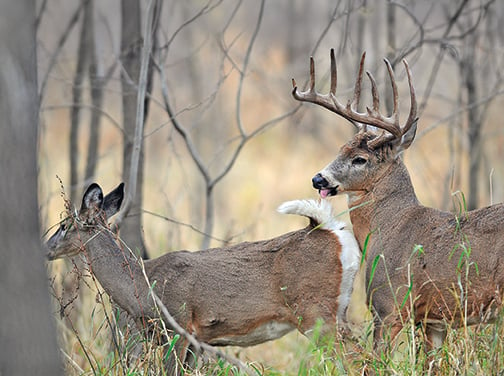
Where do big bucks go when they vanish?
Over the course of our three-months-plus bowhunting season, seeing just one wall-hanger buck can be cause for celebration. Trophy proportioned
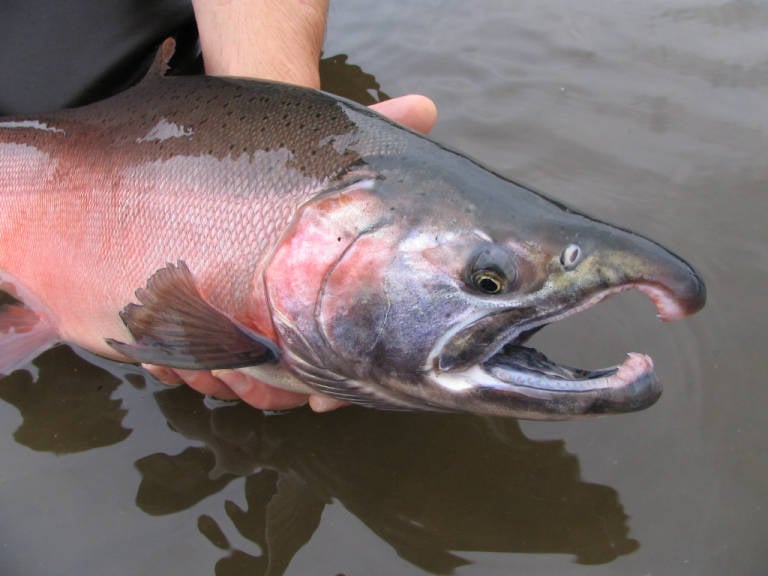
WI Daily Update: Tips for catching cohos on river mouths of Superior
This is a great time of year to chase coho salmon on the river mouths on Lake Superior. Tim Lesmeister
