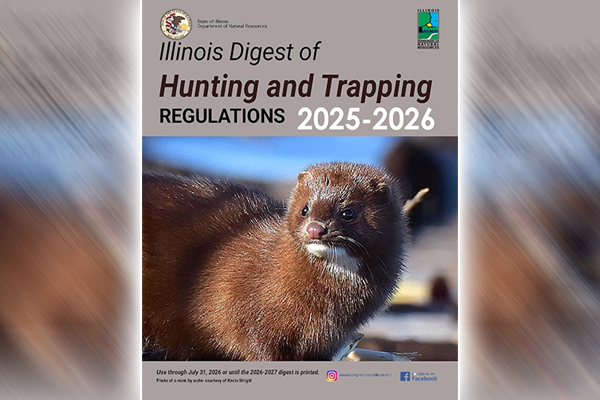
Springfield — A close-up portrait of an American mink captured by photographer Kevin Wright graces the cover of the Illinois Digest of Hunting and Trapping Regulations for 2025-26.
Inside the Digest is reference to mink and every other species of wildlife managed and regulated by the state’s conservation police.
As it does each year, DNR’s Division of Wildlife Resources staff coordinated the preparation of the Digest with many of the changes of note this year in relation to changes in programs or new season regulations announced earlier this year by DNR.
The Digest is available in many formats, allowing hunters to access hunting and trapping information from a phone, tablet, computer or as a printed copy. It also includes a quick reference card with easily identifiable dates for seasons and lotteries, as well as daily and possession limits.
Printed copies can be found at vendors located throughout the state. A digital version of the Digest can be found here.
MORE COVERAGE FROM ILLINOIS OUTDOOR NEWS:
Ralph Loos: Making deer hunting ‘easier’ strategy is missing a vital piece in Illinois
Challenges facing lesser scaup show restoration needs in Pool 19 of the Mississippi River
Endowment seen as source for Illinois state park funding needs
Some of the regulation and season changes noted in this year’s Digest:
• DNR will be adding mandatory deer harvest registration or check stations in Bureau, Ford, and Lee counties. This means that hunters in those counties will no longer be able to report their filled permits using the call-in or online systems during the first and second firearm seasons (Nov. 21-23 and Dec. 4-7). Instead, hunters will be mandated to take their harvested deer to the county’s check station.
• The bag limit for northern pintails will increase from one bird to three birds.
• Gray fox hunting and trapping seasons will be closed.
• The Digest has added a few additions to the Public Hunt Area tables. PHA tables are viewable from pages 54 to 60 and provide a large amount of information for readers, including the size of the PHA, along with a list of what species and seasons are offered at the location.
Kaleigh Gabriel is a Wildlife Outreach Specialist with Lewis and Clark Community College.