




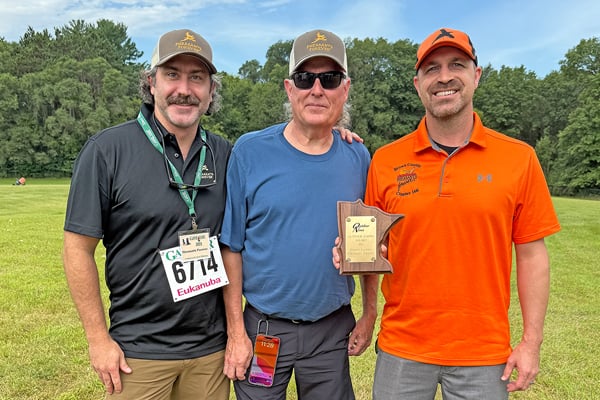
If you’re a Minnesota pheasant hunter, consider yourself lucky to have the Brown County chapter of Pheasants Forever on the beat in south-central Minnesota.
The chapter does a great many things for wildlife conservation and pheasant hunters young and old – whether they live in Brown County or travel there every autumn to hunt.
From its participation in the state’s Adopt-a-WMA program to its landowner habitat workshops or co-sponsoring Minnesota Youth Day at the Nicollet Conservation Club or helping facilitate public-land purchases, the Brown County PF chapter and its many volunteers take pride in the work they’ve done.
“We are very proud of what we’ve accomplished as a chapter over the years,” said Tim Kraskey, 65, a longtime chapter member who’s served in multiple roles, including five years as chapter president, which ended April 1 this year. “But I feel like the best is yet to come.”
Which is inspirational, to say the least.
For its many volunteers’ efforts and commitment to wildlife conservation and improvements to hunting, the Brown County chapter has been chosen the 2025 recipient of the Outdoor Leaders Award, given annually by Outdoor News.
“It feels good to be recognized, because at the end of the day, we have done a lot of work in the county for pheasants and pheasant hunters,” Kraskey said. “There is a lot competition among sportsmen and conservation groups, so it’s truly an honor for our entire chapter to be recognized.”
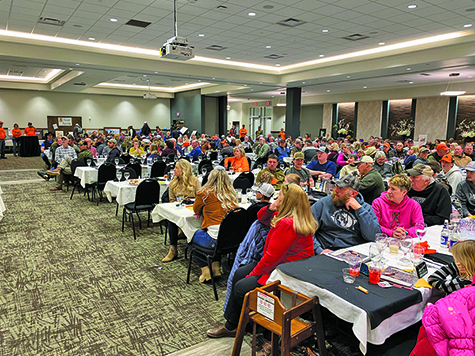
The Brown County PF chapter was started in 1987, becoming Pheasants Forever’s 166th chapter. It has more than 250 members, with most, though not all, living in the county. Roughly 350 people purchase tickets every year for the chapter’s annual March fundraising banquet.
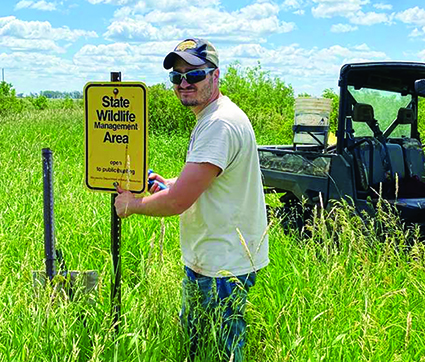
“The money we raise with our annual fundraiser is seed money for land purchases for public hunting and other initiatives, like helping with expenses with our local high school trap-shooting teams,” said current chapter president Steve Eckstein, of New Ulm. “I took over duties this summer for Tim Kraskey. Tim has done a ton of work over the last five years in helping develop the Adopt-a-WMA program, developing new signs for WMAs … and putting on our banquet. He’s been instrumental in taking our chapter to the next level.”
Consider: Established in 2011 by the state Legislature, the Minnesota DNR’s Adopt-a-WMA program is designed to encourage citizens or groups to assist with maintenance of state wildlife management areas. It’s volunteer help that Minnesota DNR wildlife managers say is desperately needed.
The Brown County PF chapter has filled the void, adopting all 23 county WMAs (which includes 33 sub-units). That’s roughly 5,000 acres of state public land. But that land requires constant upkeep and maintenance. Enter chapter volunteers.
MORE COVERAGE FROM MINNESOTA OUTDOOR NEWS:
North Dakota places new restrictions on nonresident waterfowlers at the urging of resident hunters
Minnesota’s natural bear foods more ‘normal’ this summer
Minnesota DNR denies petition to reject dog trialing at Keystone Woods Wildlife Management Area
Over the years, Brown County PF chapter volunteers have built 15 new WMA parking lots; cleaned up miles of barbed wire to make WMAs safer for hunters and hunting dogs; removed countless “noxious” trees and shrubs and helped with other habitat work; and replaced roughly 400 yellow WMA signs, among other work.
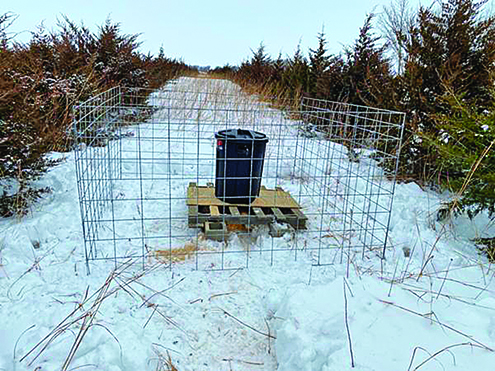
“We regularly pick up garbage and go around to make sure all WMAs are in good condition and ready for hunters every year,” said Eckstein, who added that chapter volunteers helped with last year’s Governor’s Pheasant Opener in Sleepy Eye. “We recognize that the DNR can use our help, and we’re happy to step up.”
Joe Stangel is the assistant regional wildlife manager for the Minnesota DNR in New Ulm. He has worked closely with the Brown County group over the years.
“They’re an exceptional chapter and a huge help to our operation, especially with the Adopt-a-WMA program,” Stangel said. “They’ve helped improve hunter access by helping maintain and enhance parking lots at WMAs, including building new ones … and they’ve reposted countless WMA boundaries with signage, among other important work.”
Added Stangel: “The chapter doesn’t just provide labor. They’re a valued partner that helps increase our capacity as an agency to get work done.”
In addition, Stangel said, the chapter’s fundraising dollars provide seed money for public-land acquisitions.
“PF chapters like Brown County get contacted by willing landowners before we do,” he said. “They’re a huge help on the acquisition front.”
In total, the Brown County chapter has helped purchase about 500 acres, all now state WMAs. The total purchase price: roughly $6 million, which includes money from the state’s Outdoor Heritage Fund.
In his capacity as president, Eckstein said he wants to build on the chapter’s accomplishments. That means continuing sponsoring efforts with local high school trap teams and pollinator programs for kids in the classroom.
It means continuing landowner habitat workshops with PF field biologists and county conservation officials and sponsoring a seed program for landowners to plant food plots important for pheasants and other wildlife.
“As the new chapter president, I hope to maintain our local tradition of running a great spring banquet to raise funds for local land acquisitions, support local youth groups, and create more opportunities for new people to get involved with hunting and conservation,” he said. “One of the reasons I gravitate more toward Pheasants Forever versus other conservation groups is that we have the ability to choose where our funds are used locally. That’s important to us.”
Eckstein also has a personal connection to the chapter that dates back to nearly its inception. He grew up in Sleepy Eye and has been attending chapter banquets since he was a youngster.
“My dad and a group of his buddies were active in the group as board members and volunteers ever since the beginning stages of the chapter, so I’ve been following their lead for a long time,” he said. “I don’t want to let them down.”
Eckstein said for the chapter to continue to succeed in the region, it needs to recruit new members, especially younger ones.
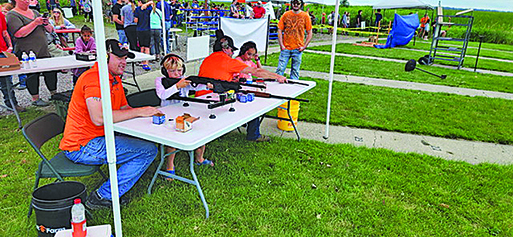
“We need to continue to get new blood to join the chapter … and hopefully we’ll be able do that by working with local high school trap teams and by sponsoring other youth programing,” Eckstein said. “One of my main goals going forward will be to try to recruit more active volunteers. More local projects can be completed, and more youth and adults can be introduced to the outdoors if we have more active help, which is proving to be difficult to find with people’s busy schedules nowadays.”
Indeed, Eckstein is echoing a common problem amongst conservation/hunting groups. Hunting demographics are trending older. So, too, is group membership.
“Bringing in new people of any age is important, because I’m concerned about the same core people doing the vast majority of the work and getting burned out,” he said. “We’d really like to spread it around, and recruiting new members can only help with that.”
As for the upcoming hunting season, Kraskey is bullish, even though some areas outside of Brown County got pounded by rainstorms during the peak of the nesting season. He expects to see Brown County WMAs filled with hunters this fall.
“Brown County is a destination for many hunters because we traditionally have some of the state’s highest pheasant densities, based on roadside counts,” he said. “I think production here has been better than average. I expect a good season.”
To learn more about Brown County Pheasants Forever: browncountypf.org.
Pennsylvania’s hunting license sales down so far this year
Hunting license sales are down nearly 4.5% at the end of August, although Pennsylvania Game Commission officials believe there is
Origin of road-killed armadillo in southwest Ohio a mystery
An armadillo found as roadkill in southwest Ohio has researchers scratching their collective heads wondering from where the non-native mammal
Bowhunt gets started in Ohio with additional opportunity in CWD surveillance area
Hunters in Ohio’s chronic wasting disease (CWD) surveillance area have additional dates this season to pursue white-tailed deer. The Ohio
