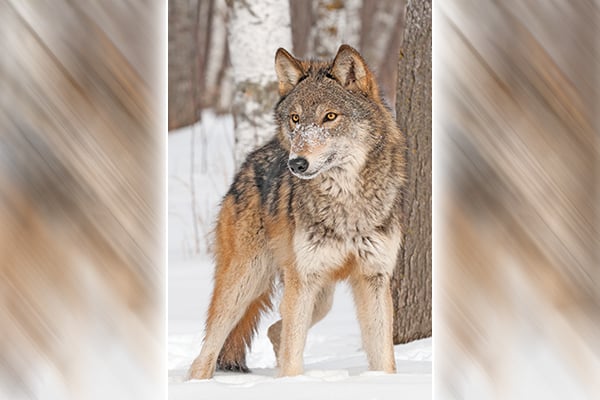
Helena, Mont. — The Montana Fish, Wildlife and Parks Department is proposing changes to wolf trapping and hunting regulations aimed at bringing down the number of wolves across the state, as required by law.
The FW&P proposal will go before the Montana Fish and Wildlife Commission at its Aug. 21 meeting. It is open for public comment through Aug. 4.
Wolf numbers in Montana remain relatively stable despite an increase in harvest in 2024, according to the 2024 Wolf Report, recently released. Montana law requires the commission to pass regulations that will decrease wolf numbers to a sustainable level statewide.
The agency is proposing that hunters and trappers be allowed to harvest 15 wolves on a single hunting and trapping license (30 wolves total), provided that at least five of those wolves are harvested via hunting and at least five of those wolves are harvested via trapping in FW&P regions 1 or 2.
It also proposes a statewide quota of 500 wolves.
On private lands, wolf hunting would be allowed outside of daylight hours and hunters could use artificial light, night vision, infrared, and thermal-imaging scopes. Hunting outside of daylight hours on public lands would be prohibited.
— Montana FW&P
CANADA
Government to Take Steps to Protect Right Whales
Ottawa, Ont. (AP) — The Canadian government says it is taking steps this summer to protect a vanishing species of whale from lethal collisions with ships in its waters.
The whale is the North Atlantic right whale, which numbers only about 370. The whales give birth off the southeastern U.S. in the winter and spring and migrate north to New England and Canada to feed.
Along the way, the whales face dangers including ship strikes and entanglement in commercial fishing gear.
Canada is enforcing mandatory protection measures for the whale this summer, Transport Canada said in a June 27 statement. All vessels of 42.7 feet in length or more must comply with speed restrictions in designated areas of the ocean to avoid whale strikes, the agency said.
Transport Canada said it is also requesting voluntary slowdowns in other parts of the ocean. The restrictions reflect the agency’s commitment “to the protection and conservation of endangered North Atlantic right whales,” the agency said.