




Home » Nature Page & Night Sky » Mixed Bag: DNR seeks input on proposed special fishing regs
Mixed Bag: DNR seeks input on proposed special fishing regs

St. Paul — The Minnesota DNR is asking for input on several special fishing regulation proposals. Each year, the agency reviews all existing fishing regulations, proposes new special regulations that apply to individual waters, and asks the public for input about the proposals. All new special regulations are reviewed on a regular basis to evaluate effectiveness.
The DNR is proposing either new regulations or changes to existing experimental and special fishing regulations for the 2026 fishing season that address the following topics: Sand Lake walleye (Itasca County); Rainy Lake walleye (St. Louis and Koochiching counties); Platte Lake sunfish (Crow Wing County); Sullivan Lake sunfish (Morrison County); Green Prairie Fish Lake sunfish (Morrison County); Long (Higgins) Lake sunfish (Todd County); Moose Lake sunfish (Todd County); Maple Lake sunfish (Todd County); Jewett Lake sunfish (Otter Tail County); North and South Ten Mile Lakes sunfish (Otter Tail County); German Lake sunfish (Otter Tail County); Rush Lake sunfish (Otter Tail County); and Rabideau Lake sunfish (Beltrami County).
The Minnesota DNR is taking input on these proposals via an online survey through Tuesday, Sept. 30. For additional details or to comment directly by email, U.S. mail, or phone about individual proposals, contact the area fisheries office for the proposal you wish to comment on.
Input may also be submitted through Tuesday, Sept. 30, to Shannon Fisher at shannon.fisher@state.mn.us or (651) 259-5206, or via U.S. mail to Fishing Regulations/Shannon Fisher, Box 20, Minn. Department of Natural Resources, 500 Lafayette Road, St. Paul, MN 55155.
The DNR is also hosting a virtual open house and an in-person open house for Rainy Lake, and an in-person open house in the Twin Cities metro area to cover all proposals. For those who wish to attend one of the open houses, information can be found on the Minnesota DNR website or by calling an area fisheries office.
Notification of the proposed changes to fishing regulations has been posted at the accesses at each lake included in the proposal.
MORE COVERAGE FROM MINNESOTA OUTDOOR NEWS:
Southeast Minnesota streams get a flushing; outlook is good
Minnesota DNR asks anglers for input on plan for four walleyes
Exercise your hunting dog’s mind and reap the rewards this fall
ZEBES FOUND IN MOOSE LAKE IN ITASCA COUNTY, PORTAGE, INGUADONA LAKES IN CASS
St. Paul — The Minnesota DNR has confirmed the presence of zebra mussels in Moose Lake, near Deer River in Itasca County, in Portage Lake, near Bena in Cass County, and in Inguadona Lake, near Longville in Cass County.
A resident on the east side of Moose Lake contacted the DNR after finding a single zebra mussel while wading in the lake. Itasca County Soil and Water Conservation District aquatic invasive species staff delivered the specimen to the DNR and assisted in searching Moose Lake. During the search, zebra mussels were found on the southwest side of the lake and on the west shore of the lake.
A Portage Lake resort owner contacted the DNR after finding adult zebra mussels attached to a native mussel caught while fishing near the lake outlet. A DNR invasive species specialist found adult zebra mussels under a dock about three-quarters of a mile from the location of the initial report. A lake service provider contacted the DNR after finding adult zebra mussels on two docks and equipment on the northeast shore of Inguadona Lake. A DNR invasive species specialist found an adult zebra mussel attached to a native mussel at the public access, about 2 miles from the original reported location.
N.D. PHEASANT CROWING COUNTS UP STATEWIDE
Bismarck, N.D. — The number of roosters heard during the North Dakota Game and Fish Department’s 2025 spring pheasant crowing count survey was up 6% statewide from last year.
“We basically have had two really easy winters, especially for North Dakota standards, with not much snow and really nice temperatures,” said RJ Gross, NDG&F upland game management biologist.
The primary regions holding pheasants showed 31.1 crows per stop in the southwest, up from 28.8 in 2024; 21.3 crows per stop in the northwest, down from 21.5; and 18.6 crows per stop in the southeast, up from 16.2.
Pheasant crowing counts are conducted each spring throughout North Dakota. Observers drive specified 20-mile routes, stopping at predetermined intervals and counting the number of roosters heard crowing over a two-minute period.
SUBSCRIBER CONTENT
Read this article now.
Create a free Outdoor News account.
Create a free account below to get instant access to this article, thousands of Outdoor News stories, and our digital editions. Your 1-month trial starts the moment you sign up.
No credit card required
No credit card required
Subscriber? Login Here.
Share on Social
- Tags: Fishing, Hunting, Minnesota, Upland Birds
Hand-Picked For You
Outdoor horoscopes for this week
WWII bunkers on Pennsylvania State Game Land 252 to be destroyed
First deer for 22-year-old archer is a rarity in Minnesota — a 10-pointer still in velvet
Outdoor Insights: Beast of a marathoner runs 26.2 miles (8,390 rods) with a canoe
Minn Kota introduces one seamless fishing system powered with Humminbird Imaging
French tip: muskies in summer, slabs during winter on this southeast Minnesota water
Related Articles
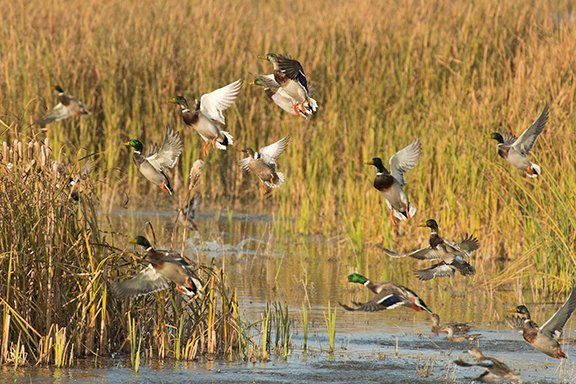
Minnesota DNR not implementing three-duck bag option
The Minnesota DNR on Thursday said it will not be implementing a proposed three-bird “splash-duck” option for Minnesota waterfowlers.
Outdoor horoscopes for this week
Aries (March 21-April 19): Pheasant season has you fired up, but your dog has noticed you skipped every preseason walk in
Best time to target that big buck? Don’t wait for the rut
Rut-crazed bucks may be easier to encounter, but for a specific buck, early season may be better.
There’s no
