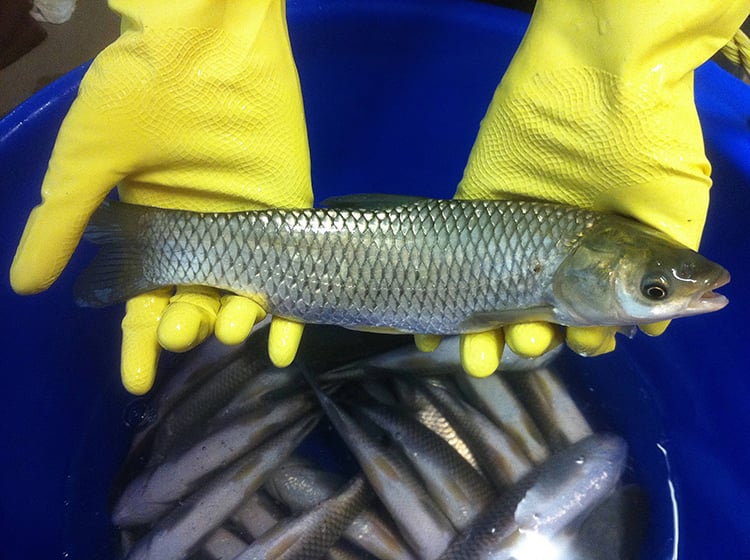
Chicago — A new study published in the Journal of Great Lakes Research shows surprising eating habits from grass carp in Lake Michigan and Lake Erie.
The southern basin of Lake Michigan was part of the research, which was led by the U.S. Geological Survey, Michigan DNR and a host of universities.
The title of the report published March 14 is “Unexpected appetites: Metabarcoding reveals grass carp foraging behaviors in the Great Lakes.”
Grass carp are not yet widespread in Lake Michigan compared to Lake Erie, but they have been detected.
“Despite increasingly intensified management efforts, limited information exists on their foraging ecology,” authors of the study noted. “We used DNA metabarcoding to characterize the gut contents of grass carp captured from 2019 to 2022 to evaluate patterns in diet composition across Lake Erie and Lake Michigan.”
FISHING COVERAGE FROM OUTDOOR NEWS:
Another ‘weights in fish’ scandal reported, this time from Texas bass tourney
Bill Hilts, Jr.: Getting ready for the ‘inland’ trout opener in New York
New findings suggest that, instead of mainly feeding on underwater plants, grass carp in Lake Erie’s western and central basins are eating terrestrial and wetland plants — including maples, willows, cottonwoods, nightshades, and even human associated foods like citrus and crop plants.
“In the eastern basin and Lake Michigan tributaries, they do eat more submerged vegetation like pondweeds — but overall, their diet is far more flexible than expected,” the report states. “This flexibility means grass carp can thrive even where underwater plants are scarce, giving them more opportunities to spread. Their unexpected connection to shoreline vegetation and human food sources reveals hidden pathways in Great Lakes food webs and adds urgency to invasive species management.”