





Hayward, Wis. — What do charter school students, Wisconsin DNR fish biologists, financial donors, muskies, and northern pike have in common?
A new study taking place on Spider Lake in Sawyer County that will take a closer look at the interactions between those two fish species, with much of the work being done by students from two Northwoods charter schools under the guidance and assistance of Hayward DNR fisheries team members.
Teachers at the Northern Waters Environmental School in Hayward and Eagles Academy in Solon Springs have been working together to meet their core objective of enabling students to learn through hands-on projects. Students from the two schools have not only prospered from these projects, it also has allowed them to make positive contributions to their community and hopefully to the world they’ll be inheriting, according to Kate Witkowski, advisor at Northern Waters Environmental School.
MORE COVERAGE FROM WISCONSIN OUTDOOR NEWS:
Deer Management Assistance Program 2.0 offers new benefits — plus fees — for Wisconsin landowners
Five cow elk tags in play for Jackson Co. for Wisconsin’s 2025 hunt
Crane hunt in Wisconsin? Committee gives green light as process takes another step forward
One of the projects involves Hayward DNR fisheries crew members, who are only too happy to have financial and hands-on help in the study of the relationship between northern pike and muskies in Wisconsin waters.
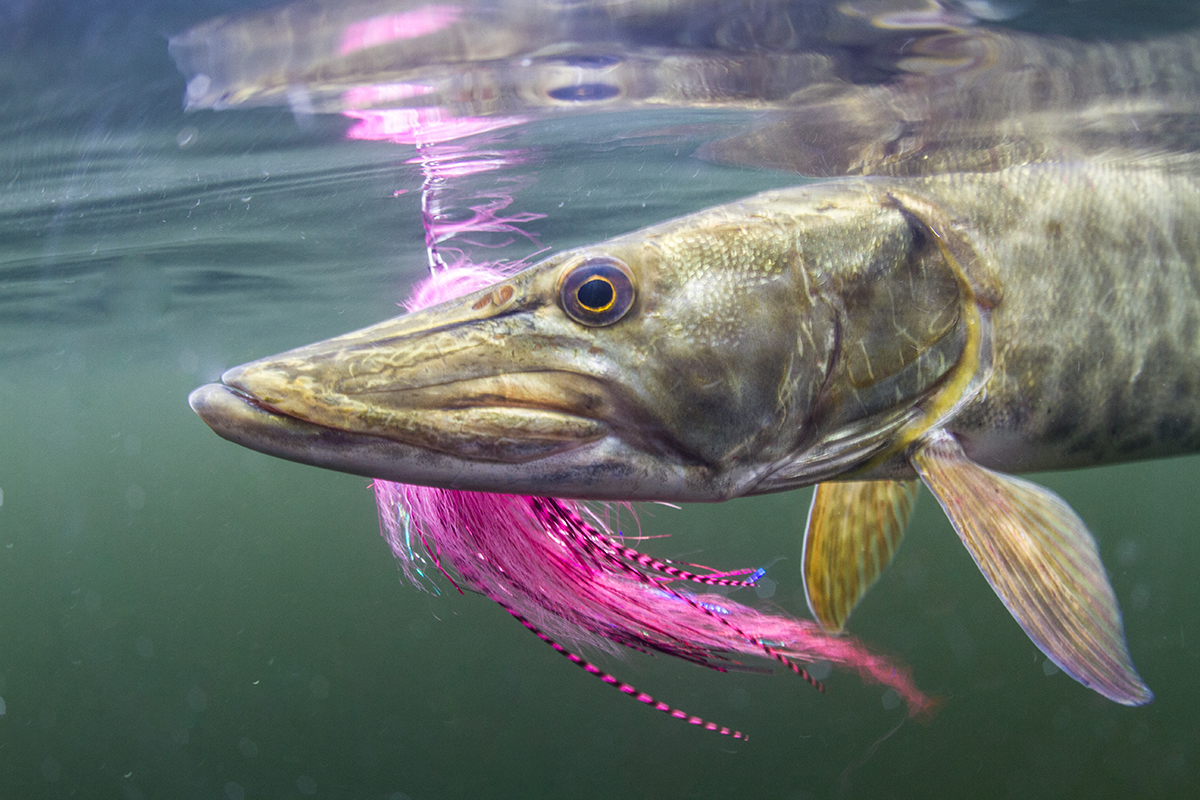
In this case, the classroom is the 1,194-acre Spider Lake in Sawyer County. The lake is home to muskies, largemouth and smallmouth bass, walleyes, and a variety of panfish. A more recent arrival to the lake are northern pike, fish that are considered an invasive species in Spider Lake.
“Managing pike abundance is key to offering a quality fishing experience,” said Max Wolter, Sawyer County DNR fish biologist, who eagerly accepted an offer from the schools that would enable biologists to better understand the relationship between the species by working with non-agency partners. “Partner groups are important when undertaking the large, meaningful projects needed to advance effective fisheries management,” Wolter said.
Witkowski said charter schools are known for offering an alternative to traditional learning environments in “regular” schools.
“I’ve been here for seven years now and love it more each year. We offer an amazing opportunity for students looking for ways to learn beyond the classroom setting. Some come because things in a conventional classroom aren’t working out, but they can flourish here. They realize what they put in is directly related to what they get out of the experience,” Witkowski said
“We’re a project-based learning community where students explore their natural, economic and cultural environment. When we take our classroom outdoors, it brings a level of joy to learning and when combined with relevant and challenging course work, provides a fulfilling and comprehensive education. Communication, creativity and critical thinking are what we promote. With partner support, students develop the confidence and abilities to achieve in life.”
DNR field crews across the state are dealing with significant revenue shortfalls. The Spider Lake northern pike/muskie project is being privately funded by various groups, including the Hayward Lakes Chapter of Muskies, Inc., the Wisconsin Muskie Alliance, the Rich Ford Musky Fund, the Terry Peterson Fishing Foundation, and the Hugh Becker Foundation. Other donors include the Spider Lake community, and the students through their fundraisers.
The study was designed by Dr. Colin Dassow, a DNR researcher, to help better understand the fragile relationship between muskies and the more prolific northern pike that spawn in colder water than muskies. That means the pike enter the shallows ahead of muskies. If the two species share spawning habitat, it’s believed pike presence can disrupt the success of the muskie spawn in that area of a particular lake.
“We hope to learn more about the interaction of the two species, including their preferred spawning sites and their primary food sources. This is the kind of study where the results can be used across the state,” Wolter said.
About 25 muskies and 25 pike will be implanted with acoustic tags that will be tracked by receivers placed on the lake bed around Spider Lake.
“These tags will send out a ‘ping’ that receivers will detect, allowing us to track the exact locations of each fish for three to four years,” Wolter said.
The fish carrying internal acoustic “tags” will also wear a visible spaghetti-like Floy tag in their back so anglers and researchers know it’s one of the study’s fish. Anglers are encouraged to release these fish, but if they keep them are asked to notify the biologists so they can recover the acoustic tag.
Thus far, the charter school students assisted with the fyke netting process to determine information on what these fish were eating, including counting panfish captured in the process and helping determine young-of-the-year recruitment. There’s been speculation on the interactions of pike and muskies, but this study will help prove or discount these theories.
The importance of this project to charter school students is by emphasizing teamwork, communication, and the importance of traditional math and reading skills in a non-traditional setting.
“This project allows us to gather first-hand experience that’s impossible to gain from a book or a video. Being there in-person, seeing the process and the sounds and smells of nature were incredible,” said Brad Glassmaker, an advisor from Eagles Academy.
Christina Hill graduated with a degree in wildlife biology from UW-Stevens Point and now works as an advisor for the Northern Waters Environmental School. She’s also leading the Spider Lake project for the school.
“All our projects at Northern Waters have a writing component, being able to figure things out in the field and seeing how things work in the real world is our goal. We’re thankful the community makes opportunities like these; it helps the students make the connection back into the community while opening their eyes as to what’s available to them. It also helps them feel they’re part of the community they live in,” said Hill, who also praised the work of Jeff Nania, author of the popular Northern Lakes Mystery series of mystery books, and his wife, Victoria Rydberg-Nania.
“Jeff is an organizer and connector who gets people together and makes the needed connections,” Hill said.
Nania, of Portage and Hayward, has high praise for the school and what the faculty and students are accomplishing.
“We can do good things for these kids. These kinds of projects are the ones we want to happen. I can honestly say this is one of the best things I’ve ever been involved with,” Nania said.
Victoria Rydberg-Nania serves as the statewide environmental education consultant for the Wisconsin Department of Public Instruction and worked with the educational non-profit FIELD Edventures to coordinate engagement with the schools.
Minnesota’s 2026 elk harvest reaches nearly half of allocated tags during early season
As the first half of the elk season winds down in northwestern Minnesota, nearly half the tags have been filled

Upper Herring Lake offers western Michigan bass anglers a legitimate fall option
Bass can be widely distributed through the vegetation, but cooling water often triggers more active feeding.
Michigan’s Outdoor Calendar
A look at upcoming outdoor-related events from across Michigan published in the Sept. 25, 2026 edition of Outdoor News.
