




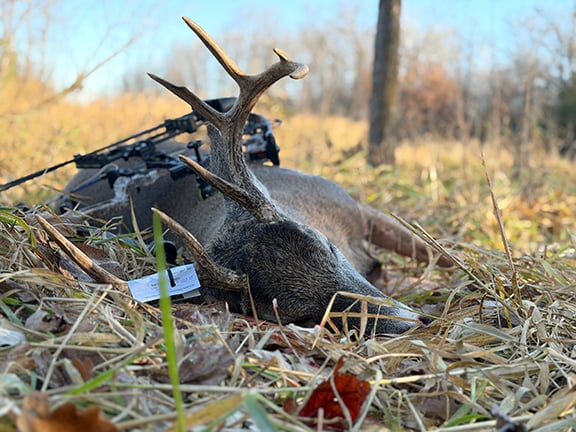
I got a text from a friend who has been putting many hours in scouting for whitetails this year.
He was seeing good sign on a big piece of public land – scrapes, rubs, and great trail systems indicating many deer are using the property. At the end of the day, he found himself with plenty of information but no real plan on exactly how to hunt the sign he was finding.
My buddy is in his early 20s and what he’s going through gave me flashbacks to what I went through at that age. Neither of us grew up in bowhunting families, but we grew to love bowhunting soon after college. What did we turn to for help? YouTube and podcasts.
Two things can be true about learning to hunt this way: These platforms can shorten the learning curve but they can also create an information overload. Sometimes, it’s best to block out the noise, get in the woods and really learn the properties you hunt by focusing on a few concepts. We sometimes make hunting whitetails more complicated than it needs to be.
Here are three general truths to come back to if you find yourself overwhelmed at any point in your scouting or hunting this upcoming season.
Deer need only a few things
Deer think about three primary things in life – security, food, and for a few weeks, breeding.
Throw water into this equation, too, but on most landscapes deer get a good portion of their water needs from the food they eat. A permanent water source can be a great area to target where water is scarce, but for the sake of simplicity here I’ll focus on food.
Where do deer feel secure in daylight (bedding areas) and what are they eating? These questions don’t always have simple answers, but those are the two initial questions to ask on any terrain during much of the season.
With bedding, the more you understand, the better. I’m a huge believer in hunting bedding areas when the wind is right and there is great access into a stand location.
But even if you don’t want to hunt security areas, scouting them will tell you how deer move through them, enter and exit them and lay down in them. Are they using their eyes, ears, nose or a combination of these senses as their primary defense against predators?
RELATED VIDEO FROM OUTDOOR NEWS:
Thick cover often draws deer as bedding, but I’ve seen points in hill country littered with beds even where the points are void of thick cover. Stand on one of those points and it’s easy to visualize why deer bed there. They’re almost impossible to get to in daylight because of how far they can see, especially later in the season once the leaves drop.
Understanding how deer bed and feed on the properties you hunt will help answer important questions when developing a plan. Is this a morning or an evening spot? How do I access a setup without blowing deer out? Will it work better under specific conditions such as a light rain or high winds that make for a quieter approach?
There are other pieces of the puzzle to put together, but a good understanding of how deer bed and feed is the basis for more consistent encounters.
MORE WHITETAIL COVERAGE FROM OUTDOOR NEWS:
Minnesota’s deer harvest opportunities to expand for 2026; regulation changes hunters need to know
Tom Venesky: Problems with Pennsylvania doe license sales a thing of the past
Gear review: First impressions of the Carbon Synergy climbing sticks from Latitude Outdoors
Deer move every day; get in the woods when you can
One theme in bowhunting that I generally disagree with is this idea that it’s a waste of time to hunt unless a certain set of conditions align.
Your cell cameras aren’t showing deer in daylight? Too windy? Too hot? Moon phase isn’t right? “Might as well stay home,” is the common refrain.
I understand being cautious if you only have one small property to hunt. Too much pressure could have a negative impact in that situation.
But as someone who hunts public and private ground every chance I get regardless of conditions, I encourage people to get into the woods for two reasons.
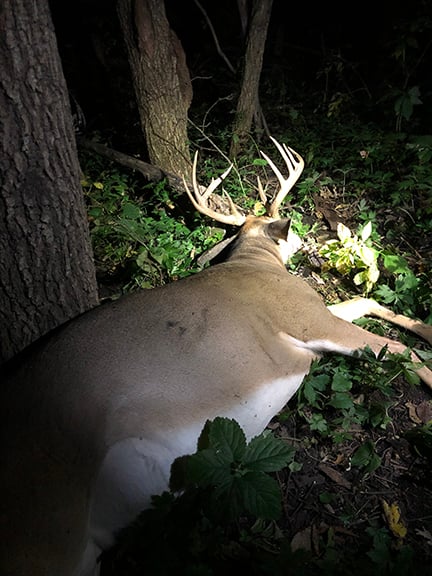
First, you can shoot deer at all times of the season regardless of weather, moon phase, etc. Ben Westfall recently wrote in a story for the National Deer Association that the average whitetail eats about 2,000 pounds of food a year. That big buck we’re all after eats even more.
Deer need to be on their feet quite a bit to fill their nutritional needs. The key is finding ways to hunt areas where deer feel safe moving in daylight, especially outside of the rut when those daylight movements are not near as long. Easier said than done, but not impossible.
Second, nothing is a greater teacher in bowhunting than being in the woods. For example, what deer eat and often how they bed changes throughout a season.
Native forbs are a huge part of a whitetail’s diet in the summer and possibly into early season, as is woody browse in the late season. Early and into mid-season can feature a whole smorgasbord of items on the menu.
You learn so much about deer by being in the woods with them at different times of the season.
Take what the conditions give you and make a hunt plan accordingly. The first mature buck I ever shot with a bow was in 75 degrees in mid-October (that darn October lull).
A big opening weekend buck in 2020 came in 85 degrees and 40 mph wind gusts. Last year’s Minnesota buck was shot on Nov. 5 during a full moon, and my Nov. 2 buck out of state was shot in 40 mph winds almost two hours before dark.
Wait for perfect conditions to align if you want. That makes sense for certain stand locations that require specific wind or weather conditions to hunt effectively. But don’t let someone convince you it’s a worthless endeavor being in the woods just because it’s not a late-October cold front.
Play the long game
When I say get into the woods, I don’t mean that time should always be spent actively hunting. Sometimes it’s best to get down from the tree in order to scout and prepare setups for the time of year when deer are traveling longer distances.
Dr. Bronson Strickland is recently retired after leading years of deer research at the Mississippi State University Deer Lab. I interviewed Strickland in 2024 about a buck movement study where he detailed what gets bucks on their feet in daylight.
“The most consistency, and this is not going to be a big shocker at all, but it’s just the rut,” Strickland said.
Consistently filling tags as a bowhunter is often as simple as being ready for that window of time when breeding is on a buck’s mind. I recently spent a day in July preparing a tree near an annual scrape area before walking up the ridgeline to prepare a tree on the back side of a bedding point. I want to be prepared for that short window in late October and early November ahead of Minnesota’s gun opener.
I’ll be on an out-of-state scouting trip this August where the goal is to make sure I have multiple trees ready to climb into for any wind direction come November.
Great rut locations are usually easy to identify all year. Where are the pinch points or areas where multiple trails converge? I want them to be inside or just on the edge of security cover if the goal is to shoot an older deer.
If you find yourself frustrated this early season, leave the tree and shift your focus toward making sure you’re “rut ready.”
Minnesota’s archery deer season opens on Sept. 19.

Ohio Cuffs & Collars: Stolen black walnut tree from Wallace O’Dowd Wildlife Area
Ohio cuffs and collars are field reports from the Division of Wildlife. These reports are from the Sept. 25, 2026
H2Ohio wetland to benefit St. Marys
As part of Ohio Gov. Mike DeWine’s H2Ohio Initiative, the Ohio DNR (ODNR) and the city of St. Marys held
USFWS announces new duck season framework process
The Department of the Interior recently announced that the U.S. Fish and Wildlife Service (USFWS) is finalizing a streamlined process
