




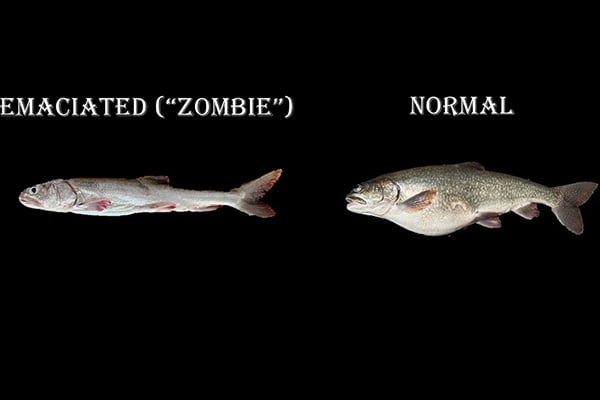
Lansing — Dangerously thin Siscowet lake trout populations have motivated the Michigan DNR and fish pathologists from Michigan State University to sink to the deepest point of Lake Superior to better investigate what is hampering the species.
Siscowets, a deep-water variant of the common lake trout, are uniquely adapted to the extreme depths of Lake Superior. They are typically characterized by a deep body, small head and an incredibly high body fat content. In fact, high lipid levels had earned the, nicknames like “fat trout” or “paperbellies.”
But DNR fisheries biologists are increasingly referring to them as “zombies” because of their undernourished bodies.
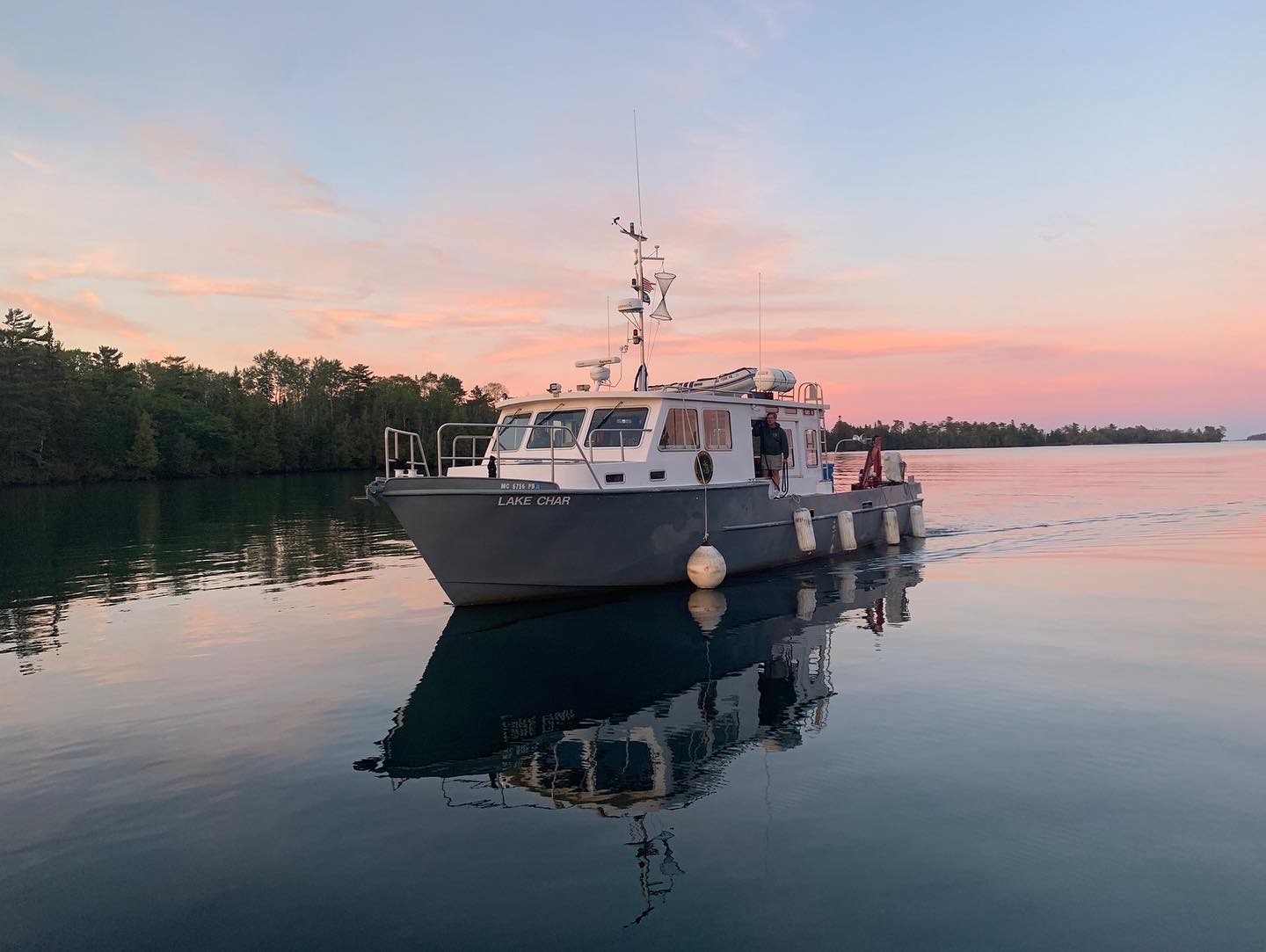
Thus, the DNR announced June 8 that a team will join MSU on an expedition aboard the RV Lake Char to “Superior Maximus” – a trench more than 13,00 feet deep located off the coast of the UP, north of Munising.
During the research journey, planned for sometime this month, DNR announced, the research crew hopes rule out a known fish pathogen as the cause the highly emaciated appearance of the Siscowet lake trout. While they are in the deep, they also plan to collect and test more of the fish.
As DNR explained, using “zombie” to describe the fish doesn’t mean the species has a contagious disease being spread by attacking and biting other fish.
“Rather, their condition is believed to be a natural ecological phenomenon due to a lack of food in the deep waters in which they live,” DNR noted. “These extreme waters are prone to ecosystem shifts such as low food availability. Misinformation about Lake Superior’s fish is concerning to officials. During the Upper Lakes meeting of the Great Lakes Fishery Commission in March, DNR fisheries research biologist Shawn Sitar presented the findings – the term “zombie” fish quickly became fodder.
“Some social media content has drifted from the facts,” Sitar said. “I’ve seen posts that said things like 50% of fish in Lake Superior are ‘zombies,’ which is absolutely not the case.”
MORE COVERAGE FROM MICHIGAN OUTDOOR NEWS:
Michigan bills again propose a separate Natural Resources Commission for Lower and Upper Peninsula
Fly-fishing from a drifting boat for bass is effective; here’s how to do it
Mike Schoonveld: BoatUS membership comes in handy when needed
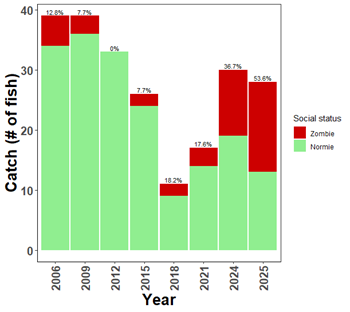
Meanwhile, the problem has been reported only in the deepest parts of Lake Superior. Siscowets, a top predator at the bottom of the lake, typically live at depths ranging from 250 feet to over 1,300 feet, reaching maximum abundance in the 300- to 600-foot range. DNR has discovered the overly-thin Siscowets in offshore Michigan waters at the deepest parts of the lake. Data shared by DNR shows the overall incidence of “zombie” Siscowet in deep water has risen from approximately 3% in 2015 to about 20% in 2024 and 2025.
At Superior Maximus, 37% (11 fish) of Siscowet captured in the 2024 survey were “zombies”; in 2025, 54% (15 fish) of those captured fell into this category.

Pennsylvania’s hunting license sales down so far this year
Hunting license sales are down nearly 4.5% at the end of August, although Pennsylvania Game Commission officials believe there is
Origin of road-killed armadillo in southwest Ohio a mystery
An armadillo found as roadkill in southwest Ohio has researchers scratching their collective heads wondering from where the non-native mammal

Bowhunt gets started in Ohio with additional opportunity in CWD surveillance area
Hunters in Ohio’s chronic wasting disease (CWD) surveillance area have additional dates this season to pursue white-tailed deer. The Ohio
