




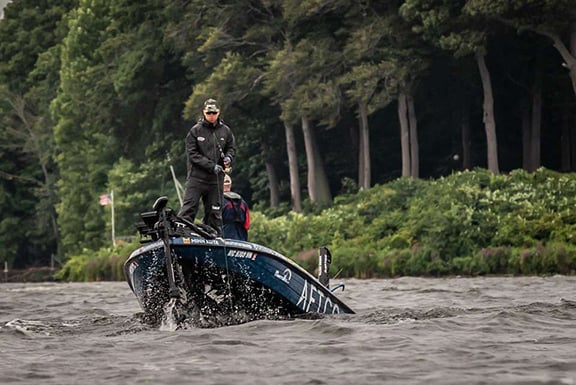
Have you ever noticed that the same anglers seem to be catching big bass all the time?
And you’re not?
Sure, some anglers are lucky. But those who are catching big ’uns consistently put themselves into position to be lucky. That could be the difference between you and them.
Here are six reasons provided by two experts as to why you’re not catching that next picture-worthy lunker.
Go where they are
You’re catching too many small fish. You’re getting a lot of bites in one area and think you’ll eventually catch a big one. That’s possible, but Michigan bass pro Garrett Paquette, notes that big fish prefer to dominate areas where they are living.
“Big fish tend to live in isolated areas,” he said. “Smallies love rocky flats. That’s a good place to catch numbers. Focus on one boulder that sits alone. Chances are you will find Mr. Big.”
MORE BASS COVERAGE FROM OUTDOOR NEWS:
Inside the Bassmaster Classic: Five days at the ‘Super Bowl’ of bass fishing
Kentucky project aimed at bigger bass makes key finding
Suspending jerkbaits are deadly in early spring, and for more than just bass
Bad weather can be your friend
Don’t shy away from bad weather elements. That’s especially true with largemouths. Those windy, cold and nasty days trigger feeding action among bigger fish.
“If the wind is howling and it’s difficult to stand up in the boat, don’t fish the leeward side, unless of course, you can’t control your boat,” said Paquette. “Big fish use adverse conditions to their advantage. Windier areas trigger bigger bass to bite.”
Slow down
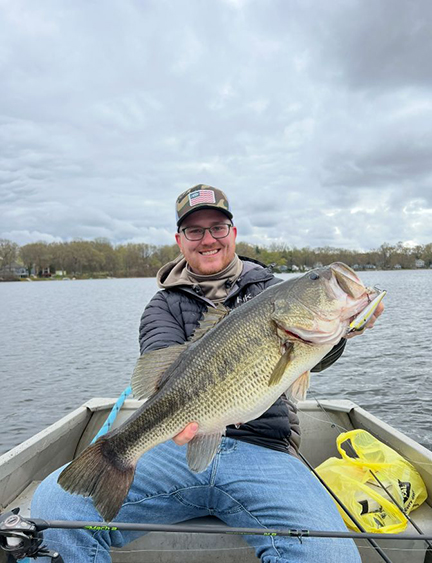
Don’t fish too fast. Don’t fly down a bank, cranking baits as fast as you can turn the handle.
“If you’re not catching anything, there is a good chance your bait is flying right by their faces,” said Bill Mathews of Dowagiac, Mich. “Slow down. Drag a bait steadily across the bottom. That’s often the key to getting big bites on tough days. Feel every single rock, brush pile branch and weed clump.”
If running from spot to spot isn’t working, pick an area you know the fish use and stay with it, Mathews said.
“The fish may be in a finicky mood, so focus on one area, pick it apart and cycle through a multitude of baits/colors and fish different depths,” he said. “That will help get you back on track. Then, start applying to other areas as well.”
Big fish like big baits
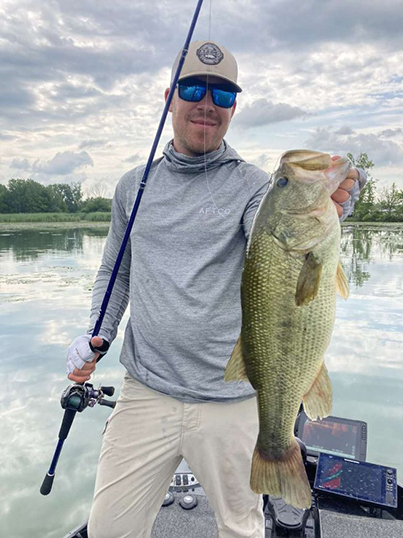
Try a bigger bait. Big fish are opportunists, so when a larger bait wanders by, they’d rather eat that than expend energy chasing a bunch of smaller baitfish around.
“If I’m throwing a 3½-inch jerkbait and not catching the quality of fish I think are in the area, I’ll go to a bigger one,” said Paquette. “It may not be as comfortable to throw and I may not catch the numbers, but I’ve seen days when it made a difference.”
That’s something he’s learned from seeing fish on his forward-facing sonar. If larger fish are ignoring his 3-inch minnow on a jighead, he’ll go to a 4- or 5-inch minnow bait.
“I’ve watched bigger fish get curious about bigger baits and commit to eat them,” he said. “Obviously, there may be times when the smaller bait works, but when it’s not, upsize.”
The right tackle
Maybe you’re not using the right tackle. Big fish don’t hit as frequently as smaller bass, so don’t blow those opportunities.
“We’re fishing for bigger smallmouths with spinning rods and lighter line,” said Paquette. “You have to pay attention to hooks, line and have the appropriate tackle.”
He said different brands of hooks may appear to be the same, but when fishing with light tackle, use strong, high quality hooks that penetrate soft plastics easily. You want them strong enough to hold a big bass without flexing, which allows fish to pull off.
“It’s equally important to match the rod to your light line set-up,” he said. “You need a rod that absorbs the shock of a powerful run, but doesn’t put pressure on the line or hooks.”
Conversely, he adds, if you’re fishing soft-bodied frogs over heavy cover, you want a rod that can move the fish out. That’s when he goes to a 7-4 heavy action rod that gives him more leverage than a 7-1 medium heavy rod.
Fish with confidence
Finally, be confident in what you’re doing.
“I’m a believer in the power of a positive mindset,” said Mathews. “If you’re not getting the quality bite, tie on the bait that gives you the most confidence. Something you’ve had success with. Anglers are better tuned in with baits they are comfortable with. Bass are more likely to respond to that.”
Wisconsin youths take aim at dove hunting
Lee DeBruin and his son Blake, 13, drove more than 200 miles in September to be students in the only

Pennsylvania Senate panel passes two of Sen. Dan Laughlin’s bills
The Pennsylvania Senate Game and Fisheries Committee advanced two bills at its Sept. 29 hearing – one that requires state
Tyler Frantz: October is a roll of the dice for outdoor fun
Is it possible for too much of a good thing to be a problem? It seems that way, at least
