




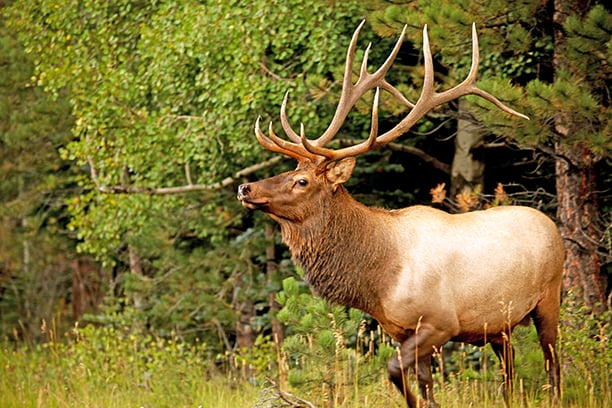
Last year the Pennsylvania Game Commission took some positive steps toward improving the elk license drawing.
This year, a pair of bills proposed in the state House could impede the progress.
A major concern among hunters has been the lack of transparency involved with the elk license drawing. By law, the Game Commission is supposed to conduct the drawing live at the Keystone Elk Country Alliance in Benezette.
 For a number of reasons – mainly the logistics of doing that with an enormous amount of applications – the agency has been conducting the drawing behind closed doors at its Elmerton Avenue headquarters, only to reveal the winners later at the elk center.
Now, this doesn’t necessarily mean that the commission has been intentionally “rigging” the drawing, but the secrecy of the process has surely led many hunters to speculate that’s exactly what’s happening.
And who can blame them?
Appearance alone leads to mistrust – in this case the Game Commission not following the law and opting to hold the drawing out of public view. Again, while I don’t think there is anything shady going on, I can’t say for certain. No one can as long as the drawing is being held in secret.
The optics aren’t good.
But the fix is easy.
If logistics make it impractical to hold the drawing live at the elk center, go ahead and keep it at Elmerton Avenue in Harrisburg, but open it up to the public. Since it’s done by computer now, watching the drawing would probably be a pretty boring affair. But in the name of transparency, give the public the opportunity to watch it happen.
One reason I’ve heard for not holding the drawing live at the elk center is a lack of internet access in the area. But with today’s technology, internet access shouldn’t be an issue. I mean, Starlink is capable of providing internet access in Antarctica and the Himalayas, so I’m pretty confident it can connect in Benezette.
However, a bill recently introduced by state Rep. Anita Kulik, who is the majority chair of the Game and Fisheries Committee, ignores the lack of transparency for the sake of maintaining secrecy.
Kulik’s bill eliminates the current requirement to hold the drawing live at the elk center. The drawing can be held anywhere, and behind closed doors, according to the bill, with the winners being revealed later at the elk center.
So, instead of making it right and requiring a live drawing at the elk center where the public can watch, Kulik’s answer is to make something that’s illegal, legal (interestingly, Kulik’s bill was scheduled for a vote at the March 25 Game and Fisheries Committee meeting, but was removed from the agenda).
Never mind restoring trust and transparency to the process, let’s just keep it in the dark.
Unreal.
But Kulik isn’t the only politician trying to tinker with the elk license process.
State Rep. Eric Weaknecht, D-Berks County, has also introduced a bill to allow for the transfer of an elk license to another eligible hunter.
In his co-sponsor memo, Weaknecht uses the example of a someone who was successfully drawn for an elk license wanting to transfer it to a terminally ill youth hunter, but wasn’t able to do so.
While the example is a good one, it doesn’t mask the potential for wrongdoing that could occur.
If elk licenses could be transferred, it opens the door for people to cash in by not necessarily transferring their license, but selling it.
Even though Weaknecht’s bill clearly prohibits this, we all know there are those who will give in to the temptation to make a quick buck and ignore the law.
Also, the license transfer idea makes it easier for hunters to stack the deck in their favor by having their friends and family – those with no interest in hunting elk – apply for a license for the sole purpose of transferring it to their buddy.
There’s just too many loopholes and openings for corruption for the license transfer idea to work as it should.
At a time when hunters don’t trust the current process and want less secrecy and more transparency, the Legislature is pondering two bills that enable the “behind closed doors” approach and also increase the potential for fraud and abuse.
In 2025 the Game Commission took a number of positive steps to improve the process by requiring the purchase of a hunting license before applying for an elk tag, limiting non-residents to 10% of issued elk tags and a one-and-done mandate for successful bull tag applicants.
It’s a blueprint that legislators should build on, not dismantle.
We need legislation that brings trust to the elk license drawing, not doubt.
Minnesota’s black bear kill rises to largest total in over two decades
Minnesota’s 2026 bear season now ranks among the tops in state history, with the highest harvest totals in two decades.<br

South Lake balances panfish, pike, and big bass in Michigan’s Washtenaw County
Ten-inch redear sunfish aren’t what most anglers expect to find at the end of their line, but South Lake has
Michigan’s Outdoor Calendar
A look at upcoming outdoor-related events from across Michigan published in the Oct. 23, 2026 edition of Outdoor News.

4 thoughts on “Tom Venesky: Pennsylvania’s elk license bill enables secrecy, not transparency”
The PGC as a whole has not been trusted by the sportsman for decades.
I have no problem with transferring the license to others. If I would draw one I would love to transfer to my child or grandchild. As far as closed door drawings I’m in complete agreement with you that it should be made public no matter where they do it. Thank you.
My opinion is the system isn’t fair. I have 27 bonus points, meaning that I have been applying for 27 years, and someone can put in 1 time and have almost the same chance to draw a tag then I do. Any other state that you put in for a draw the more points you have the better your odds are at drawing.
It’s all rigged. All these preference points we have all accumulated mean nothing. We should collectively sue the PA Game Comission.