




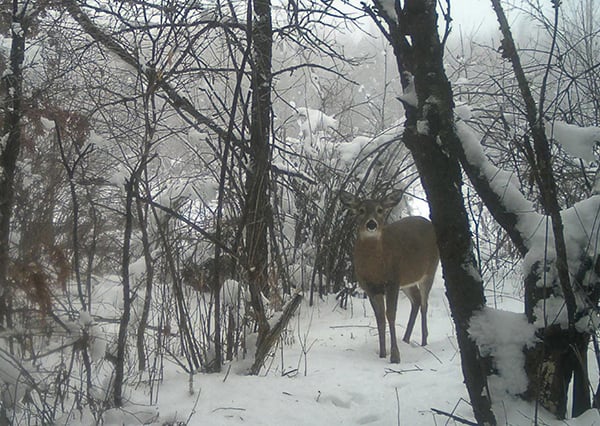
Here in Minnesota, the last minutes of the 2025 deer season faded away on New Year’s Eve, and now most of us have moved on to other outdoor pursuits.
While deer hunting might be over, plenty of us still have some gear left in the woods. Treestands, blinds, and trail cameras that haven’t been pulled yet should warrant some attention before winter drags on too long, but you might want to hold off on pulling your cameras if they still have some juice left in them.
The recon they provide now can help inform some of your decisions about hunting next season, but they can also provide some more immediate and useful insight – the first of which is pretty obvious, but important to a lot of folks.
Survivors list
In today’s whitetail world, laser-focusing on a couple of target bucks for a whole season is pretty common.
Keeping track of specific deer in the early season is challenging enough, but it becomes a lot more difficult during and after the firearms season. Some bucks hole up and really restrict their movement until deep into the late archery season, so they may not return to your ground until real winter sets in and the hunting pressure disappears.
MORE WHITETAIL COVERAGE FROM OUTDOOR NEWS:
Latitude’s Method III or Lonestar saddle? My pick after a full season of hunting in them
Want a more efficient whitetail rut in 2026? Start brainstorming now
Ryan Rothstein: Alone for one final hunt in Nebraska, and thoughts of gratitude
Seeing who survived is simply a matter of keeping your cameras out there and active, but this also lets you see who else might be wintering in your area. And as an added bonus of keeping track of the local bucks, you can also figure out when you should devote your best effort to shed hunting.
You might get lucky and capture some images of your target buck after he sheds a side, or just notice that more and more of your bucks are suddenly showing up without their headgear. Either way, other than in-person observation, this is the best way to know when to get out and start looking for fresh sheds.
Keeping tabs on your hit-listers isn’t the only reason to leave your trail cameras out, however. You can also use them to figure out better management strategies.
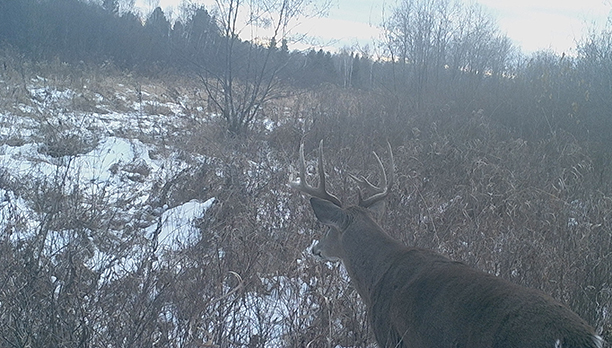
Habitat and predators
Even in the southern part of our state, the winters are no joke.
This becomes more notable the farther north you head, but the fact is that your winter trail camera work can tell you how to give the deer a boost. For example, if your property becomes a ghost town, deerwise, when January sets in, you’re missing something crucial.
The most obvious reason for a lack of deer is food, but don’t discount quality winter cover. While it’s nice to leave a couple of acres of standing corn for the herd, the truth is that a lot of properties would hold more winter deer by offering better cover.
This might involve planting some pines this spring to foster a patch of prime geothermal cover, or possibly doing some hinge-cutting of trees just to thicken things up and provide some extra browse for the next several years.
But it’s not just the weather that takes a certain percentage of the deer each year. It’s also the predators, and while you might not be able to do anything about some of them, coyotes are one deer foe that can be managed. Maybe you don’t think you have too many song dogs to worry about, but trail cameras can really ground-truth that for you.
Coyotes are highly active in winter, and they are prone to following the same trails that the deer have carved through the snow. Frequent images of coyotes where you’d expect only deer is a window into what’s going on out there, and might require some action.
A lot of folks would look at this as a good opportunity to load up a rabbit-in-distress call, don their snow camo, and head out with a varmint rifle. But, if your cameras show a heavy coyote density, it might be time to either trap them yourself or to find a local trapper willing to spend the winter thinning them for you.
Calling predators is fun, and definitely a good way to help out the winter deer, but if you really want to reduce the population, it’s best to find someone with the knowledge and gear to run a real trapline.

Minnesota artist Bob Hautman wins federal duck stamp contest for fourth time
Minnesota’s own Bob Hautman, from Delano, won the 2026 Federal Duck Stamp Art Contest today with his acrylic painting of
Confirmed cougar makes an even dozen sightings over 25 years
A mountain lion was spotted moving through southern Illinois, and this time wildlife officials believe the big cat crossed west
Illinois bow season opens Oct. 1 with few changes
The DNR has floated the idea of establishing additional Restricted Archery Zones in other parts of the state, but this
