Harrisburg — The Fisheries Committee of the Pennsylvania Fish & Boat Commission held a meeting online Dec. 23 and discussed increasing the minimum length for anglers to keep trout, in an effort to protect wild fish.
The full board of Fish & Boat commissioners is expected discuss the recommendation to boost the minimum size from 7 to 9 inches in its meeting Jan. 23, then introduce the change in proposed rulemaking at its April board meeting and set final rulemaking at its July meeting.
Commissioner Charlie Charlesworth, of Lackawanna County, chairman of the Fisheries Committee, noted that raising the minimum is the best way to protect wild trout without having to make wild brook trout catch-and-release only.
“I think it’s a fantastic idea,” he said. “We’re going to have more discussions on it at the commission’s quarterly meeting,”
MORE COVERAGE FROM PENNSYLVANIA OUTDOOR NEWS:
Pennsylvania’s Hunters Sharing the Harvest, deer processors need help
Notes off a soiled cuff: Send your old hunting, fishing photos to Pennsylvania Outdoor News
Pennsylvania Game Commission investigates five hunting-related shooting accidents
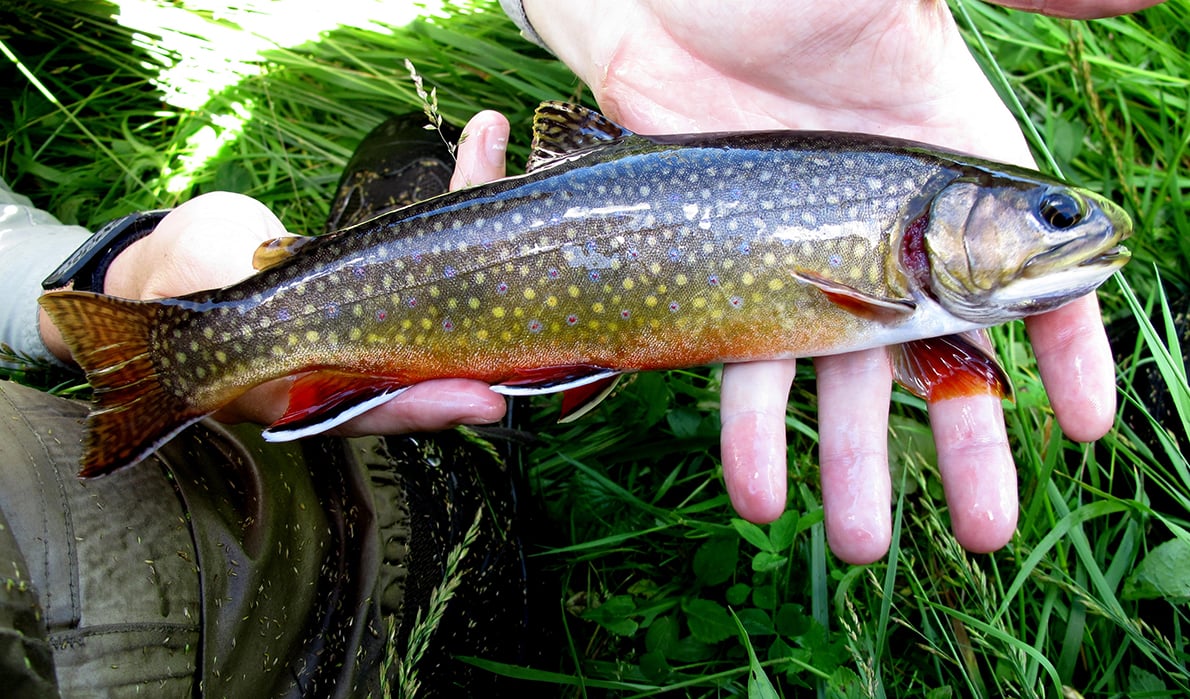
Dave Nihart, chief of the commission’s fisheries management division, explained that the goal of increasing the size limit is for the protection of wild brook trout, the state fish. He added that the agency has been discussing the change for several years as part of its strategic plan.
“An increase to the minimum size limit will afford additional protection from harvest,” he said.
Over the last decade, according to Nihart, commission biologists have sampled about 2,900 streams or roughly 3,000 stream sections. As part of those surveys, agency staff have captured almost 200,000 wild brook trout over the last 10 years.
“The data shows 12,598 of them – less than 7% – were at least 7 inches long,” he said. “All of them would be or could have been harvested based off the 7-inch minimum size limit.”
If you would go to a 9-inch minimum size limit, Nihart told the commissioners on the Fisheries Committee, you would reduce the number of fish available to harvest from 100% of the ones over 7 inches to 14.5% being 9 inches.
“That’s less than 1% of all the fish that we’ve collected over the last 10 years could have been harvested based off a 9-inch minimum size limit,” he said. “So, it’s a pretty good mechanism to protect wild brook trout from harvest.”
Nihart pointed out that there is considerable angler support for raising the minimum size on trout. In the Pennsylvania Trout Angler survey the commission conducted in 2023, about 85% of the respondents supported an increase to 9 inches.
About 60% of stocked trout anglers responded that it is not important to keep fish, Nihart noted, and 78% of wild trout anglers said it’s not important to keep fish.
“This social data that we’ve collected through this survey just further justifies that most anglers are not going to be impacted by a change in a minimum size limit from 7 to 9 inches,” he said.
Commissioner William Gibney, from Wayne County, asked about the age of wild trout. “Can you give me an idea about how old a 9-inch trout is?”
Nihart responded that the length of the wild fish varies by the water system.
“If the fish is living in a harsh environment like in northeastern or central Pennsylvania, a 9-inch brook trout may be 4 or more years old,” he said.
“But if you were to look at a system like Fishing Creek in Clinton County – a more fertile system – a 9-inch brook trout may only be 3 years old.”
The larger minimum size won’t be a problem with stocked trout, Nihart noted. Since 2023, he said, the agency stocks trout that average more than 11 inches.
Of the roughly 3.2 million adult fish the commission stocks every year, a vast majority, 92% of them, are from 11 to 13.9 inches, he said. About 3% are greater than 14 inches, and about 5% are from 9 to 10.9 inches long.
“All of the fish that are coming out of our hatcheries and are stocked in our stocked trout waters are already greater than 9 inches in length,” Nihart said. “We’re not going to be stocking fish that are sublegal in size.”
The only complication in increasing the minimum size for trout may be fish raised by the 160 volunteer cooperative nurseries the Fish & Boat Commission partners with, Nihart suggested. Those groups raise about 1 million trout for public fishing each year, but sometimes those fish can run a bit smaller.
Most of those “co-ops” stock trout after they are at least 9 inches long, but there are some fish that have been stocked that are less than 9 inches, Nihart conceded, adding that about 15% of the in-season stockings by co-ops are fish less than 9 inches long.
“With some changes, adjustments to operations, operational adjustments, we can work with cooperative nurseries to improve the size of the fish that are being stocked,” he said.