




Baltimore — In an important show of unity, the region’s governors and federal partners recently agreed to a Chesapeake Bay restoration plan for the next 15 years.
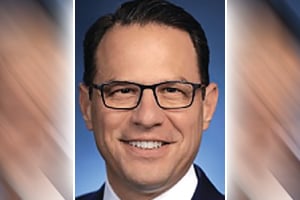
At a Chesapeake Executive Council meeting in Baltimore, a host of state and federal leaders committed to the latest version of the Chesapeake Bay Watershed Agreement – including Pennsylvania Gov. Josh Shapiro.
Also committed were Maryland Gov. Wes Moore, Virginia Gov. Glenn Youngkin, Delaware Gov. Matt Meyer, Washington, D.C. Mayor Muriel Bowser, EPA Deputy Administrator David Fotouhi and Chair of the Chesapeake Bay Commission Maryland State Sen. Sara Love.
The council elected Shapiro as its next chair, marking the first time in more than two decades a Pennsylvania governor has led the group.
MORE COVERAGE FROM PENNSYLVANIA OUTDOOR NEWS:
Notes off a soiled cuff: Upcoming Pennsylvania flintlock season last of its kind
Pennsylvania hunter killed in a large deer drive
Heavy bears highlight Pennsylvania’s 2025 hunting season
Since 1983, versions of this agreement have held together the bay restoration partnership, a decades-long effort that has become a national model for different levels of government cooperating to meet common environmental goals.
Separately from the bay agreement, in 2010 states committed to a 2025 deadline for meeting legally binding commitments to reduce nitrogen, phosphorus, and sediment pollution. This requirement was enshrined alongside other goals in the 2014 bay agreement.
While states have made notable progress, from oyster restoration to upgrading sewage treatment plants, they did not meet the pollution-reduction targets by 2025.
In late 2024, the federal and state restoration partners committed to revising the Bay Agreement by the end of this year to update goals and incorporate new science that promises to more efficiently restore the bay.
Throughout the process, the Chesapeake Bay Foundation advocated for a strong agreement that: Affirms state commitments to meet legally required pollution reductions; Provides accountability with a uniform deadline across goals and a midpoint assessment; and, Factors in growing challenges from climate change.
After input from CBF and other advocates, the final bay agreement revision includes improvements over the July draft. It now has a uniform deadline of 2040, as well as a 2033 midpoint check in that offers a chance to adapt to the latest science.
It also reaffirms the legally-binding pollution reductions states must meet. The council today also approved a charge to develop by July 1 recommendations on including the region’s seven federally recognized Indigenous tribes in the restoration partnership.
 While the agreement is not as ambitious as what CBF called for, it remains critical, according to CBF President Hilary Harp Falk.
Because it sustains a historic partnership working to restore the bay, she noted, including governors of Pennsylvania, Maryland, Virginia, West Virginia, Delaware, and New York, the mayor of the District of Columbia, state legislators with the Chesapeake Bay Commission, and leaders at the EPA and six other federal agencies.
“The revised bay agreement is what we need to keep progress alive,” she said. Even in a time of deep division and uncertainty, leaders from across the political spectrum still find common ground in restoring the Bay.”
But words alone won’t save the bay, Falk pointed out. Now is the time for bold action and thinking big.
“We must use what we’ve learned over the last 40 years to deliver lasting solutions for polluted runoff from farms, cities, and new development,” she said.
EHD in Michigan’s deer herd concentrated to four counties so far
The Michigan DNR has confirmed epizootic hemorrhagic disease in four counties so far in 2026, with plenty more tests pending

Dan Small Outdoors Radio: Show 2138
Indiana hunter scores a huge black bear in northern Wisconsin. Jeff heads to Cass Lake, Minn. for a Masters Walleye
Way less land for hunting spurs action from Pennsylvania Game Commission
The Pennsylvania Game Commission has overhauled its Hunter Access Program this year in an effort to boost declining landowner participation
