




Home » Home Page News » Habitat help on the way for waterfowl? New Delta initiative focuses on refuges, WMAs
Habitat help on the way for waterfowl? New Delta initiative focuses on refuges, WMAs
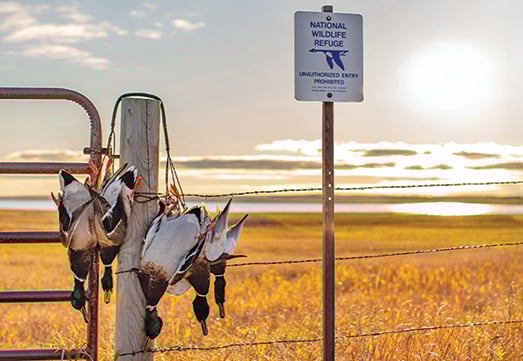
Bismarck, N.D. — Delta Waterfowl has launched an ambitious new program to improve waterfowl hunting across the United States by advocating for increased habitat-improvement funding for federal and state public lands.
The effort is called Restoring Our Refuges, an advocacy campaign to “secure enhanced public funding to revitalize the health and waterfowl value of federal refuges and state-owned wildlife management areas” across the U.S.
“One piece is about improving habitat, another is also about significantly improving hunting opportunities on national wildlife refuges and state public lands,” said John Devney, Delta Waterfowl’s chief policy officer, in an interview. “The two are very much linked.”
Devney said that during the past several years, the organization has heard “very consistently” from its members and volunteers about poorer and poorer hunting on national wildlife refuges and state WMAs, which, he says, is largely a function of degraded waterfowl habitat – on both the U.S. breeding and wintering grounds.
“To keep our refuges running well, you need efficient water delivery and fairly intensive management to maximize habitat productivity,” Devney said.
“In a growing number of cases, there’s not enough staff or infrastructure to do it. Our goal is to change that.”
MORE WATERFOWL COVERAGE FROM OUTDOOR NEWS:
Decoying Perch: When a duck hunt becomes a fishing outing
Patience pays off for Illinois hunters as overdue ducks answer the call
Late-arriving canvasbacks make this a hunt to remember
National Wildlife Refuge System
According to Delta, the nation’s 573 national wildlife refuges, which encompass 95 million acres of land and 760 million marine acres, serve as “critical assets for the continent’s waterfowl and waterfowl hunters.” Refuges, Devney said, provide important waterfowl nesting habitat in the prairies and other key breeding grounds, as well as key habitats along migration routes and at wintering areas.
On the hunting side, U.S. federal refuges host an estimated 2.6 million hunting days each year – a number poised to increase as federal officials explore opening parts of more refuges to hunting in the near future.
“That’s something we’ve been pushing for,” Devney said.
Ailing system
The National Wildlife Refuge System is ailing, Devney said. “Deep reductions in staffing and maintenance budgets have led to a backlog of failing infrastructure,” he said.
In addition, funding in the U.S. Fish and Wildlife Service budget to operate the NWR system has declined by 35% or more since 2010. The NWR system has lost 711 full-time staff since 2011, a 29% workforce reduction.
In an effort to compensate for the losses, Devney said national wildlife refuges have been “clustered into complexes” to stretch staff over several refuges. That, he says, has decreased the time and ability of biologists and staff to manage habitat effectively on each property.
“Everyone is stretched too thin, which isn’t serving ducks or duck hunters,” Devney said.
RELATED STORY FROM OUTDOOR NEWS:
Delta analysis
During the COVID-19 pandemic in early 2020, Devney said the organization helped to identify more than $250 million in “deferred maintenance” on priority waterfowl and wetland projects within the NWR system and on state public areas.
In Minnesota, Devney said, that includes roughly $11 million on state WMAs and roughly $1.8 million on national wildlife refuges.
“That’s a conservative estimate,” he said.
In addition, over the broader NWR system, Devney said the shortfall of unmet infrastructure needs is an estimated $2.6 million. “I think it’s safe to say that both deficits have likely increased since 2020,” said Devney.
Finding funding
Devney said the key to Delta’s new campaign is to increase funding for national wildlife refuges in the federal budget and to work with Congressional lawmakers “to ensure the money is spent to improve wetland and waterfowl habitat.”
Devney said Sen. Steve Daines, a Republican from Montana, has introduced legislation as part of the so-called Legacy Restoration Fund to spend $100 million annually over seven years on national wildlife refuges for habitat improvement. While the legislation is far from being passed, Devney said he’s hopeful that “something can get done at some point later next year.”
Said Devney: “Since the majority of the federal refuges were acquired using (federal) duck stamp dollars, and duck stamp dollars come from duck hunters, those resources should go back to improving conditions for ducks and duck hunters.”
Devney also said that Delta Waterfowl staff and its member and volunteers will work at the state level to push for increased investments to improve waterfowl habitat on state and federal lands.
“We’re asking our members and volunteers to help engage in this topic to help drive the investment back into public lands both at wildlife management areas and refuges,” he said.
Declining participation
Devney said improving waterfowl habitat on federal and state public lands is critical to recruiting new waterfowl hunters and retaining old ones.
Indeed, the number of active of U.S. waterfowl hunters continues to decline, following a decades-long trend.
According to the Migratory Bird Hunting Activity and Harvest Report issued annually by the USFWS, 1.26 million people actively hunted ducks and geese during the 2024-25 season – a 2.5% decrease from the previous year. Waterfowl hunters across the U.S. and Minnesota have declined sharply since the 1970s. The number of U.S. hunters peaked at 2.02 million in 1970-71.
Last year, 63,500 people hunted waterfowl in Minnesota, according to the report. That’s roughly half the number of waterfowl hunters who participated in the 1970s.
“If you’re a duck hunter who hunts public land and you’re consistently not shooting ducks, eventually you’re going to do something else,” Devney said. “That’s why we need to invest in our refuges and state lands. That’s good for waterfowl and waterfowl hunters, as well as a spectrum of other wildlife species and hunters.”
Minnesota is home to 13 national wildlife refuges and eight associated wetland management districts. The refuges support various habitats, from prairie to wetland to forest.
Many refuges are open to some form of hunting, including waterfowl hunting, in designated areas, as well as other forms of outdoor recreation (fishing, birding, hiking, and more).
SUBSCRIBER CONTENT
Read this article now.
Create a free Outdoor News account.
Create a free account below to get instant access to this article, thousands of Outdoor News stories, and our digital editions. Your 1-month trial starts the moment you sign up.
No credit card required
No credit card required
Subscriber? Login Here.
Share on Social
Hand-Picked For You
Partnerships help preserve public lands, habitat for Minnesota’s prairie chickens
Dan Small Outdoors Radio: Show 2138
Commentary: Walz executive order gives Boundary Waters the commonsense protections it needs
Iowa’s statewide fishing report on Sept. 17, 2026
Way less land for hunting spurs action from Pennsylvania Game Commission
Pennsylvania’s hunting license sales down so far this year
Related Articles
Dan Small Outdoors Radio: Show 2138
Indiana hunter scores a huge black bear in northern Wisconsin. Jeff heads to Cass Lake, Minn. for a Masters Walleye
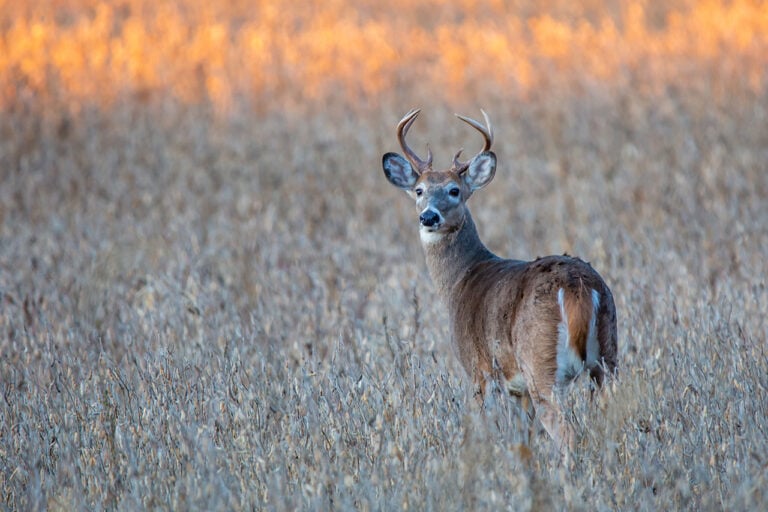
Way less land for hunting spurs action from Pennsylvania Game Commission
The Pennsylvania Game Commission has overhauled its Hunter Access Program this year in an effort to boost declining landowner participation
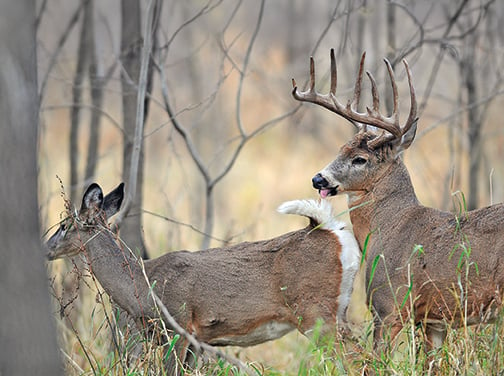
Where do big bucks go when they vanish?
Over the course of our three-months-plus bowhunting season, seeing just one wall-hanger buck can be cause for celebration. Trophy proportioned

2 thoughts on “Habitat help on the way for waterfowl? New Delta initiative focuses on refuges, WMAs”
Good to see Delta acknowledge and focus efforts on the importance of waterfowl and wetlands Habitat restoration, management, improvement, and protection.
With the fools running the show in DC expect it to get alot worse before seeing any increase in $$. And more than likely a decrease in staff. Wonder where the DOGE savings went???