





Late last year I wrote a column about a proposal that would allow anglers fishing from boats in the Great Lakes to pay an extra fee that would allow them to fish with more than three rods per person. The exact details weren’t completely ironed out.
One version would allow a solo angler, who had paid for the special privilege, to fish with up to six rods. Those three “extra” rods would have been the limit per boat.
 Another possible version would skip the “per boat” provision so a pair of anglers could each purchase extra rod privileges and the pair could fish with up to 12 rods. That being the case, a trio of anglers, all with the extra rod privilege, could try to fish with 18 rods. Not many charter boats with a captain, crew and full load of passengers fish with that many.
Regardless of what the exact wording of the proposal would have been, it would have been a win for the Michigan DNR’s fisheries division, providing them extra funds, as well as a win for Great Lakes anglers with small boats now constrained by “opinion-based” rod-limit rules.
“Opinion-based” rules are those not based on biology or science; rather, they only reflect what an individual, or a committee of individuals, tasked with setting fishing regulations have decided is right or ethical.
I remember when Michigan allowed only two rods per angler. Opinions change, however, and it suddenly became legal to use three rods each.
The opinion of the rule makers had changed. There was no opposition by resource managers. The daily catch limits didn’t change. The change from two rods per person to three made only a slight difference in how rapidly an angler could catch fish but very little difference in the total number of fish caught and kept.
FISHING FEATURES FROM OUTDOOR NEWS:
Al Lindner: Anglers located and caught a lot of lunker fish during open water 2025
November is trophy muskie time
Want to try winter camping? Here’s the must-have gear and knowledge to make it a great experience
When the two-rods-per-person rule was amended to three-rods-per-person, most Great Lakes anglers thought they’d scored a win. The DNR scored nothing. If this new regulation allowing extra rods was enacted, it would produce needed revenue for the DNR’s hatcheries or other fisheries programs. It would have been win-win.
The original proposal for a fee-based, rods-per-person increase came from a meeting of the Great Lakes Salmon Initiative and then gained legs when it was supported by several of the DNR’s Citizen’s Advisory Committees. The GLSI is a non-government organization, but the advisory committees are groups set up by the DNR to provide input, advice, and recommendations to the DNR Fisheries Division on fisheries management.
The DNR purposely didn’t include this proposal in its latest request to the legislature for increases to many of the current hunting/fishing license fees. When asked why, the DNR’s response was this measure would be a part of a “phase two” request to the legislature – after they got their fee increase.
How’d that work? A last-minute passage of a state budget in early October didn’t include any license fee increases. The legislators didn’t like the DNR’s “phase-one” request, which promised to fund new DNR programs instead of providing increased funds for hatcheries or fish and wildlife management programs.
In the meantime, a potential “phase two” bill is in both Michigan’s house and senate. The boldest of the two is HB 5093.
One of the many provisions in this bill is a $5 hatchery stamp, which would be required for people fishing for species of fish produced and stocked by DNR hatcheries – walleyes, muskies, trout, salmon and others. If passed, it’s expected hatchery production for inland lake walleye stocking could increase by a million annually, 25,000 more muskies, and an increase in inland trout stocking areas. Embedded in the language of the hatchery stamp bill is the provision to allow Great Lakes trollers to use additional rods.
There are other license fee increases listed in the bill, quite modest, considering how much inflation has impacted every operation of the DNR since the last fee increases in 2015. Will modest increases be enough?
The sponsors of the bill think so because instead of just raising license fees to be used at the discretion of the governor or the DNR’s director, HB 5093 (as it’s written now) directs the new money, as well as some of the money from existing license fees, to go back to resource management programs.
This bill has the support of the DNR’s fisheries citizens’ advisory committees, the GLSI, and more than 25 other fishing-oriented groups and associations throughout Michigan.
The easiest way for you to express your opinion on this bill is to contact your state representative. If you are unsure of who that is or how to reach them, go to: www.house.mi.gov/.
A quick chat with Jim and Will Pattiz, brothers behind morethanjustparks.com
Outdoor News has monitored the website Morethanjustparks.com with increasing frequency for its one-stop shopping content on America’s most important public
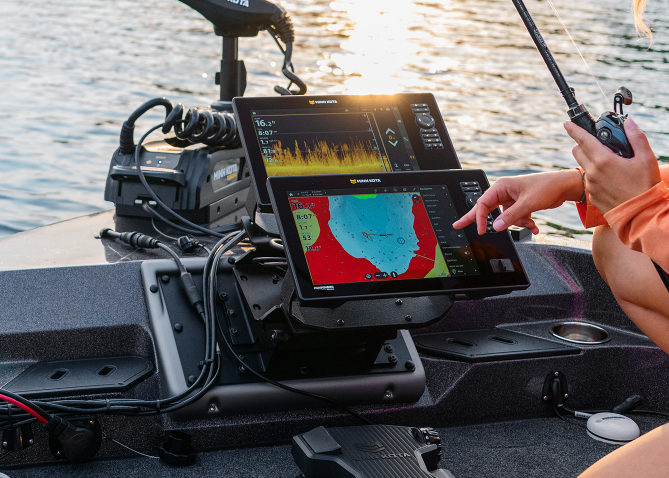
Minn Kota introduces one seamless fishing system powered with Humminbird Imaging
On Oct. 6, Minn Kota introduced the most significant expansion in its history with a new, seamless fishing system, powered

French tip: muskies in summer, slabs during winter on this southeast Minnesota water
Muskie anglers have a limited number of options in the southern part of the state; French Lake near Faribault is
