




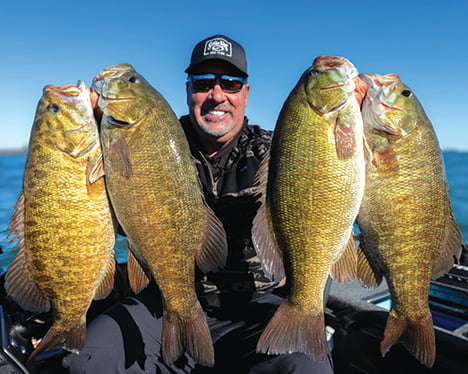
It’s no secret that the Great Lakes have produced a lot of big smallmouth bass in recent years.
The smallmouth always have been there, but the influx of protein heavy, non-native gobies as a forage and clearer water seems to be creating more and bigger smallmouth.
Lakes Michigan, Huron, Erie, Ontario, and Superior total 60.3 million acres of water, so finding those isolated Great Lakes bass sweet spots isn’t easy.
So where would one begin the search?
No one has spent more time fishing for Great Lakes small mouths than Michigander Mark Zona, TV host of “Zona’s Awesome Fishing Show.”
“I’ve seen state records swimming in the Great Lakes and honestly, I think the world record is swimming out there,” said Zona, whose biggest smallie weighed 7 pounds, 15 ounces.
Here are his top five picks for where you stand a good chance of catching a personal best, and perhaps even a state record smallmouth.
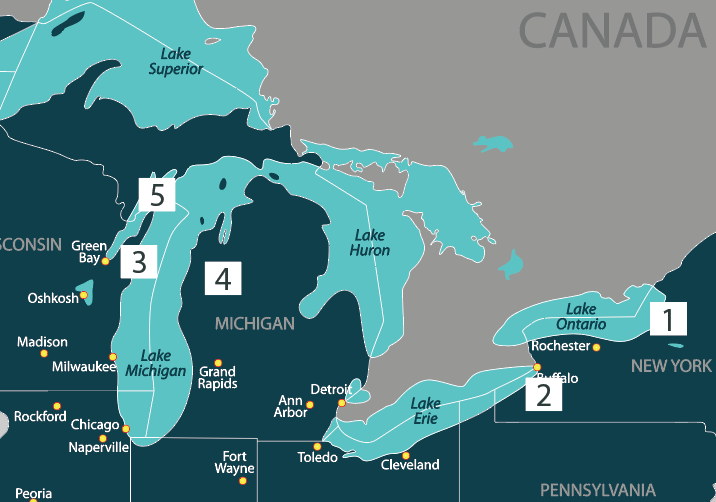
1) Eastern Basin, Lake Ontario
Zona said the region from the mouth of the St. Lawrence River to Prince Edward Island produces a lot of top 10 Bassmaster Elite finishes.
The fish are big there, he notes, but because of publicity, “they’re not as unintelligent as they once were.” He believes the fish you catch there are genetically different – and bigger – from most of the fish you catch in the river.
“The habitat is diverse – sand, rock, grass and boulders, with boulders being a top producer of big fish,” he said. “But the great thing about this area is you can pick your poison; fish from 1 foot to 60 feet and find fish.”
Zona said the days of catching 100 bass in a day are likely in the past, “but it’s still world class and a 25- to 30-pound (five-fish) limit is doable.”
2) Eastern Lake Erie
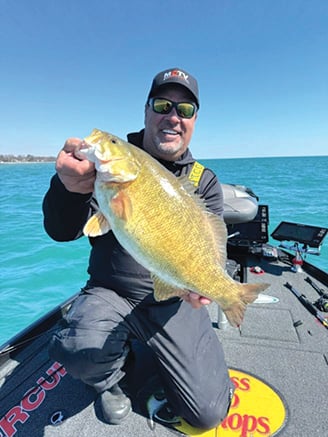
Zona’s second favorite Great Lakes spot is in the Buffalo, N.Y., area that lies from Dunkirk, N.Y., to the mouth of the Niagara River. It’s where his personal best smallmouth was caught.
“One thing that makes it so good is it gets less tourist fishing pressure than the rest of the Great Lakes,” he said.
There is a very good reason for that – there is no place to hide from the wind.
“Like most of the Great Lakes, you have to monitor the weather and pick your battles,” he said.
The fishery offers reefs, sand and rock that provides smallmouths excellent habitat and spawning grounds.
“You can find a shallow to midrange depth bite, with 29 to 45 feet being ideal most of the time,” Zona said. “Chances of a 5-pound or bigger smallmouth are pretty good there when you get out.”
3) Door County, Wis.
One of the reasons Zona loves this area is because of the shallow bite early in the season.
“It’s a time of year deal,” he said. “When the ice comes off, the bass move shallow, almost instantly. You can catch a lot of bass from zero to 10 feet during the first 60 days after ice-out.”
He doesn’t fish there once the fish move offshore because they scatter too much.
“But once late summer rolls around, they will push up shallow again,” he said.
He believes the best fishing is along the Door County Peninsula from Sturgeon Bay out to Washington Island. Key habitat is scattered grass patches and rock veins surrounded by sand.
“Those fish are very object oriented there,” Zona said. “If you can find a boulder, it’s like a palm tree in the desert. And there will likely be a bass or two there.”
MORE BASS COVERAGE FROM OUTDOOR NEWS:
Northern Minnesota’s Stu Osthoff says timing is key to fishing success in canoe country
Bill Hilts, Jr.: Upcoming Great Lakes preview an invitation to explore amazing waters
May in Minnesota now means a first crack at bass; here’s how to catch them
4) Traverse City, Mich.
Remarkably, the East Grand Traverse Bay and West Grand Traverse Bay of Lake Michigan near this tourist town get a ton of pressure, yet the quality of bass caught goes up each year.
“This area is eerily similar to the eastern end of Erie around Buffalo,” Zona said. “The good fishing for giant smallmouths tends to be in wicked depths.”
The big ones live in 20 to 70 feet, he adds, and are always around bait.
“Yes, you can catch a 6-pounder shallow, but to catch giants, you have to be deep and around forage,” he said. “If you think you’re fishing deep (compared to some lakes), you probably still aren’t deep enough.”
Further, he adds, you might be catching lake trout mixed in with the smallmouths.
“It’s weird out there, but if you’re around lakers, you’re probably around the biggest smallmouths in the lake,” he said. “The smallmouths and lake trout will get together and feed on smelt. They do it year after year.”
Habitat worth targeting includes wood lying on the bottom or very deep flats.
“You can find the very best-looking spot structure-wise, yet if there is no food around, you won’t catch bass,” Zona said.
5) Little and Big Bay de Noc
Located on the north end of Lake Michigan, this area on Michigan’s Upper Peninsula is off the beaten path, hence it gets very little pressure. That means the bass don’t see a lot of lures and can be easier to catch most days.
The fishery is susceptible to south winds, but if it’s not a straight south wind, you can usually find fish in an area sheltered from the wind. Look for broken rock mixed with grass.
“It has a massive population of smallmouth bass that seems to want to be shallow and those fish will hunt the flats throughout the fishing season,” Zona said. “You can fish those areas with fast moving baits and catch a lot of bass. The key to finding success in this area is to cover water and don’t slow down until you get bites.”
Minnesota artist Bob Hautman wins federal duck stamp contest for fourth time
Minnesota’s own Bob Hautman, from Delano, won the 2026 Federal Duck Stamp Art Contest today with his acrylic painting of
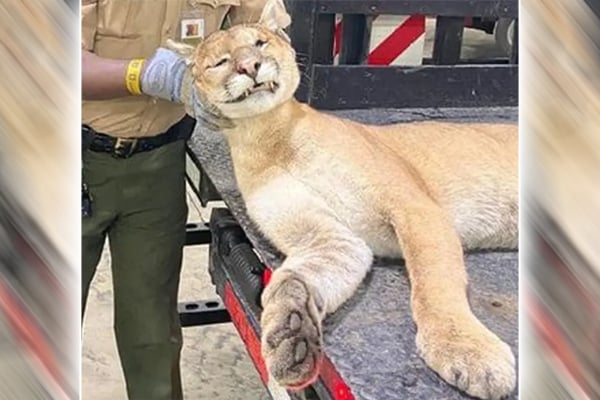
Confirmed cougar makes an even dozen sightings over 25 years
A mountain lion was spotted moving through southern Illinois, and this time wildlife officials believe the big cat crossed west
Illinois bow season opens Oct. 1 with few changes
The DNR has floated the idea of establishing additional Restricted Archery Zones in other parts of the state, but this
