




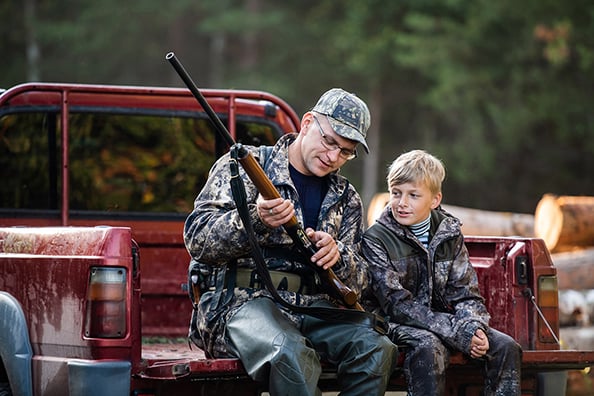
From the day my son was born, I couldn’t wait for the day when I could take him hunting with me.
But it didn’t happen right away.
From the time he could walk I took him into the woods – not to hunt, but educate. The lessons included wildlife sign, habitat, tree species and just nature in general – all of which form the foundation of a true hunter.
 A few years later, the gun- safety lessons ensued when I gave him his first BB gun, and the skill developed quickly. In no time at all, my son was a proven marksman when it came to plinking cans in the backyard.
Yet I still didn’t feel he was ready at such a young age to plink a deer with a high-powered rifle.
So we continued to wait.
But when the elementary school years began, that’s when the pressure started to mount. My son, who was 7 years old, came home from school with stories about how some of his classmates were already hunting and shooting deer.
I talked to parents who said their kids were shooting deer when they were as young as 5, with not only crossbows but rifles as well.
I felt like hunting was becoming a contest to see whose kid could shoot a deer first. Some parents wanted to push the envelope and to have their kid shoot a deer at the youngest age possible. Five years old? Four? Nothing was out of the question.
But I told my son that hunting isn’t a race. When I felt he was ready, he would go.
MORE COVERAGE FROM PENNSYLVANIA OUTDOOR NEWS:
Pennsylvania archers take 21 elk during recent season
Pennsylvania’s Operation Game Thief speeds up reporting, helping to stop poachers
No need to dig really deep for bass in the early fall
It wasn’t long until he did become a hunter, honing his skills on squirrels with a single-shot .22. After that, it was on to woodchucks in the summer and rabbits in the winter.
He was getting better, but I still felt he wasn’t quite ready for the big time – turkey and deer.
Even though his friends were self-proclaimed big-game hunters – and my son was getting more anxious to go – something happened while he waited.
He learned to be patient. That’s when I felt he was ready for deer.
Last year, at the age of 12, my son shot his first deer – a small buck. It might’ve taken him a long time to achieve the feat compared to his buddies at school, but there’s no denying the wait was worthwhile and the hunt was made even more memorable.
Waiting ensured that my son was a responsible, ethical hunter, and it also instilled a sense of appreciation when that first harvest was made. Because of that, he’s destined to become a life-long hunter.
I understand that some parents may deem their kids ready to hunt at much younger ages, and I’m not going to question their judgment.
But there is a line.
The Pennsylvania Game Commission board, in its desire to generate hunting opportunity, is close to crossing the line with a proposal to issue big game tags for mentored hunters under 7 years old. The move essentially does away with any semblance of a minimum age, and it’s a short-sighted idea that could do more damage than good.
And I’m not the only one who feels this way.
During the board’s Sept. 5 meeting. Commissioner Dennis Fredericks – who opposed the measure – said he spoke with commission law enforcement, region supervisors and other personnel in his southwest region district and couldn’t find anyone in support of the measure.
In the Oct. 10 issue of this newspaper, the results of an online poll were printed in which readers were asked if they support the move to give big-game tags to kids under the age of 7.
An astounding 96% of respondents said “no.”
It also was mentioned at the meeting, in support of the measure, that 14 other states have no minimum hunting age. However, I think it’s more telling that 36 other states do have a minimum age to hunt.
But here’s the kicker: According to Fredericks, those 14 states with no minimum age all require some degree of hunter training or education.
In Pennsylvania, hunter education is required only for those 12 and older. Why? A few years ago I asked a Game Commission employee that question, and he said the course is designed for kids 12 and older. Younger children can’t comprehend it.
If anything, that fact alone makes the case for having a minimum age.
The board ended up passing the measure at its September meeting by a 6-3 vote, and it still needs final approval in the future.
I understand the desire of some commissioners to do what they can to get more kids involved in hunting, but this isn’t the way.
If a parent feels their child is ready to hunt deer at an age younger than 7, they’re free to transfer their antlerless tag to the youth.
The opportunity is already there, and the line doesn’t need to be crossed even more.
There’s nothing wrong with waiting and it’s OK to “pay your dues” before being allowed to hunt big game. That way, when the opportunity finally arises, the experience will be a positive, meaningful one and not a race to see who can do it first.
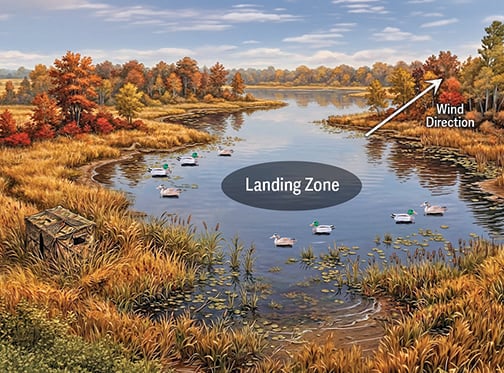
Mastering early season duck decoy spreads; a time when less is more
It was better than Christmas morning – opening day of duck hunting. I had just turned 14, and with a
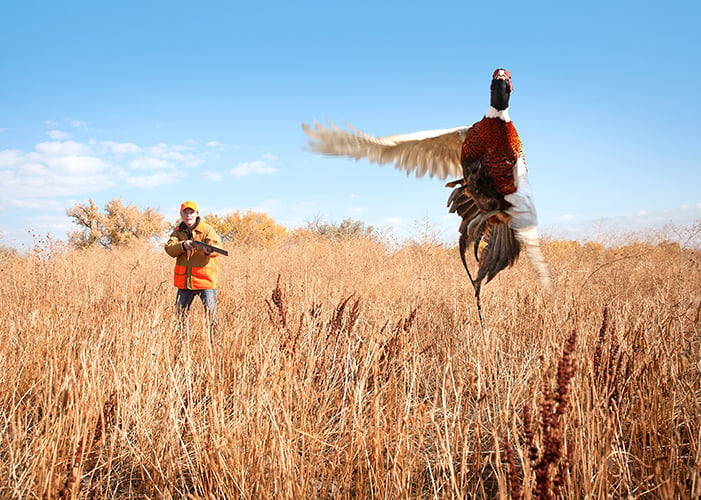
WI Daily Update: DNR budget constraints lead to fewer stocked pheasants this fall
Wisconsin pheasant hunters will see fewer stocked birds and a shorter release schedule this fall. Here’s why, along with what’s
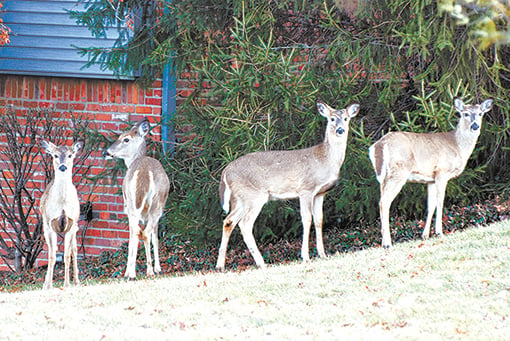
Suburban deer management expands in southwest Pennsylvania
Oakmont is the latest in a growing number of suburbs around Pittsburgh to adopt a controlled archery program to manage

1 thought on “Tom Venesky: Deer tags for tots in Pennsylvania is a bad idea”
I have two great nephews in Louisiana who, accompanied by their father, both shot their first deer when they were but five years old. By the age of twelve, they’ve added trophy deer, record-sized fish, and wild boar to their lists.
Back in the early 1950s, at our family deer camp in far northwestern Minnesota, a child of five, was still a child. Children weren’t allowed at camp until they were 14, as a rite of passage. At deer camp, youths of fourteen were taught firearm safety. They learned how and when to handle guns; always asking for permission from its owner first, not just pick up a rifle impulsively. They shot at targets for practice. They were given lots to eat, a good place to sleep, and expected to help with camp chores that anyone else would do. They learned directions and the lay of the land; its animals. They had fun, heard lots of hunting stories, anxiously waiting the day they had stories of their own to tell. At 15 they could begin hunting with the group. It was just the way things were done at our camp.
Lots of farm kids started much younger hunting small game like rabbits, squirrels, grouse, and pheasants; some trapped fur bearers to earn money. Some ice-fished during the winter. Some have shot deer. Well in advance of mere beginners, this kind of outdoor/hunting training stayed with them all their lives. Some, growing up prior to WWII, survived harrowing circumstances because of the hunting skills they learned afield or ‘in deer camp’.
Fifteen is a good age to start deer hunting, I think. Not five.