




Home » National News » Public invited to open houses for developing Forest Plan Amendment of management direction for Minnesota’s Boundary Waters
Public invited to open houses for developing Forest Plan Amendment of management direction for Minnesota’s Boundary Waters

Duluth, Minn., — The Superior National Forest is inviting all interested individuals to its two upcoming open house events regarding management of the Boundary Waters Canoe Area Wilderness (BWCAW) management area.
Based on the current management situation and that the Forest Plan direction for the Wilderness is over 30 years old, staff with the Superior National Forest are considering making an amendment to update and modernize Forest Plan direction for the BWCAW.
“Changes to our Forest Plan can better position the Forest to restore and preserve wilderness character and meet the purposes of wilderness described in the 1964 Wilderness Act and 1978 BWCAW Act,” said Tom Hall, Forest Supervisor, Superior National Forest, in a prior release. “The management direction for the BWCAW was last updated in 1993. Our implementation and monitoring over the past 30 years, and changes to national wilderness management policy and guidance, has highlighted several issues affecting wilderness character in the BWCAW and the wilderness experience for visitors.”
Interested individuals can attend either an in-person or virtual open house on the developing Forest Plan Amendment. Superior National Forest staff will be on hand presenting information on the process and how to comment, display relevant maps of the BWCAW, and answer questions.
Open House (In-Person): An in-person event will be held Thursday, April 11, 2024, from 4:30-7 p.m. at the Superior National Forest Headquarters at 8901 Grand Avenue Place, Duluth, Minn.
Open House (Virtual): A virtual event will be held on Thursday, April 18, 2024, from 4-6 p.m. Click here to join the meeting, meeting ID: 289 483 854 876, Passcode: XPqvvs
How to comment
The Superior National Forest is gathering input from tribes, local communities, interested parties, and the broader public regarding management of the Boundary Waters Canoe Area Wilderness (BWCAW) management area.
Public comments can be made through May 17 on the project web page, or in hard copy submitted to: Superior National Forest, RE: BWCAW Forest Plan Amendment, 8901 Grand Ave. Place, Duluth, MN 55808.
Issues to be addressed
The issues to be addressed in a Wilderness Chapter amendment include, but are not limited to the following:
- Increasing visitation and changing trends in utilizing public lands and primitive management areas in general is adversely impacting all four management areas of the BWCAW; high use campsites and travel routes, as well as previously under visited pristine areas to escape people in popular locations. Monitoring has indicated both social and ecological impacts, such as crowding, noise, light pollution, lack of campsite availability, littering, campsite and portage erosion, campsite expansions, water quality degradation, and other issues preventing the Forest from managing to standard. There is a need to update management direction to preserve wilderness character, while providing for opportunities for solitude or a primitive and unconfined type of recreation, restoring naturalness and protecting other features of value across the Wilderness.
- Following up from the BWCAW Towboat pre-scoping in August 2023, over 1,300 comments were received. The primary issues identified relate to how towboats are managed in the overall motorized cap within the BWCAW and the impact that towboats have on wilderness character. Management of the towboat commercial service is just one aspect of the larger whole related to both motorized use and wilderness character. To effectively manage commercial towboat use in the BWCAW, management direction in the existing Forest Plan concerning commercial towboat may need to be updated to address specific standards and guidelines to continue to preserve wilderness character and ensure compliance with the statutory limits set in the 1978 BWCAW Act. In addition to commercial towboat use, there is a need to consider the context of motorized use within the BWCAW, as provided for by existing law.
- Much of the Superior National Forest has fire-adapted ecosystems and large fires have occurred periodically on the landscape. The current Forest Plan only contains project-specific Plan amendments to allow management-ignited prescribed fire in the BWCAW on a project-by-project basis over the past 25 years. Where multiple project-specific Plan amendments are done for a given issue, it suggests consideration towards a programmatic Plan amendment to allow lightning fires to play a more natural role.
- Additional management topics include, but are not limited to: fisheries stocking, survey and spawn take; outfitter and guide operations; visitor management (overnight paddle quota, campsites); special provisions; structures; other agency use; wilderness education plans; the reservation system and research needs.
What is the next step after the public engagement period? Based on public comments and input, as well as applicable law, regulation, policy, and guidance, the SNF will develop a proposed Forest Plan Amendment to address the purpose and need for action.
Staff will then notify stakeholders and partners of the proposed amendment and initiate the public involvement process under the National Environmental Policy Act (NEPA). Formal public scoping for this project is anticipated in early 2025.
For more information, visit the links below:
SUBSCRIBER CONTENT
Read this article now.
Create a free Outdoor News account.
Create a free account below to get instant access to this article, thousands of Outdoor News stories, and our digital editions. Your 1-month trial starts the moment you sign up.
No credit card required
No credit card required
Subscriber? Login Here.
Share on Social
Hand-Picked For You
Longtime Illinois DNR fisheries biologist leaves behind legacy for anglers
Illinois Mixed Bag: Youth waterfowl hunts to be held in south
Duck seasons open with low counts on Illinois River
County Board member in Illinois cited in deer poaching case
Ohio’s early deer season continues torrid pace
CPO Austin Priest repeats as the Illinois DNR’s Officer of the Year
Related Articles
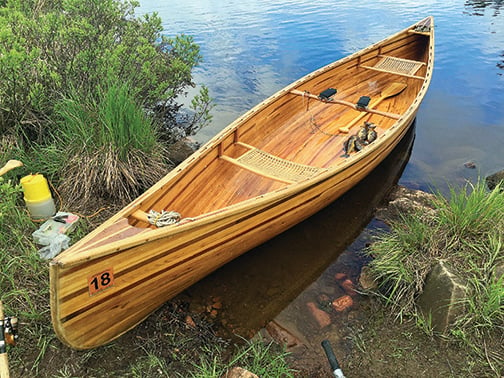
Got a hankering to build a wooden canoe? Here’s how to do it
“The way of a canoe is the way of the wilderness and of a freedom almost forgotten. It is an
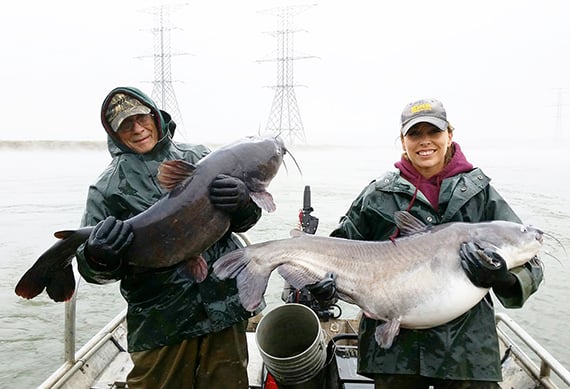
Longtime Illinois DNR fisheries biologist leaves behind legacy for anglers
He referred to himself as a “river rat” and spent his career working to better Illinois’ fisheries. Wayne Herndon Jr.,
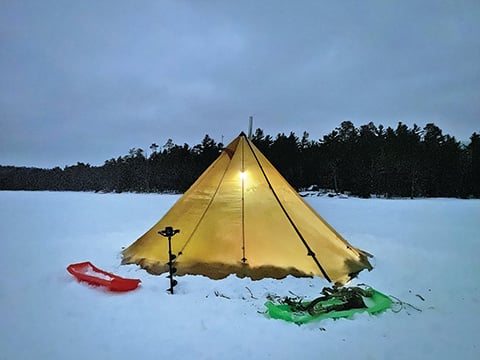
Ice fishing from a hot tent gives winter anglers freedom to roam
I’ve been using hot tents in the backcountry for years. Call it romanticizing, but there’s something special about watching smoke
