





St. Paul — Thanks largely to firearms and ammunition sales, the Minnesota DNR has been allotted a record $49 million and change for fiscal year 2023 from the Wildlife and Sport Fish and Restoration program, an annual agency funding source accrued from federal excise taxes on hunting, shooting, and fishing equipment, and small-engine fuel.
The funding is used to support state wildlife conservation efforts, hunting and fishing education, and outdoor recreation, among other uses.
“It’s the largest allotment ever, and it touches everything we do as an agency one way or another,” said Heather Kieweg, federal assistance coordinator for the Minnesota DNR in St. Paul. “It’s a tremendous amount of money for conservation, and that’s good news for the state’s hunters and anglers and others who love the outdoors.”
The WSFR has two funding sources: via the Pittman-Robertson Act, which created an excise tax on firearms, ammunition, and archery equipment in 1937, and the Dingell-Johnson Federal Aid in Sport Fish Restoration Act, which created a tax on fishing tackle, boat equipment, and boat fuel in 1950. The combined funding is distributed to states and territories through federal grants from the U.S. Fish and Wildlife Service.
For fiscal year 2023, Minnesota received $34.4 million in Pittman-Robertson funding, up slightly from last year’s $32.2 million. The $14.8 million this year from Dingell-Johnson Sport Fish Restoration funding is up from last year’s $13.9 million.
Nationally, a record $1.6 billion in WSFR funding was announced by the U.S. Fish and Wildlife Service for distribution to recipient states earlier this year. That includes roughly $1.15 billion from federal excise taxes on guns, ammunition, and archery equipment. Of that $1.15 billion, $1.1 billion is directly sourced from firearms and ammunition excise taxes paid by manufacturers, according to the National Shooting Sports Foundation.

According to the U.S. Fish and Wildlife, the federal-state-industry partnership is instrumental in funding conservation across the nation – an impact about which many Americans are unaware.
“The partnership is vital to wildlife and habitat conservation and outdoor pursuits throughout the country because it helps our state partners create opportunities for recreational access and to monitor and manage wildlife and wild places,” said Martha Williams, USFWS director.
Indeed, the WSFR funding will help the Minnesota DNR with numerous short- and long-term projects and initiatives, including, in some cases, funding salaries.
According to Kieweg, the projects funded with the Pittman-Robertson Wildlife Restoration allotment include land acquisition, habitat management, wildlife population surveys, wildlife health, hunter education, and initiatives surrounding hunter recruitment, retention, and reactivation. Funds from Dingell-Johnson Fish Restoration help underwrite fisheries research, fish stocking, lake and stream population surveys, as well as aquatic habitat and fishing education, among other uses, including investigating fish kills.
In addition, Pittman-Robertson funds have been used over the years to purchase and manage state wildlife management areas. Minnesota has 1,506 WMAs that provide outdoorsmen and women roughly 1.37 million acres for hunting, trapping, wildlife watching, and more.
“Public land acquisition and management is certainly important part of how we’ve used the funding,” Kieweg said.
States have wide latitude on how WSFR funding is used, but it must fit within guidelines set by the USFWS. States also are required to increase total spending by 25% through state matching funds. According to Minnesota DNR officials, matching funds typically come from revenues on hunting and fishing license sales.
Since 1937, the USFWS has distributed more than $27 billion in annual apportionments for state conservation and access projects, which have been matched by roughly $9 billion in state funding. The federal formula on how much funding each state is eligible for is based on total land and water area and the number of hunting and fishing license holders in the state.
As popular as the combined programs have been with conservationists and state wildlife and fish agencies, the funding has its critics. Last June, Georgia Republican Rep. Andrew Clyde introduced a bill to eliminate the Pittman-Robertson Act – a funding mechanism for natural resources that conservation officials say is arguably the nation’s most important.
The bill had as many 58 co-sponsors, all Republicans, including Minnesota Rep. Michelle Fischbach. The legislation aimed to eliminate most federal excise taxes on hunting and fishing equipment in the name of, supporters said, protecting Second Amendment rights.
Conservation groups came out strongly against the legislation, mobilizing the nation’s hunters to contact their legislators and voice their disapproval. A letter also was signed and sent to lawmakers by 41 groups representing hunters, recreational shooters, professional societies, and outdoor recreationists in support of the Pittman-Robertson Act.
The legislation appears to have been successfully beat back. “It’s a dead letter and I don’t see it coming back,” said one conservation official from the Midwest.
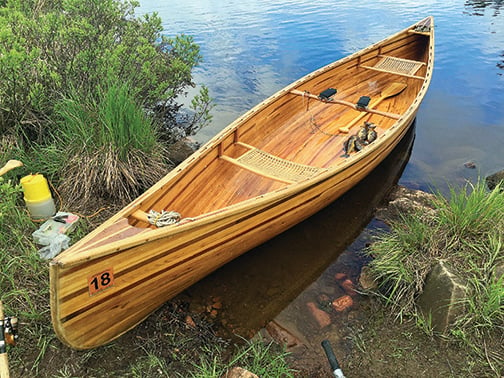
Got a hankering to build a wooden canoe? Here’s how to do it
“The way of a canoe is the way of the wilderness and of a freedom almost forgotten. It is an
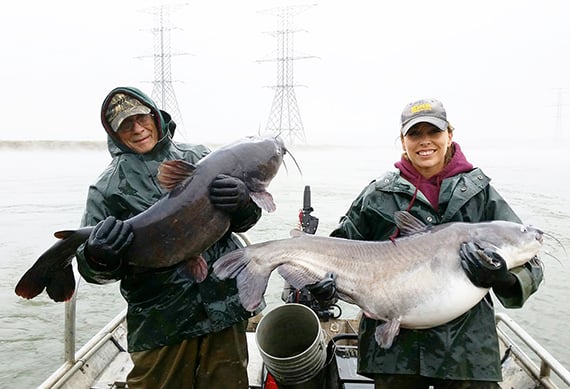
Longtime Illinois DNR fisheries biologist leaves behind legacy for anglers
He referred to himself as a “river rat” and spent his career working to better Illinois’ fisheries. Wayne Herndon Jr.,
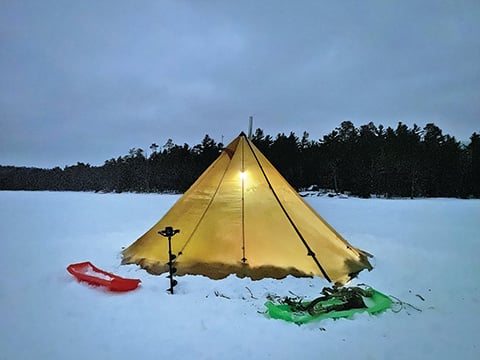
Ice fishing from a hot tent gives winter anglers freedom to roam
I’ve been using hot tents in the backcountry for years. Call it romanticizing, but there’s something special about watching smoke
