




Home » Pennsylvania » Opinion » White Nose Syndrome still threatens bat species in Pennsylvania and beyond
White Nose Syndrome still threatens bat species in Pennsylvania and beyond

Love them or hate them, bats are critical to the state of Pennsylvania. But experts are concerned about the deadly toll white nose syndrome is taking on their population.
Wildlife biologist Greg Turner serves as the non-game mammal section supervisor for the Pennsylvania Game Commission. Originally overseeing all mammals without a hunting season in the state, his job has evolved to focus predominantly on bats in recent years.
“Bats play a significant role in every ecosystem on the planet,” Turner said. “They spread seeds, pollinate plants- in fact, they are the sole pollinators of a number of fruits- and they eat many insects.”
“Here on the East Coast, where bats are primarily insectivores, they can consume their body weight or more in insects every night. It is estimated that one bat will eat 4,500 insects per night or just under one million insects per year.”
“One study published in Science magazine estimated bats can save farmers about $74 per acre in crop damage equating to $300 million annually, and we can’t even put a value on the aide they provide for our forests,” Turner explained.
While we might not appreciate the guano left behind, one would be hard pressed to find a Pennsylvania resident who doesn’t appreciate less mosquitoes, which are prime carriers of encephalitis, heartworm disease and West Nile Virus. Bats are perhaps the best eco-friendly control of these buzzing and biting pests.
But northeastern bat populations have drastically declined since White-Nose Syndrome – or WNS – was first discovered in a cave near Albany, New York in 2006. The problem has grown exponentially to affect all six of Pennsylvania’s cave-hibernating bat species, which collectively have declined by over 98-percent statewide.
“WNS is caused by a fungal pathogen believed to have come from Europe or Asia,” Turner explained. “It lives in the sediment of the soil and is spread by both bats and people who transfer it to other sites via contaminated boots and clothing.”
“Bats hibernate for approximately six months in the wintertime, relying on excess fat stores to survive. Once every 15 days or so, they warm up their body temperatures, fly around, drink some water, and then go back to hibernation.”
“WNS causes infected bats to arouse from hibernation 2-3 times more often which burns up their energy reserves, causing them to seek more food. This ultimately results in starvation, freezing or relocation to another cave, which spreads the disease even further,” Turner said.
Turner explained that prior to WNS, the Little Brown Bat and Northern Long-eared Bat comprised 95-98 percent of Pennsylvania’s total bat population. His monitoring efforts over the past decade have noted an alarming 99.9 percent reduction in these two species.
The U.S. Fish & Wildlife Service has already listed the northern long-eared bat as threatened and is currently looking into listing both the little brown and tri-colored bats as well. The Indiana bat is a federally endangered species, leaving the big brown and small-footed bats as the state’s most prevalent cave-dwelling species at the present time.
“Decontamination methods and public outreach have reduced the spread of WNS to about 20 miles per year, as opposed to 500 miles when it was first discovered,” Turner said. “Likewise, our focus on monitoring and protecting maternity colonies seems to be making a difference in some areas.”
Females, which can live up to 40 years when fully healthy, often form colonial groups for rearing their young but only produce one pup per year. They like to utilize manmade structures such as church steeples, old barns, attics and bat boxes as shelter for this important summer task.
“We recently counted 466 bats coming out of one bat box along the Juniata River, but it is difficult to say whether this is a true comeback or an aggregation of survivors who all gravitated to this particular structure,” Turner said.
The Game Commission utilizes the services of multiple citizens who help biologists track these colonies through a collaborative program they established and labeled the Appalachian Bat Count.
The idea behind this important wildlife conservation partnership is to engage the public in areas of known bat colonies, using active volunteers to conduct pre- and post-volant counts of summer maternity sites to assess reproductive success.
“Through these citizen counts, we observed a gradual drop in reproduction but after a few years, it improved again- leading us to believe some of the bats are beginning to adapt to the disease,” Turner said. “Counting bats can be difficult, but the information gleaned from the survey is incredibly useful.”
“Every year, I learn something new about bats,” Turner marveled. “They impress me the more I learn about them, and I’m hoping to be continually fascinated by their resiliency. We’re just trying to do everything we can to help them persist for generations to come.”
For more on how to prevent the spread of WNS, instructions for building and erecting bat boxes and general bat-related information, visit www.pgc.pa.gov.
SUBSCRIBER CONTENT
Read this article now.
Create a free Outdoor News account.
Create a free account below to get instant access to this article, thousands of Outdoor News stories, and our digital editions. Your 1-month trial starts the moment you sign up.
No credit card required
No credit card required
Subscriber? Login Here.
Share on Social
Hand-Picked For You
Pennsylvania Mixed Bag: Docks removed early at Lake Wallenpaupack
Pennsylvania’s hunting license sales down so far this year
EHD in Michigan’s deer herd concentrated to four counties so far
Michigan’s statewide fishing and hunting report on Sept. 18, 2026
Partnerships help preserve public lands, habitat for Minnesota’s prairie chickens
Dan Small Outdoors Radio: Show 2138
Related Articles

Pennsylvania Mixed Bag: Docks removed early at Lake Wallenpaupack
The Pennsylvania Fish & Boat Commission recently announced that public boat docks at the Mangan Cove Access on Lake Wallenpaupack,
EHD in Michigan’s deer herd concentrated to four counties so far
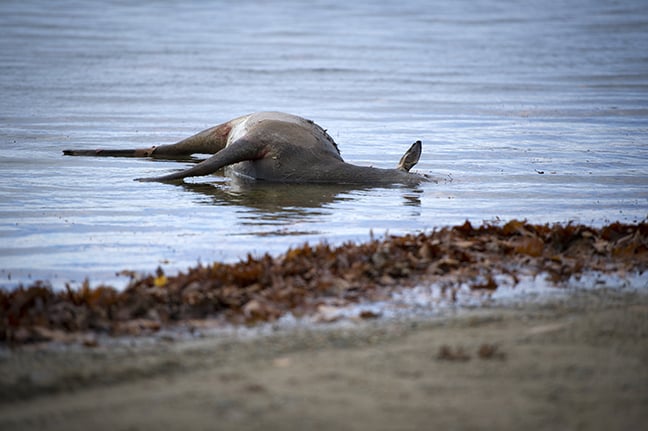
The Michigan DNR has confirmed epizootic hemorrhagic disease in four counties so far in 2026, with plenty more tests pending

Dan Small Outdoors Radio: Show 2138
Indiana hunter scores a huge black bear in northern Wisconsin. Jeff heads to Cass Lake, Minn. for a Masters Walleye
