


Outdoor News may earn revenue from products shown on this page by participating in affiliate programs. This comes at no extra cost to you. Click here to learn more.
Fishing in November can be feast or famine. Fish are in a state of transition from summer haunts to winter locations. In between, they can sometimes be difficult to find.
In general, fish are moving from deeper locations to the shallows for several reasons. Water temperatures finally are stabilizing after the fall turnover. Much of the lake is the same temperature throughout which widely scatters fish.
Predators begin to head shallow because of several factors. One, the shallows are likely to be warmer than deeper water. Fall sunshine is still intense enough to warm areas of a relatively shallow water, especially if they have a dark bottom. Areas sheltered from strong winds, like coves, bays and marinas, stay relatively warm compared to the rest of the lake. Winds push layers of tepid surface water stacking it where it’s not subject to strong winds and fish follow.
Minnows and other baitfish move shallow because they either spawn in the fall, are attracted to the warmer water and as weeds begin to die, they seek out still-green vegetation to hide in where oxygen levels are still favorable. Predators follow.
One place to look is in marinas. Because marinas are sheltered, they are one environment where conditions tend to stabilize quickest in the fall. Because they are not subject to wind, marinas tend to stay a little warmer than the main lake. Marinas generally have depths of 10 feet or less and are filled with structure that attracts game fish. Things like floating docks, weed edges, and pillars and posts provide fish-holding structure. You can always find a sheltered area to fish in a marina regardless how mush the wind is blowing.
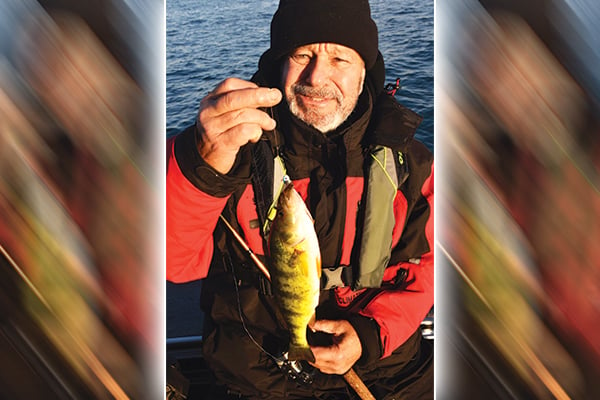
Some species like sunfish, bluegill, crappie and perch may have been there the marina the whole time, but become more available and tuned in to feeding as winter approaches. Other species, like pike and walleye, are attracted to the forage that congregates and schools in marinas in the fall.
Panfish will be keying in on aquatic insects found in the last green weeds commonly found in marinas. Well defined edges expose themselves as boats are pulled and put in winter storage. Weeds tend to not grow under boats in slips because they are in the shade and they don’t get any sunlight. Outside of the shadow of the hulls, weeds grow creating a well-defined edges.
The same happens to docks. Weeds don’t grow under the docks. Outside they do. Panfish hide in the weeds or just on the edges. Bluegills and sunfish can be found feeding on the insects that are still active in the vegetation. Crappies and perch will keyed in on the bounty of minnows stacking up in the marinas around the weeds.
You can increase your odds by fishing both bobbers or floats and casting ice-fishing jigs on another rod when targeting panfish. Bobbers allow you to suspend baits close to the edge of docks and posts just off bottom. Fish taking shelter under the docks will often poke their heads out to feed.
Positioning so a stiff wind drifts your jig along the edge of the dock helps you cover water and add a little movement. You can use wax worms or a piece of red worm for ’gills and sunnies or live shiner minnows for yellow bellies and specks. If the bite is good, plastics and Gulp! can work just as well, preventing having to fool with live bait and cold fingers.
FISHING FEATURES FROM OUTDOOR NEWS:
Into the abyss for late-fall walleyes
What’s the intrigue of flathead fishing? It’s ‘the fight, their power’
Fall is the perfect time to catch Lake Erie’s giant walleyes; here’s what to focus on
While you’re keeping an eye on a bobber you can also cast. A 4 mm or 4.5 mm Custom Jigs & Spins Cheka ice-fishing jig or a number 10 or 12 Majmun Tungsten jig suspended below either a fixed or slip Thill float will interest about anything that swims.
If the quarry is mainly perch, a 1-inch Gulp! Minnow is money. The biggest sunfish and bluegills will eat the Gulp! Minnows too. Shiner, white glow and chartreuse are the best colors. Jig colors run the gamut from light to dark. Experiment to find the best color, although the jigs are basically just a way to deliver the bait. A jar of Gulp! will last you the entire season and you won’t have to worry about keeping minnows and wax worms alive.
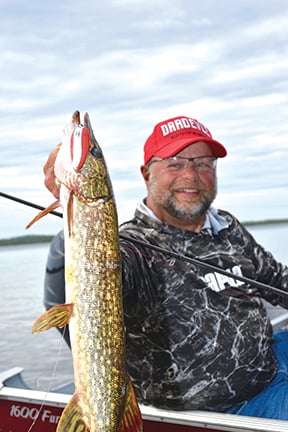
If the panfish are biting and they suddenly quit, take note, Northern pike will frequent the marinas attracted like a siren’s song to the tepid water and bounty of prey. Keep a little bigger plastic on a jig head to cast when the bite suddenly stops. Panfish will scatter when pike are on the prowl and you might be able to add a good northern to the stringer by making a few quick casts. Keep a bigger minnow tethered under a float for just such occasions.
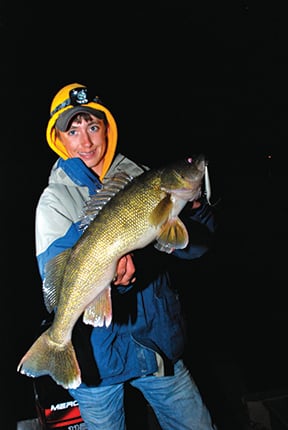
You probably won’t catch many walleyes in the marinas during the day, but after dark is a different story. Brightly lit marinas attract minnows and walleyes aren’t far behind once it gets dark. Listen for splashing and cavorting and chuck 4- or 5-inch stick baits using a jerk and pause retrieve.
Schools of walleye often trap schools of shiners against the marina walls and tear them up. Marinas located near Saginaw Bay and the Saginaw River, Lake Erie and Lake St. Clair produce outstanding action for those not worried about loosing a little sleep. Other opportunities are just waiting to be discovered.
Most marinas are private. The water isn’t. As long as you entered via a public right of way or connecting water and don’t get out on the docks or tie off, you’re good. When in doubt, contact the marina directly or your local conservation officer. Many will tell you that you can’t, but they’re likely just trying to keep the secret to themselves.
Notes off a soiled cuff: A ‘senior moment’ in our story on Pennsylvania’s new record channel catfish
First, let me say that I know the difference between a channel catfish and a flathead catfish. But I had
WI Daily Update: CWD confirmed for first time in Marinette County
The Wisconsin DNR confirmed the first positive test result for chronic wasting disease in a wild deer in northeastern Wisconsin’s

Lake Loramie in southwest Ohio is good wintertime bet
There are a host of fish species that are worth noting when it comes to southwest Ohio’s Lake Loramie.
