


Home » Home Page News » Commentary: Hunting and fishing need your voice – and your vote this November
Commentary: Hunting and fishing need your voice – and your vote this November
Most of us don’t head afield to think about politics. We go to hunt, fish, camp or spend precious time in places that matter to us. We go for the invaluable experience of “just being out there.” And we want to make sure our kids and grandkids can enjoy the same opportunities we’ve had.
But here’s something every hunter and angler needs to remember: The future of our hunting and fishing is often decided in Washington, D.C. This is a critical moment for fish and wildlife, and we have a responsibility, an inherited obligation, to speak up.
The people we send to Congress vote on budgets, write laws, fund federal agencies and decide which priorities advance and which get left behind. We’ve seen what happens when our issues become political chips, traded away or elevated depending on what best serves a political agenda.
Everybody is fed up with Congress. I understand that feeling. But if we want different results, we need to interact differently. We need to hold those people accountable. As Hall of Fame football coach Bill Parcells put it, “You are what your record says you are.” That applies to Congress, too.
Over the past two years, we’ve seen reasons for both optimism and concern.
MORE COVERAGE FROM OUTDOOR NEWS:
Solve for where the bucks are pre-rut, and tag out before the chaos kicks in
Proposed regs would affect Minnesota/Wisconsin border water harvest limits, closed waters
Minnesota duck hunters await fresh birds as warm weather lingers
Look at our public lands. In 2025, proposals to sell federal public lands were removed from major budget legislation after hunters, anglers and other Americans spoke out. That was a reminder that our voices can make a difference.
But the debate over the future of these lands is far from over. The administration has proposed rescinding the National Roadless Rule and changing the 2005 Bush administration Travel Management Rule. Both affect how much wildlife remains on our national forests.
Decisions like these affect wildlife habitat, fisheries and the outdoor opportunities for the next generation. These proposals also raise questions about how much weight public input carries when longstanding safeguards are reconsidered despite public support.
We need to pay attention to the people and institutions responsible for managing our shared resources. For waterfowl and upland hunters, particularly in the Midwest, national wildlife refuges are an essential part of the landscape. Weakening agencies like the U.S. Fish and Wildlife Service or losing the talented people who do this conservation work has serious consequences.
Hunters and anglers have led conservation funding for generations. We should expect that investment to be put to work for our fish and wildlife, now and for our children.
That means standing up for science, too. Science as the basis for wildlife management is one of the foundational principles of the North American Model of Wildlife Conservation. Hunters have long relied on research and sound wildlife management to understand what’s happening to the critters we pursue and the habitats they need.
Chronic wasting disease is one example. Deer and elk don’t recognize political boundaries, and managing this disease requires research, surveillance and cooperation among federal, state and Tribal governments.
In 2026, the U.S. Department of Agriculture announced approximately $12 million to support CWD control and prevention. We shouldn’t allow science to become an afterthought, muscled out by political or economic demands.
Clean water is another test of our commitment. In Alaska, conservationists are monitoring the proposed 211-mile Ambler Road project, which would require 2,932 water crossings, including thousands of culverts and 49 bridges through what’s now untrammeled wilderness.
In the Lower 48, consider the Boundary Waters Wilderness in Minnesota. In April, Congress used the Congressional Review Act to overturn a 20-year mineral withdrawal covering more than 225,000 acres of the Superior National Forest, within the wilderness area watershed. The implications extend beyond the Boundary Waters. Using the Congressional Review Act, an obscure measure used seldom until recent proliferation, makes it easy for Congress to eliminate conservation measures established through federal agency decisions – even when they have overwhelming public support.
Our lands and waters need management grounded in sound science, meaningful public input and a long-term view that hunters have used to create what we enjoy today.
These examples aren’t an argument that government gets everything wrong – or right. Nor should conservation belong to one political party. Hunters and anglers come from all walks of life, and we won’t always agree on the best way to manage a resource.
But we all agree that the condition of our lands and waters, public access, and the future of our fish and wildlife deserve close attention from the people elected to represent us. We need to hold those people accountable for their actions – and their records.
So before you vote, take a little time to look beyond the slogans. Find out how candidates have voted and what they’ve actually done for conservation. Ask where they stand on access, clean water, wildlife management and the future of hunting and fishing. Don’t assume you know the answers based on a party label.
Theodore Roosevelt once said, “The wildlife and its habitat cannot speak, so we must and we will.” Today, that responsibility belongs to us. Failure to speak up is a failure to those hunters and anglers still in the womb of time. What we stand to lose may not come back in our lifetimes, if ever.
We may not go to Washington to make our living. But the people we send there will shape the places where we hunt and fish. Let them know by your voice and your vote. We must vote like that matters, because it does matter.
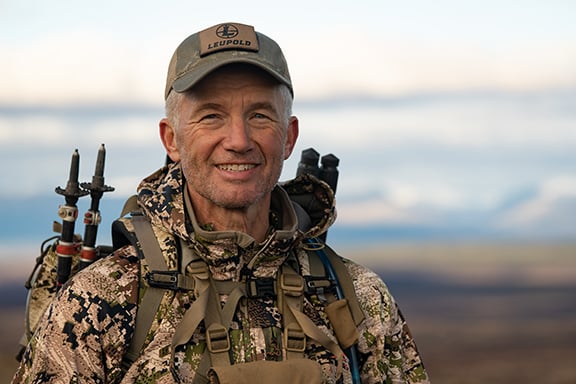
Randy Newberg is a hunter and host of the Fresh Tracks and Hunt Talk podcasts. He lives in Bozeman, Montana.
SUBSCRIBER CONTENT
Read this article now.
Create a free Outdoor News account.
Create a free account below to get instant access to this article, thousands of Outdoor News stories, and our digital editions. Your 1-month trial starts the moment you sign up.
No credit card required
No credit card required
Subscriber? Login Here.
Share on Social
Hand-Picked For You
Outdoor horoscopes for this week
The allure of big bucks: Where to find a jaw-dropper this firearms season
Make the most of bow season’s middle before the rut
Solve for where the bucks are pre-rut, and tag out before the chaos kicks in
Patrick Durkin: Wisconsin’s Tom Tiffany can’t tell trivial from crucial on conservation issues
Minnesota DNR reminds firearms deer hunters to prepare for CWD sampling
Related Articles
Outdoor horoscopes for this week
Aries (March 21-April 19): Your dog locks up on point, the rooster flushes cackling right at your feet, and you
Solve for where the bucks are pre-rut, and tag out before the chaos kicks in
There is a period every fall when the whitetail woods seem to change almost overnight. The bucks are still moving
Proposed regs would affect Minnesota/Wisconsin border water harvest limits, closed waters
The Minnesota DNR is asking residents to share their opinions on potential changes to regulations for border waters, closed waters,
