




“How can we design and create fishing lures that will attract the fish we’re fishing for and sell well in our area?”
It’s the kind of question you might expect to hear at a tackle shop before the spring opener or batted around between experienced anglers after a long day on the river or lake. Instead, the question came from a handful of third and fourth grade students inside one of Michigan’s last one-room schoolhouses that is still operating.
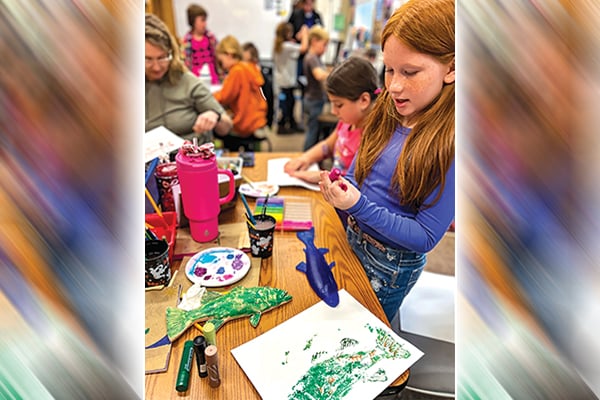
By focusing on that question, elementary school students from Crawford School in Kalkaska County, also known as Excelsior School District No. 1, turned the region’s fishing culture into a project-based learning experiment that seamlessly blended science, art and economics with local tradition and inquiry-based education.
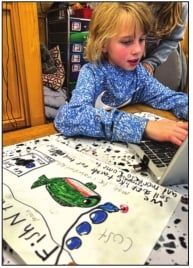
The tiny school, which has remained in operation for more than 140 years and is one of only 20 working one-room schoolhouses left in Michigan, was transformed into a student-led business throughout the course of the project.
“One-room schoolhouses create community,” Rochelle Balkam, the president of the Michigan One Room Schoolhouse Association, said. “A lot of the things that we think of as innovations today in schools, like peer education, really came out of how education took place in these schools.
They served as the heart of their community because they brought everyone together.”
At Crawford School, fishing is more than just a shared pastime among the school’s 50 or so K-8 students. It’s a multi-generational tradition and a key part of the community’s culture and heritage.
Located less than 10 miles from the school is the village of Kalkaska, which has been home to the National Trout Festival since 1931. The festival is so beloved by the local community that schools even close for the day to allow students to participate in the annual spring celebration. A giant, 17-foot-long brook trout statue stands downtown as a reminder of the event for the remainder of the year.
“Teaching in a one-room schoolhouse means you really get to know your kids,” Karie Saxton, the third and fourth grade teacher for Crawford School, said. “I knew I had a lot of kids who loved the outdoors, and even though I don’t know a lot about fishing, I knew I could find some people who could help me.”
The students’ curiosity and passion for fish floated to the surface during a Nature Awaits field trip to the Carl T. Johnson Hunting and Fishing Center in nearby Cadillac, when the students explored a state park on a guided hike with an educator from the Michigan DNR.
MORE COVERAGE FROM MICHIGAN OUTDOOR NEWS:
FishPass nears final construction phase in Michigan’s Traverse City
Ralph Loos: Mandatory reporting system offers good insight into Michigan’s turkey, deer harvest
Bear, elk hunting licenses chosen in Michigan
While on the field trip, the students studied species found in inland lakes, discussed food webs and watched as fish darted through the nearby canal. Once students were back in the classroom, the essential question took center stage: how do we design lures that can catch fish and attract potential customers?
Framed as an economics lesson, the project led students to spend several weeks brainstorming, planning and eventually rotating through a series of hands-on stations with additional help from local community members and staff from the Michigan DNR and the MiSTEM Learning Network.
Without even realizing it, the students achieved state curriculum standards in science, math, English and art – all through the familiar lens of fishing.
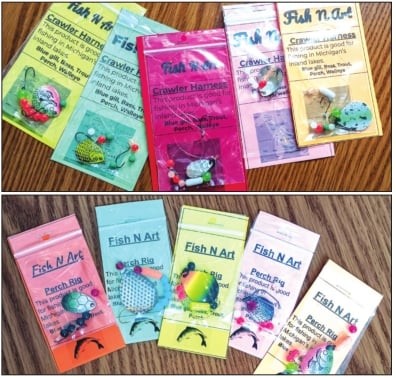
At one station, they learned to assemble crawler harnesses, a trailing rig designed to spin with hooks and beads to attract fish like walleye. At another, they learned to build perch rigs, a multi-hook lure that sinks and uses live bait to catch panfish.
Once each lure was completed, the students would carefully calculate the cost of constructing it and price it accordingly.
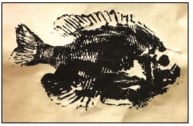
Nearby at the marketing station, students designed packaging for the lures and a display for their booth at an upcoming craft sale, while another station introduced students to gyotaku, a traditional Japanese art style. At that station, students used realistic rubber fish as stamps to create detailed prints of different species, which allowed them to learn fish anatomy and build their observation skills.
During the project, students were not forced to stay quietly confined to desks or to work only within the lines of a worksheet. Instead, they learned by tying clinch knots with their own small hands, by passionately debating the merits of catching bluegill versus perch with their fellow classmates and by relying on the northern Michigan community firmly rooted around them.
“The support of our community made this project possible,” Karie Saxton said. “Everybody that I reached out to was like ‘absolutely – tell me what time,’ and they were there, in our classroom, helping our kids learn.”
Research supports how powerful an experience like this is and consistently shows that students retain more information and engage more deeply when learning feels active, collaborative and connected to the world they know.
“Karie was able to ask her students questions and get them at a headspace where they found freedom within the structure of the project,” Laura Quist, an educator for the DNR who helped with the project, said. “All of it became a learning opportunity, and they didn’t even realize that they were learning at some point. The kids had 110% ownership of the project from start to finish, which was amazing to see and help support.”
In addition to help from the DNR, this project was made possible through support from MiSTEM, a statewide initiative focused on expanding access to science, technology, engineering and math education.
MiSTEM helps fund programs that connect students to real-world career pathways, particularly in underserved communities. In rural communities like Kalkaska, organizations like MiSTEM and the DNR’s Nature Awaits program help schools turn nature and their local communities into a backdrop for deeper and more impactful learning.
“The best part of my job is being able to connect schools with business partners and to connect schools with opportunities,” Sarah Roche, the Region 13 director for MiSTEM, said. “At the end of the day, projects like this are a little bit trickier than worksheets and tests, but the content and the engagement is just top-notch and worth it.”
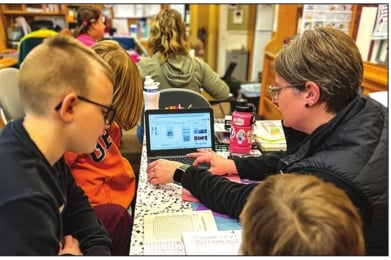
In the project’s final phase, the students sold their brightly packaged lures and colorful gyotaku art prints at a booth they designed for a local craft fair. Within hours, they sold out. When it came time to decide what to do with their profits, their teacher gave them one rule: At least half of the money needed to benefit someone outside the school.
After brainstorming ideas and narrowing them down through multiple rounds of sticky-dot voting, the class chose to donate a portion of the proceeds to their local animal shelter.
When the shelter’s director explained its biggest need was money to pay for emergency veterinary care, the students agreed to donate directly to the shelter’s veterinary fund, instead of purchasing items like food or toys for the animals.
“If that’s what they need, then that’s what we should give,” one student said.
The students then decided to use the remaining profits for a class celebration and an ice cream party for the entire school.
Designing a successful fishing lure required students to think critically and make connections, and their final creations didn’t come from the latest cutting-edge technology. Instead, they came from the personal connections the students made to nature and their local community.
And it all began with a simple question about fishing lures.
Aileen Kemme is a communications coordinator with Michigan DNR
Michigan DNR asks public to report sick deer as EHD surfaces
Michigan’s archery deer season opened Oct. 1 with some questions about the state’s deer herd.
The DNR has noted

Dan Small Outdoors Radio: Show 2140
Montana surf and turf: elk and cutthroats. Enjoy fall colors and brook trout in Florence County, Wisconsin. When to wait
Nearly 3,000 acres of Ohio’s Wayne National Forest auctioned for drilling
Almost 3,000 acres of Ohio’s only national forest were leased recently for more than $11 million for horizontal drilling for
