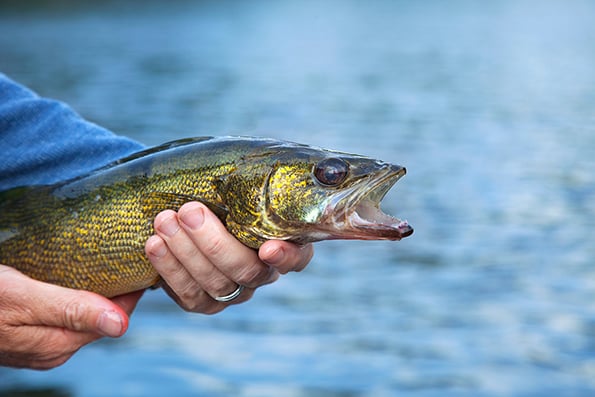
Harrisburg — The Pennsylvania Fish & Boat Commission announced April 21 that the 2026 creel limit for Lake Erie yellow perch will remain at 30 per day and the creel limit for walleyes will stay at six per day.
The commission’s Lake Erie Research Unit evaluates the populations of yellow perch and walleyes in Lake Erie annually.
If populations reach critically low levels, a management process is followed to reduce harvest and rebuild the numbers of yellow perch and walleyes in the lake. All jurisdictions on Lake Erie adhere to this system.
“Our assessment in 2025 showed that both yellow perch and walleye populations in the Pennsylvania waters of Lake Erie remain at levels that don’t necessitate regulation changes,” said Mark Haffley, the commission’s Lake Erie Unit leader.
“Based on these findings, the 2026 creel limits are being maintained at the standard limits.”
MORE COVERAGE FROM PENNSYLVANIA OUTDOOR NEWS:
Rep. Maloney seeks a grand jury hearing to investigate harassment claims against Pennsylvania Game Commission
Eaglet near Pittsburgh recovers from surgery to remove fishing hook
Let bluegills point the way to crappies this spring
At its March 27 meeting, the Lake Erie Committee allotted to Pennsylvania a yellow perch total allowable catch of 248,000 pounds.
The 2026 level includes a yellow perch allotment for Pennsylvania’s commercial trap net fishery of 100,000 pounds.
Currently, Pennsylvania is a very small part of the total yellow perch harvest in Lake Erie.
Yellow perch harvest has averaged about 40,405 pounds over the last five years. In 2025, Pennsylvania only harvested 45,522 pounds (1.5 %) of the 3.1 million pounds harvested lakewide.
The yellow perch and walleye populations in Lake Erie are maintained strictly by natural reproduction. Good “hatches” and survival of young fish are necessary to provide fish for sport and commercial fisheries.
The Lake Erie walleye hatches have been record-setting over the last five years, while yellow perch hatches have been poor over the same period.
Both fisheries reflect these trends, resulting in most anglers targeting only the most abundant fish populations. In 2025, 91% of Lake Erie boat anglers targeted walleyes; about 1% targeted yellow perch.
Based on a 2025 abundance estimate of 57.6 million walleyes age two or older, the walleye population has declined about 26.6% from 2025 and approximately 8% of the walleye abundance will be two-year-old fish averaging approximately 14 inches.
It takes two to three years for Lake Erie walleyes to fully grow to the 15-inch minimum size limit.
The commission’s objective is to keep harvest limits at conservative levels without being too restrictive to fisheries, but also be able to act promptly if walleye or yellow perch populations reach critically low levels.
The commission adopted a regulation in 2012 that established flexible creel limits for walleyes and yellow perch based on the annual quotas established by the allocations, which consists of fisheries managers from Pennsylvania, Ohio, New York, Michigan, and Ontario, Canada.
Under the regulation, the Fish & Boat Commission sets daily creel limits for these species by April 15 each year.
“Adaptive fishing regulations are based on the most recent fishery assessment results and are better aligned with the current status of the yellow perch and walleye stocks,” Haffley said.
“This regulatory flexibility provides fisheries managers the ability to change daily harvest limits prior to the onset of the summer boat fishing season on Lake Erie.”