Harrisburg — This winter, avian influenza viruses have continued to circulate in wild birds across Pennsylvania, and more birds will be migrating to and through the state in the coming weeks. Strains of highly pathogenic avian influenza virus have been present in Pennsylvania’s wild birds since early 2022.
As migration unfolds, the Pennsylvania Game Commission continues to respond to the outbreak, and is asking the public to report any wild birds observed sick or found dead.
Reports can be phoned in to 1-833-PGC-WILD (1-833-742-9453). Submitting reports allows the commission the opportunity to step in with wildlife-management actions including dispatching sick wild birds, recovering and removing carcasses, pursuing diagnostic testing, and conducting stakeholder outreach.
The agency continues to work with the Wildlife Futures Program, the U.S. Department of Agriculture and other partners when deploying these strategies. The most substantial activity this winter involved the removal of an estimated 2,000 wild bird carcasses, predominantly snow geese, from a quarry in Northampton County in December and January.
MORE COVERAGE FROM PENNSYLVANIA OUTDOOR NEWS:
Giant muskie through the ice is huge surprise for Pennsylvania angler
Dave Maloney, Pa. lawmaker vocal on hunting, fishing issues, opting to leave ‘corruption of politics’
Meet Laura Yeates… Bethlehem, Pa.’s ‘queen of the flatheads’
“Over the past five years, Game Commission dispatchers and field personnel, along with our partners, have worked to respond to and investigate suspected highly pathogenic avian influenza events across the commonwealth,” said the agency’s wildlife veterinarian, Dr. Andrew Di Salvo.
“Responding to every report received from the public is neither logistically possible nor in the best interest of the wildlife, so incidents are prioritized to ensure our actions will have the most impact.”
High-priority incidents Di Salvo added, include cases with clear human or domestic animal exposure, a public site, such as a park or playground, that could pose an exposure risk to humans or domestic animals, or a large number of sick or dead wildlife on the landscape that could pose an exposure risk to scavenging wildlife.”
Waterfowl – from wood ducks and pintails to snow geese and tundra swans – have been bottled up farther south by cold weather and frozen conditions here. Timing is important for these and other birds returning to their breeding grounds because arriving late means delayed nesting.
But they also can’t make the demanding journey if food and resting areas along their route are too hard to come by, as happens when conditions are harsh. As Pennsylvania continues to thaw out, though, migrating birds will begin showing up.
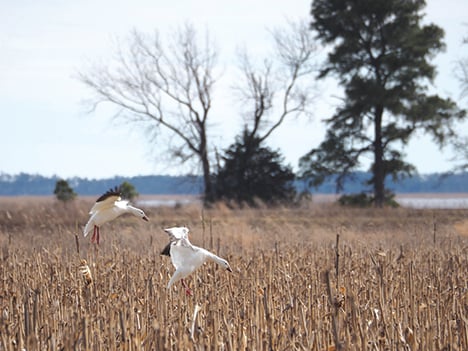
Snow geese often come to mind when talking about migration because they flock in large numbers and attract much attention when they come through Pennsylvania on their way to the Arctic.
The Game Commission’s Middle Creek Wildlife Management Area, on the border of Lebanon and Lancaster counties, is a key stop for migrating snow geese, in some years hosting more than 100,000 of them.
Snow geese have just begun showing up at Middle Creek, and more will follow.
Wild birds are natural carriers of avian influenza viruses and bird migration enables the disease to be spread over vast distances.
The disease also can be spread by legal and illegal movement of infected birds, poultry products, contaminated materials, equipment and vehicles if appropriate biosecurity precautions are not taken.
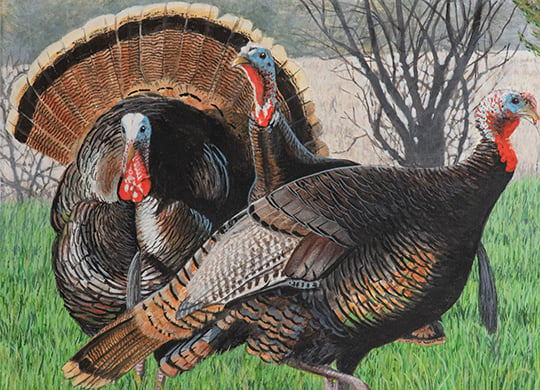
Aside from waterfowl and shorebirds, avian influenza viruses can significantly impact wild poultry such as turkeys and grouse, raptors such as hawks and eagles, and other avian scavengers, such as crows and ravens.
Birds infected with highly pathogenic avian influenza can exhibit neurologic signs, such as swimming or walking in circles, tilting their heads in an unnatural position, tremoring, seizing or having difficulty flying.
Infected birds shed the virus in their feces and saliva, and the disease can impact other mammals, including humans.
The public should avoid contacting wild birds or their feces. The Game Commission does not advise that the public handle any abnormal, injured, sick or dead wildlife unless authorized to do so.