




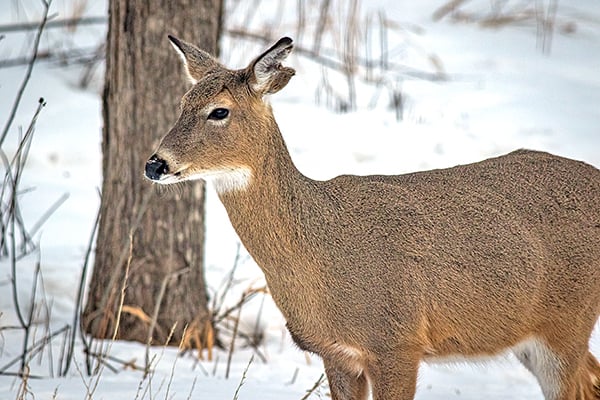
In my last column, I wrote a bit about a unique doe that I’ve been following for the past four years. She’s got a split left ear that you can’t miss, and she’s been a fun gal to follow ever since I first noticed it. She’s at least 5.5 years old based on my history with her, but she could easily be older.
She’s been an interesting case study. After all, how many does are unique enough that you can truly be sure they are the same animal? I have extensive notes on how different bucks have used the property over the years, but she’s the first doe I’ve followed closely, across multiple years, no less.
 She’s a homebody, though strangely enough, I’ve never seen her while hunting, nor has anyone else in my group to my knowledge. Not that she’s nocturnal by any stretch. She’ll often poke her nose out on food plots well before dark during the first half of the season, though to be fair, not in places that I would typically have reason to hunt that time of year.
Best I can tell, she makes her bed in a block of woods behind my dad’s shed that we never enter. The only time someone walks into that chunk of timber is to trail a wounded deer or look for sheds in the spring. We thinned the timber stand about four years ago, and she’s been camping out there ever since.
There are definitely other areas of the property that she’ll venture to, but she seems to have a small core area of maybe 30 to 40 acres and a home range that I’m guessing spans around 350 acres for most of the year. I know she spends time on at least one or two neighboring properties, so I’m guessing at her overall home range size, but I’ve seen where she crosses the road enough that I have her pretty dialed in.
At this point, I’ve enjoyed watching her so much that part of me hopes she dies of old age, so I get to continue learning from her.
She’s been a great lesson in designing habitat management on a property simply by observing how she’s reacted to various things we’ve done during her lifetime and how they connect to her overall travels. She’s also been a great teacher on the impact of hunting pressure. It doesn’t take much for her to hunker down and sit tight.
MORE WHITETAIL COVERAGE FROM OUTDOOR NEWS:
CWD rates set a record pace in Wisconsin’s farm country during 2025
Knife accident turns deer hunt into all-night survival challenge for Wisconsin hunter
Meet Jim Ploen: A bowhunting and target archery icon still shooting strong at 98
Usually, I’ll stop getting daylight pictures of her after opening day of gun season, though she’s still around under the cover of darkness. By the week of Thanksgiving, she’ll usually start popping up close to the edges of shooting light again, probably because she’s got to start packing on fat, and we typically leave them alone between gun season and muzzleloader opener.
I’ve long said that I learn far more from the deer I don’t shoot than I do from deer I’ve harvested. This doe exemplifies that. She’s taught me more than most deer have about habitat preferences of whitetails and how they relate to their landscape across seasons.
Something else she’s really driven home to me is how important good mothers are to a healthy deer herd. Bucks get most of the press because of their headgear, but you don’t get big bucks without happy, healthy does. Which brings me back to my split-eared gal, who has successfully raised twin fawns every single year I’ve followed her.
While there’s nothing particularly impressive about raising twin fawns in any given year, it’s her consistency that stands out. Considering one of those years was the winter of 2022-23, the worst winter in a decade, she’s got my respect.
Precious few does raised twins that year, but she did. What’s more, she’s not just birthing twins, she’s raising them to recruitment age in the fall. That takes a savvy mother year after year.
In our northern climate, mama does like this are really the lifeblood of the herd. Deer can rebound fairly fast after a population shock (like bad winters), but it’s entirely predicated on does being good mothers and successfully recruiting fawns into the population.
This is especially important for areas prone to deep snow, like northern Minnesota. A sizeable number of does like this can mean a much faster recovery when Mother Nature knocks back the herd.
Another important factor is that she’s clearly kept her fawns safe from predators during those critical first weeks of life. Granted, I don’t have wolves in areas I hunt, but we get the occasional bear, and there are more than enough coyotes to go around. Sneaking fawns by these carnivores only comes from having good fawning habitat and a smart mom.
I know something will eventually take this split-eared doe, whether it’s a hunter’s bullet, 60-mph driver, or Old Man Winter. One thing I know for sure is that I’ll be sad when she’s gone. She’s taught me a lot and made me a better hunter and land manager.
It’s been a lot of fun getting to know her over the years, and I’m thankful for healthy whitetail mothers like her.
Mixed conditions, but more ducks greet Minnesota’s opener this Saturday
The traditional Minnesota duck season opens 30 minutes before sunrise this Saturday, Sept. 26, and Jerry Christopherson, of Heron Lake
Fall is the perfect time to catch Lake Erie’s giant walleyes; here’s what to focus on
Anglers who are prepared to face some colder weather can catch lunker walleyes. For the past decade, walleye fishing derbies
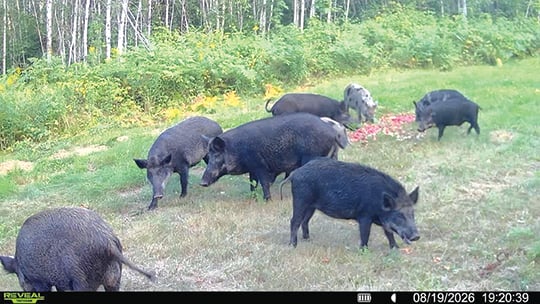
Upper Peninsula landowner provides evidence feral pigs have established there
A population of feral pigs that escaped from a game farm have become established in southern Marquette County, based on
