




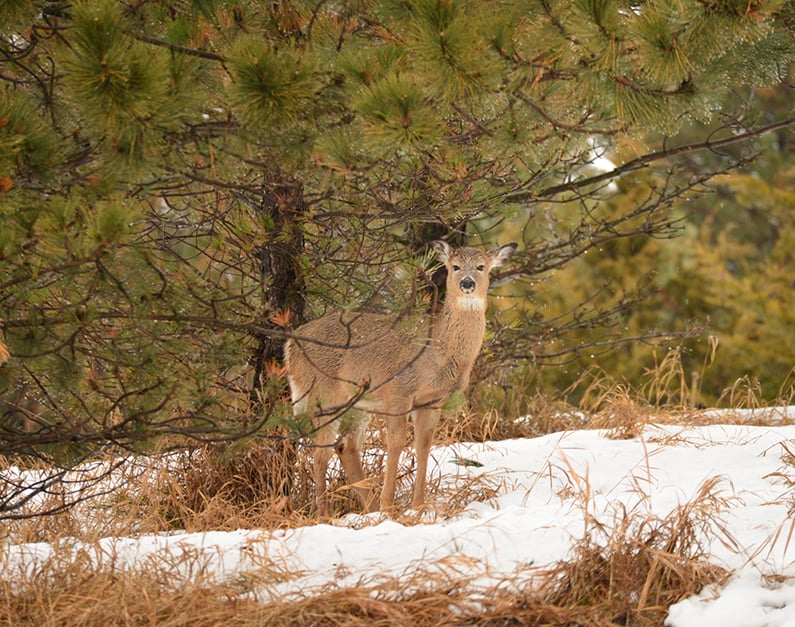
Truthfully, I hate any sort of event that’s labeled a “reveal,” so my apologies. But with just days until summer officially ends, we may be on the verge of discovering the findings of the state Office of the Legislative Auditor’s special review of the Minnesota DNR’s “timber harvest decisions in wildlife management areas” and whether said decisions violated the conditions required of federal funding: in a nutshell, prioritizing logging operations above what benefits wildlife.
It’s a matter that’s become somewhat of a saga in wildlife management and hunting circles.
 Sources have told me the OLA handed off its report to DNR leaders for a look-see a few weeks ago. I don’t know exactly how that process works, and, as I write this, I haven’t heard back from the folks at OLA. So we’ll clarify that at a later date.
While much of this might seem like inside baseball to the average big- or small-game hunter, how the state’s forested acres – on WMAs and in state forests, alike – are managed for timber harvest matters.
Few know that better than Tim Quincer who, on Sept. 9, retired as a DNR Fish and Wildlife Division forest wildlife coordinator. It’s a position he’d held since 1999, and just part of his 38-year career with the agency. It’s a unique position, determining what’s best for wildlife amid pressures to turn trees into “green” for the state.
Pursuit of that source of income has intensified in the past decade or so, Quincer said, adding that it’s been “discouraging” for someone whose job it is to do what’s best for everything from whitetails to grouse to furbearers such as pine martens and fishers.
“When I first started, (his predecessors) had done quite a bit of work to get wildlife a seat at the table in forest management,” said Quincer, now 64. “But in the last 10 to 15 years, we’ve lost some of our tools to manage wildlife in forests.”
MORE COVERAGE FROM MINNESOTA OUTDOOR NEWS:
Better things yet to come for Minnesota bowhunters after hot opening weekend
Continuous bass season in Minnesota could begin on March 1
Four ways to turn passing shots into point-blank opportunities on waterfowl
An example: In years past, he said, certain forests, because of their wildlife value, were allowed to grow beyond what’s considered an optimal harvest age. Aspen, for example, often harvested at about 40 years old, could provide greater cover for wildlife if allowed to grow for another 10 to 20 years.
Further, the current statewide planning process can “wash out the needs of a particular species,” he said, citing lost winter cover for deer in northern Minnesota, where it’s needed most.
Other wildlife – fishers, martens, and others – require older wooded habitat for dens. Earlier cutting also encourages the northward expansion of bobcats, a negative incursion on fisher and marten territory.
The effects of logging activity, Quincer points out, can last “40, 50, 60 years. The losses are hard to recover from.”
From his perspective, the next few years will be telling. He’s seen promise in new DNR Wildlife Section leadership, and perhaps the OLA report will spur the agency to a greater extent to emphasize the well-being of Minnesota’s critters. (“There’s so much wrong, it can’t be a good report that will come out,” he said.)
Either way, Quincer said, his work on behalf of forest wildlife isn’t complete – that he won’t “fade into the sunset.”
Saying he might be better able to effect change from the outside rather than the inside (the department), he adds, “I’ll continue to advocate for forest wildlife.”
Three tactics to take advantage of this early fall smallmouth bite
It is that special time of the fishing season when summer and fall merge. There’s give and take, compromise, and
A ‘Bronx’ tale from a memorable day fishing
“Bronx is eaten up with fishing! You should come see for yourself.” My brother, Curt, was not describing the angling
Wisconsin DNR reviews CWD, EHD situations as fall hunting seasons get going
The Wisconsin Natural Resources Board (NRB) received updates on the two biggest white-tailed deer health concerns – chronic wasting disease
