





John Devney doesn’t remember a lot about his early-teen years, but he does vividly recall one moment with stunning clarity: the early October morning he shot his first duck.
He was 12 years old. It was opening day. He was hunting an island on the Mississippi River near Little Falls, a town in central Minnesota, with his father and grandfather.
“I wasn’t new to the duck blind at that point, because I had been tagging long on duck hunts for seven or eight years by then,” said Devney, chief policy officer for Delta Waterfowl in Bismarck, N.D. “But it was a special day because I shot my first duck, which happened to be a woodie. It also took place on the Mississippi River, the central feature for duck hunters in the Mississippi Flyway.”
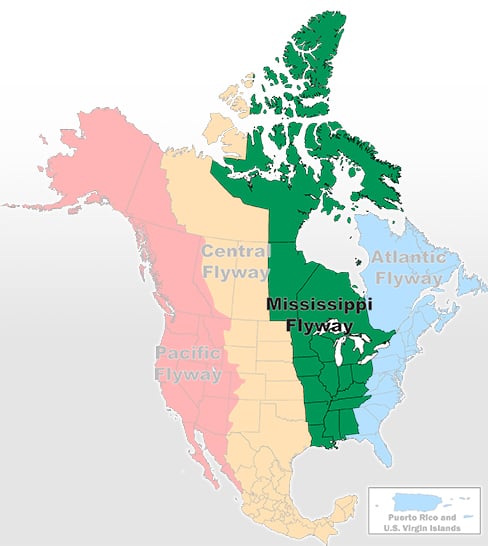 Indeed, the Mississippi River flows like a massive, life-pumping artery through the heart of the 14-state Mississippi Flyway. It covers roughly 2,350 miles from its modest upper reaches in northern Minnesota to the sprawling Gulf of Mexico in Louisiana.
For waterfowl managers and waterfowl hunters, the river is a watery thoroughfare for ducks and geese migrating to the breeding grounds in the spring and returning with new members in the flock to the southern wintering grounds in the fall.
“The Mississippi is a river steeped in history and lore,” Devney said. “And for duck hunters from Minnesota, Wisconsin, Iowa, Missouri and points south to Louisiana, the Mississippi is something truly special. It defines their hunting experience every autumn.”
MORE WATERFOWL COVERAGE FROM OUTDOOR NEWS:
Are you as good at identifying ducks as you should be? Here are ways to learn
7% bump in Wisconsin’s breeding duck numbers from ’24 may not tell the full story
Top duck hunting club in southern Illinois closed after baiting case
Hunting opportunities
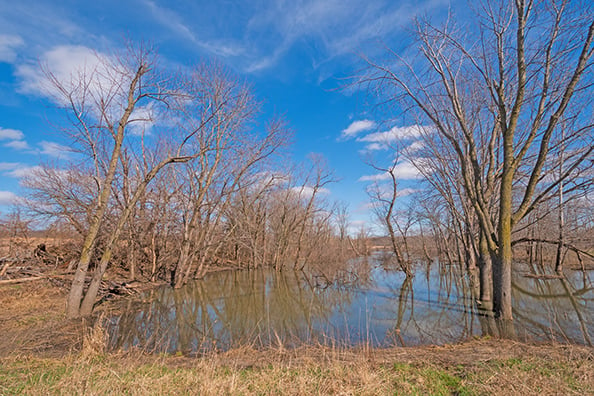
Throughout the Mississippi River watershed, waterfowlers try to outwit migrating ducks and geese in numerous – and diverse – locations. Backwater sloughs. Oxbow lakes. Reservoirs. Flooded riparian forest. Ponds. The banks of the Big River herself. Even fields (some dry, some wet) adjacent to the river are in play.
Some of these areas are privately owned, and some, like federal national wildlife refuges and state wildlife management areas, provide public hunting access. Each state is a little different.
“Most of the best hunting, especially when you get farther south and beyond the Upper Mississippi region, is managed private areas,” said one federal natural-resource official. “They often have the best habitat and most food resources … and consequently attract a disproportionate share of ducks.”
Targeting migrators
While many river hunters have success targeting “local” wood ducks early in the season, most Mississippi River waterfowlers are hunting migrating birds from points north.
That means hunters from various states are hoping and praying for a cold front of snow, ice, and strong winds to push new ducks “down.” And the larger the front, the better.
This often requires big decoy spreads and lots of persuasive calling to attract and finish ducks. Regardless of where you’re hunting the river, keeping tabs on the migration – as well as changing water conditions throughout, especially in backwater areas – is critical.
Migrating ducks are in search of two things as they seek more hospitable conditions: food to eat, and places to rest. Some of the best hunting, waterfowlers up and down the river say, often happens after weather fronts move in, especially on cold, bluebird days.
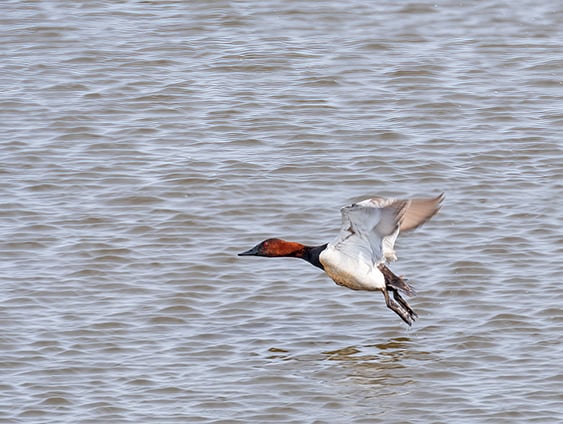
Scout and locate those new ducks – often mallards and other puddle ducks, but also canvasback, scaup and other divers – in their new digs and set up. Lastly, over the last several years, migration dates along the river are well behind schedule compared to past historical timelines. Balmier weather and ample food (from ag waste grains) are keeping birds north longer than ever before.
Hunting Pool 9
“The big push used to happen around Halloween, but it got gradually later and later and now it happens roughly in the middle of November,” said Phil Nowack, who lives about 20 miles south of Decorah, Iowa, and hunts the Mississippi River often.
He’s speaking specifically of the fall canvasback migration to Pool 9, which stretches some 31 miles from Lock and Dam No. 9 near Harpers Ferry, Iowa, to Lock and Dam No. 8 near Genoa, Wis. It’s also part of the Upper Mississippi River National Wildlife Refuge.
Pool 9 is a major annual stopover point for migrating canvasbacks, with more than half of the breeding population staging there each fall, according to various estimates. It helps the pool is historically rich in wild celery, which “cans” love.
“I remember one aerial survey counted like 480,000 cans in Pool 9 at one time in the fall,” said Nowack, who has been hunting there since the mid 1990s. “My preference is to hunt divers, cans in particular, with long lines on the big water. Pool 9 is the place to do it. That’s no secret anymore.”
Other hunters – and Nowack on occasion, too – set combination spreads for divers and puddle ducks. “It can be good for both,” he said.
Above all, Nowack said hunting the oft-mercurial Mississippi River can’t be taken lightly, especially if you’re new to navigating it. Safety should be your first and last priority.
“The river is changing constantly, so you can’t take anything for granted when you’re on the water,” said Nowack, who hunts from a 21-foot boat made for big water. “Parts of Pool 9 that have stump fields that can sheer off your lower unit in a heartbeat. Sand bars can do the same thing. That happens when guys are going too fast and don’t know where they’re going. Just take your time.”
In addition to following all safety protocols for big-water waterfowl hunting and navigation on a large river, Nowack recommends using a GPS to navigate. And if you’re serious about hunting it, spend time day-light hours learning it.
“I don’t want to scare people away, but the river can be very dangerous,” said Nowack, echoing other hunters and waterfowl managers from Minnesota to Mississippi. “Factor in high winds, cold temperatures, ice, boat traffic – there’s just a lot going on that you have to account for.”
Guided hunts
Zach Jumps is an avid waterfowler and director of marketing for Heartland Lodge in Nebo, Ill., about 90 minutes north of St. Louis, Mo.
He said many hunters would rather hire a guide than hunt the river themselves. “If you’re new to it, the learning curve is steep,” said Jumps, adding there are plenty of guides who offer day trips. “For some, it’s just easier to hire a guide for a day or two. You can also learn a great deal from them in a short amount of time.”
Heartland Lodge offers waterfowl hunts within the Mississippi River watershed. They often hunt from permanent pontoon-style blinds in the river’s backwater sloughs and lakes. From deluxe suites with hot tubs to chef-prepared meals, the lodge’s accommodations are high-end.
“We get clients from all over, but especially on the East Coast,” Jumps said. “It starts with teal and wood ducks early in the season and right round Thanksgiving, we start to get a push of mallards. We might even see some pintails and few canvasbacks. At that point, everyone is hoping for bad weather to the north so the migration continues. Everyone around here loves a cold front.”
Around Christmas, Canada geese and even some white-fronted geese show up. “The late-season goose hunting through January can be good,” he said.
Jumps said finding a place to hunt in the region is not easy. Private land is mostly leased for hunting and duck clubs are commonplace. “Hunting pressure is pretty intense,” he said.
Inland freeze-up
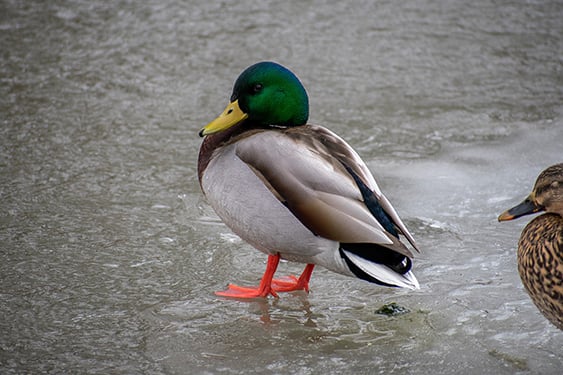
John Brunjes is the migratory bird coordinator for the Kentucky Department of Fish and Wildlife Resources. A hardcore waterfowler, Brunjes said much of the river hunting that occurs in Kentucky happens near the confluence of the Mississippi and Ohio rivers. Waterfowlers who hunt the river and its forested riparian backwaters patiently wait for inland waters to freeze up.
“When inland waters freeze, the backwaters attract and concentrate a lot of puddle ducks, primarily mallards,” Brunjes said, adding the quality of hunting, which can be good through January, also is dependent on the timing of the migration. “Mallards are king down here, just like in Arkansas. But you’ll need permission to hunt. It’s private land for the most part.”
Points South
You can’t talk about hunting ducks on the Mississippi River without experiencing it in Louisiana.
That’s the advice of Dr. Frank Rohwer, president and chief scientist for Delta Waterfowl. He spent more than two decades living in the Bayou State, teaching classes at Louisiana State University’s School of Renewable Natural Resources.
Though he hunted across the state, Rohwer has a deep soft spot and an abiding affection for the coastal marshes south of Venice, the south-eastern tip of Louisiana and the end of the road for tens of thousands of wintering ducks. That’s near where the Mississippi River flows into the Gulf of Mexico.
Rohwer said that there are two excellent options for public-land hunters south of Venice. One is the 48,000-acre federally managed Delta National Wildlife Refuge, a 45-minute boat ride from Venice, and the state-run 115,000-acre Pass-a-Loutre Wildlife Management Area, which is farther south and has campgrounds popular with hunters beginning during the early September teal season through January.
“It’s a long trip, but it’s worth it,” said Rohwer, who deploys a 21-foot boat to make the journey. “I think it’s pretty easy to hunt, but you have to be careful navigating the river. There’s a lot commercial traffic. The shipping channel is busy. Just take your time. It’s a unique experience.”
Rohrer makes the trip at first light and scouts for marsh areas that have shallow water and an abundance of what is locally called Delta duck potato, or Delta arrowhead. It’s an aquatic plant or tuber that ducks – from mallards to mottled ducks, canvasbacks to gadwall, wigeon, teal and shovelers – love.
Rohwer uses a smaller tender boat to get around the marsh. He rarely sets more than three dozen puddle-duck decoys. “If you’re not on the X, the ducks will tell you just by watching them,” he said. “It can be quite a bit of work to get there, but it’s worth it. It’s a truly special place to hunt ducks.”
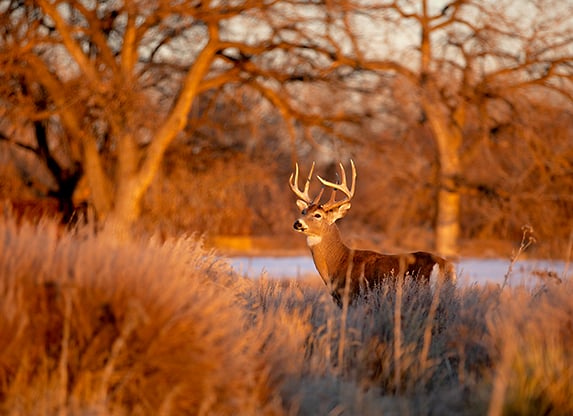
Pennsylvania’s hunting license sales down so far this year
Hunting license sales are down nearly 4.5% at the end of August, although Pennsylvania Game Commission officials believe there is
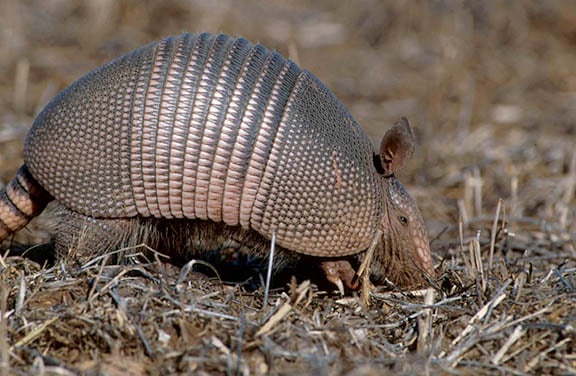
Origin of road-killed armadillo in southwest Ohio a mystery
An armadillo found as roadkill in southwest Ohio has researchers scratching their collective heads wondering from where the non-native mammal
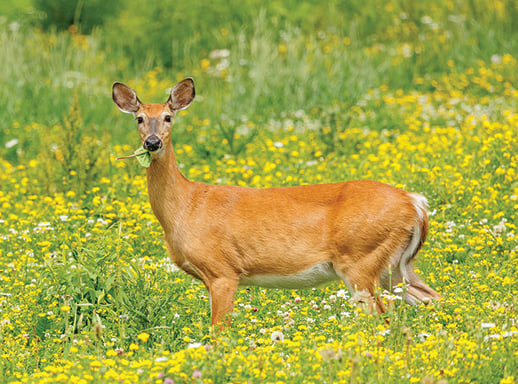
Bowhunt gets started in Ohio with additional opportunity in CWD surveillance area
Hunters in Ohio’s chronic wasting disease (CWD) surveillance area have additional dates this season to pursue white-tailed deer. The Ohio
