





Scott Doheny is a waterfowler who takes immense pride in the craft.
That’s especially true when it comes to identifying ducks and geese on the wing – a skill set, Doheny says, that you likely can’t master overnight but “you sure can get started today.”
Armed with binoculars and waterfowl ID pamphlets and books, Doheny, 57, of New Prague, Minn., has over the years studied the ways and means of ducks on wetlands, shallow lakes, and other waterways. He says those trips afield outside the hunting season have made him a better, more knowledgeable waterfowl hunter and have increased his love of the pastime.
“I’ve done a lot of scouting and duck-watching over the years so I could better identify ducks during the hunting season,” he said. “It’s paid off, too. Apart from that, I just really love watching ducks on the water, or on the wing. I love listening to them communicate with each other. And the more time I’ve spent doing it, the more I’ve learned. You start to notice certain things that help with ID. Their size. Their silhouette. Their color. Their speed. Their wingbeats and how they differ between species. How they land. Their sounds.”
MORE WATERFOWL COVERAGE FROM OUTDOOR NEWS:
7% bump in Wisconsin’s breeding duck numbers from ’24 may not tell the full story
Top duck hunting club in southern Illinois closed after baiting case
U.S. Fish and Wildlife Service debuts new federal and junior duck stamps
Doheny says every waterfowler should learn to identify ducks and geese as much as possible before going afield. He calls it the game within the game. According to the Minnesota DNR, the state boasts 23 duck and goose species – no small number. Roughly 60% of North America’s migratory birds wing through the state every spring and fall. In other words, there’s plenty to learn.
“It’s enormously satisfying to know your birds,” Doheny said. “It’s ethical, too. I want to know what I’m shooting at before I pull the trigger. I also want to shoot drakes 100% of the time, and that’s impossible if I can’t tell the difference between hens and drakes of a species.”
Nate Huck, Minnesota DNR migratory gamebird consultant and a duck hunter himself, said waterfowl ID is vital for all waterfowlers for other reasons, too.
For one: During the season, there are some nongame waterfowl species found in marshes that are illegal to shoot. Second: There are species-specific bag limits that hunters need to abide by. For example, in Minnesota during the upcoming season, hunters may harvest four mallards daily, with only two being hens.
“Not only do you need to learn the species of duck, but you also have to distinguish between hens and drakes in some instances,” Huck said. “When you factor in the thrill of the hunt and ducks bombing your decoys in the half-light of the morning, among other factors, that’s not always easy to do.”
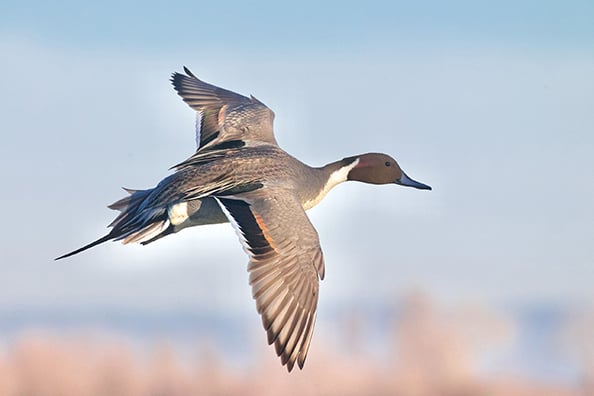
Consider the following tips to help you improve your waterfowl ID skills:
• Find a waterfowl ID guide and study it. Doheny doesn’t remember which guide he started with, but he does recall studying it relentlessly. “I always had it with me, even when I wasn’t scouting or hunting,” he said. “I learned my ducks well before I shot most of them. And that started with a basic ID booklet.”
There are several fantastic ID guides. There’s “Waterfowler Identification: The LeMaster Method,” by Richard LeMaster. Doheny said he still carries “Ducks at a Distance,” a pocket guide available from the U.S. Fish and Wildlife Service.
You can also embrace technology to become better at waterfowl identification. Ducks Unlimited has a phone app for duck identification. It covers all North American species and provides all the practical information you’ll need: flight characteristics, calls, detailed descriptions of drakes and hens, what to look for in low light, and how to distinguish between similar-looking species. It also includes quizzes to test your knowledge.
If you’re not sold on the app concept, Delta Waterfowl’s identification guide is another good one. It’s covers 47 species of ducks, geese, and swans and everything you’ll need to know to identify them. It’s also made for the mud and muck of the blind.
Delta’s guide is spiral-bound and made on waterproof and tear-proof paper. For more information, visit here.
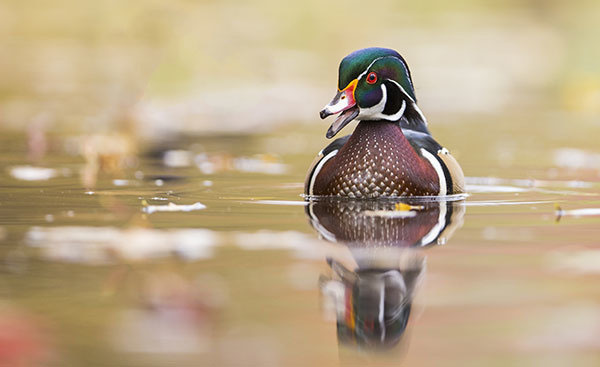
• Learn ducky colors. Doheny said learning the colors of each species – especially drakes of each – is among the fastest ways to learn duck species.
“That’s what’s helped me the most over the years,” he said. “Having said that, it’s not always easy on cloudy days or in low-slight situations, or early in the year when all ducks are drab and brown. But color is a great place to start.”
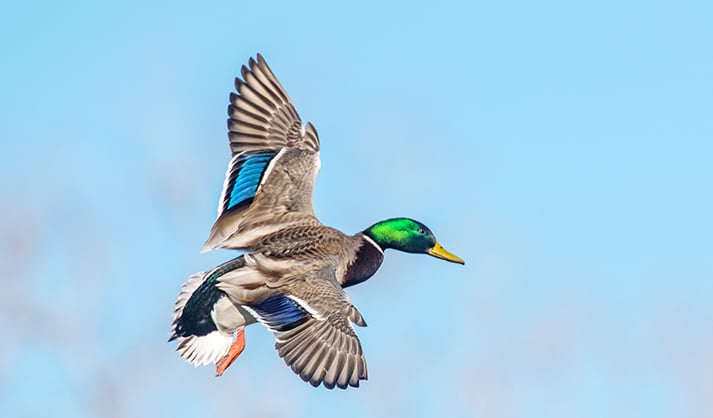
Beginning in late fall, drakes in particular develop distinctive plumage that makes IDing much easier. For example, drake mallards – the most common duck in North America – have an iridescent green head and white neck collar. Drake canvasbacks have cinnamon-colored heads, red eyes, and snowy white backs and sides. Hen canvasbacks, by comparison, have tan heads, dark brown breasts, and creams sides and bellies.
“A drake canvasback can look a lot like a drake redhead, too.” Doheny said. “They’re both diving ducks and are often found in the same marshes. But they’re different on the wing.”
• White makes right. Dr. Kevin McGowan is a senior ornithologist with the Cornell Lab of Ornithology in Ithaca, New York. Through the lab, McGowan promotes the “look for the white” method of identifying ducks.
“Looking for the white can help streamline your learning, especially with ducks on the wing,” McGowan said. “The white patches of a duck are just much easier to spot at a distance than any other characteristic.”
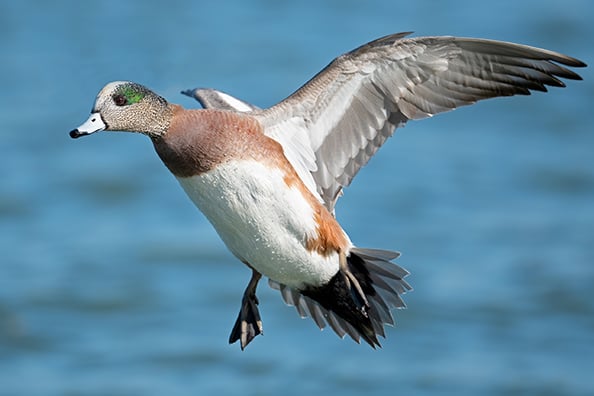
For example, the white belly and back of a canvasback. Or, he said, a drake American wigeon’s white patch (see below) on the leading edge of its wing. “It’s very visible in flight,” McGowan said. “When you only have a split-second to make a decision, ‘looking for the white’ is a good ID strategy.”
McGowan also has developed a “Be a Better Birder: Duck and Waterfowl Identification” course that’s available through the Cornell Lab Bird Academy. The course, which costs $59.99, covers a lot of ground, including how to use “where is the white” for quick duck ID; how to tell dabblers from divers by way of behavioral cues; and keys to identify all common waterfowl in the U.S. and Canada.
The course features six lessons containing more than three hours of video instruction, 21 quizzes (including a final exam and course wrap-up), and two puzzles.
“We have more birders take the course than waterfowl hunters,” McGowan said. “But hunters have been very complimentary of it.”
For more information, visit here.
• Learn vocalizations. This is a great value-added when trying to ID ducks. Learning the sounds of each species – including the differences between hens and drakes – will immediately improve your ID skills.
Listen and learn during morning hunts before shooting time. You likely won’t be able to ID birds on the wing, but their calls may give them away. For example, when a mallard circling overhead quacks, you know it’s a hen. If it makes a soft, raspy whine, it’s a drake.
• Ducks and Habitat. The type of habitat – from large lakes to small prairie potholes – often dictates which species of duck you’ll see. Doheny said he loves to hunt wood ducks early in the season, and woodies, he said, prefer different types of waterfowl habitat than do, say, bluebills or redheads.
“Woodies are most often found in forested riparian areas and wooded swamps, for the most part,” he said. “Certain divers like redheads usually show up in larger areas of open water. Understanding the relationship between a species and their preferred habitat is very helpful in winnowing down which species you’re likely to see on any given day in the blind.”
• Days afield: the more, the better. Like Doheny, Huck said learning your ducks and geese is best done in the field – before, during, and even after the season. Ideally, hunt with an experienced waterfowler.
“Time afield is definitely important, especially if that time is with someone who can ID birds and talk you through what you’re seeing,” said Huck, who also encouraged using online resources, though, he said, such reference materials can only get you so far. “Spending as many days in the field is really the key,” he said.
“My No. 1 piece of advice is that no one is forcing you to shoot a bird you haven’t been able to ID yet,” Huck said. “You can always pass on a bird that you are unsure about. There’s absolutely nothing wrong with that.”
Ohio’s Outdoor Calendar
A look at upcoming outdoor-related events from across Ohio published in the Sept. 22, 2026 edition of Outdoor News.

Ohio Cuffs & Collars: Stolen black walnut tree from Wallace O’Dowd Wildlife Area
Ohio cuffs and collars are field reports from the Division of Wildlife. These reports are from the Sept. 25, 2026
H2Ohio wetland to benefit St. Marys
As part of Ohio Gov. Mike DeWine’s H2Ohio Initiative, the Ohio DNR (ODNR) and the city of St. Marys held
