





I don’t believe, in my two and a half decades of dedication to this publication, that I’ve ever written about swimmer’s itch – unless I once whined about contracting the allergic reaction several years ago after doing some dog training at a local lake in summertime.
Lesson learned. After that, if I trained the pup in those waters, I brought with me a bucket of fresh water with which I cleansed my lower limbs prior to even driving home. I really didn’t want to ever again enlist the healing powers of Epsom salt and calamine lotion to sooth the itch caused by what I presumed began as something within goose feces.
 But here we are, in July 2025, and I’ve crossed the threshold into swimmer’s itch reporting. I found it somewhat intriguing, and you might, too. See the full story here.
It’s one of those tales of man vs. nature – but not in a mountain man sort of way. More in a man (several individuals – men, women, children) wants to swim in a lake where he owns property but can’t because of the threat of a severe and painful rash. And in a way that pushes man to pursue legal avenues for ridding said lake(s) of the wildlife that’s the presumed source of the evil – common mergansers – by way of killing them.
It’s a story that’s brought together competing research, that’s revealed that oh, by the way, there are various varieties of parasites that, following their release from snails and in their search for an original host (mergansers in this case) unwittingly bump into human bodies and decide, good enough. Let’s attach and burrow.
MORE COVERAGE FROM MINNESOTA OUTDOOR NEWS:
Carp deterrent design for Minnesota waters of the Mississippi will be decided by June 2026
Conservationist’s legacy remembered at Minnesota wildlife management area dedication
Minnesota’s spring count of ruffed grouse dips, expectedly
According to those lakeshore residents from the Pelican Lake area of Otter Tail County, Minn., who wish to remove mergansers as they seek relief from swimmer’s itch, the variety of parasites harbored by these ducks are, for whatever reason, “superstrength,” in that the itch they unleash is of a higher order than “ordinary” itch caused by hosts such as your friendly mallard or Canada goose.
At least that’s what a researcher employed by the Pelican Lake Property Owners Association has to say – he of extensive research and former experiences dealing with mergansers/swimmer’s itch in the upper reaches of Michigan.
But alas, the killing of mergansers in Minnesota – both on OTC’s Pelican and Crow Wing County’s Bay Lake – will wait. Given the birds’ migratory nature, both the U.S. Fish and Wildlife Service and the state DNR need to sign off on such a measure.
While the USFWS took the lead and did, the DNR followed but didn’t. Why the USFWS did is a quandary for another day, although some folks believe it might have to do with friends in high places. Or maybe it’s because the agency has for several years been cool with whacking double-crested cormorants in certain Midwestern hot spots where their habitat destruction/displacement of other bird species and extreme fish-eating habits have pushed humans just a bit too far.
It’s all very puzzling. Yet it’s easy to see both sides of the problem. No one likes to see kids writhing in pain as they deal with swimmer’s itch (which, I believe, should have a more sinister name than … swimmer’s itch).
Yet, should mergansers be the first sentenced in some lake locations to death? Where would the ball continue to roll in the near future? And with what waterfowl species? And how sound is the information out there on these parasites – blood flukes – anyway? I’m quite certain the science world isn’t overwhelmed by swimmer’s itch research.
Tricky. Very tricky.

Pennsylvania’s hunting license sales down so far this year
Hunting license sales are down nearly 4.5% at the end of August, although Pennsylvania Game Commission officials believe there is
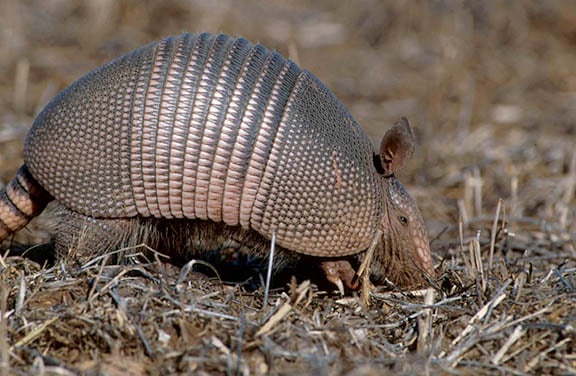
Origin of road-killed armadillo in southwest Ohio a mystery
An armadillo found as roadkill in southwest Ohio has researchers scratching their collective heads wondering from where the non-native mammal

Bowhunt gets started in Ohio with additional opportunity in CWD surveillance area
Hunters in Ohio’s chronic wasting disease (CWD) surveillance area have additional dates this season to pursue white-tailed deer. The Ohio
