





Long-range target shooting is heady sport. Thousands of shooters would love to indulge… if only they could afford one of those big scopes.
Well, maybe you can.
The thing about long-range scopes is that they’re subject to the same laws of price and performance as short-range scopes except they must be more precise and reliable. A ½ MOA aiming error at 800 yards results in a bigger miss than a ½ MOA miss at 100 yards.
Also, you can mount a scope on a deer rifle, zero it, and never touch the turrets for the next 20 years. Start engaging targets at 500 to 1,200 yards and you’ll dial up a blister on your thumb.
Additionally, targets far, far away suggest higher magnification. And a sharp image. It’s hard enough to see a small target 873 yards away at 20X let alone through a “fuzzy” scope. But must we really spend $4,000 to get a scope that works? No.
First, appreciate what a long-range scope is supposed to do:
1. Take a zero setting and hold it until you change it.
2. Change to your newly dialed ranges accurately and consistently.
3. Transmit enough light so you can see your target. (Brightness)
4. Resolve the target well enough so you can see it clearly.
5. Not fall apart.
MORE HUNTING FEATURES FROM OUTDOOR NEWS:
Exercise your hunting dog’s mind and reap the rewards this fall
E-bikes change how hunters, anglers reach their spots quickly, cleanly, and quietly
Summer food plot maintenance: Lime, fertilizer, mowing and more
Doing all of this best and most reliably usually means the scope is going to cost more. But it doesn’t mean there aren’t bargains in the mix. Some 5-25X scopes with dialing turrets sell for as little as $400. Should you gamble with one?
Maybe. I’m not going to promise every “cheap” scope is perfect, adequate, or junk, but I will give you some tips on shaving the price you pay for your long-range wonder scope.
1. Minimize objective lens diameter. We all think we need those big objectives to “let more light in.” But how much light do we really need for target shooting, most of which is done in bright daylight?
A 2.5mm diameter exit pupil is large enough to pump in all the light your daylight-shrunken pupil can absorb. At 20X power setting, a 44mm objective lens scope will yield a 2.2mm exit pupil. If the scope’s lenses are properly ground and anti-reflection coated, you’ll see your aiming point just fine (unless air pollution and heat mirage are bad that day.)
On many days air quality is so bad that you can’t use scope magnification of much more than 18X anyway. A 4-18X or 4-20X by 44mm objective scope should save you some money.
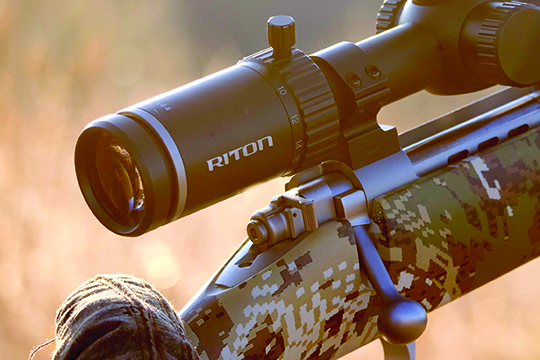
2. Try “off” brands. The big names compete at the highest levels. Shooters fighting to win major competitions can justify paying more for the best of the best.
For fun or “hobby” long-range shooting, you might not need this degree of precision. Many new names have come into the market in recent years and are fiercely price competitive. Many are also amazingly well built and precise. Check them out. You might be surprised.
3. Manufacturer-to-consumer scopes. Some brands sell and ship directly to consumers, skipping the middleman markups. These can save you hundreds of dollars per scope. And some of these are built to the same standards with the same ingredients as the top-line scopes. Do your research.
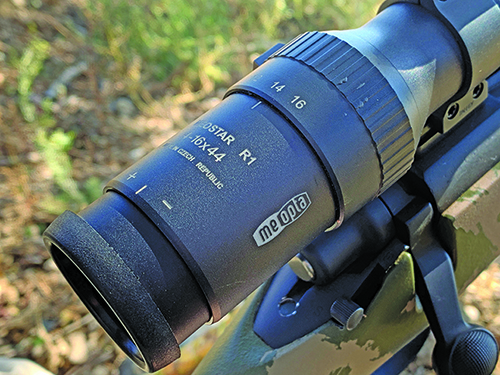
4. Settle for a bit less power. As noted above, atmospheric conditions often preclude effective use of really high magnifications. If you can shoot well at 12X to 18X on bad air days, why not on clear days, too? A lower-power-range scope could save you more dollars. (I’ve taken 9X hunting scopes to 500 yards on prairie dog-sized targets with surprising success.)
5. Consider a ballistic reticle instead of turret dialing. Ballistic-style reticles with multiple aiming lines etched onto them can take many rifles/cartridges/bullets to 1,000 yards without the need to dial turrets. Even those with less range can be stretched farther if you zero at 400 or 500 yards instead of 100 yards. An etched reticle is less expensive than a precision dialing turret and less prone to error or breakage.
6. Skip the parallax dial. This is a long shot and might not work but… Yes, parallax can mess up your aim, but you suffer significant parallax only when your eye is out of alignment with the center of the scope.
Set up your rifle’s butt stock and comb for perfect eye-to-reticle alignment and you’ll minimize if not eliminate any inherent parallax. This isn’t as ideal as parallax adjustment, but might be worth a try if you can find a high magnification scope without it. Given the demands of long-range shooters, I suspect no long-range scope models are still made without parallax adjustment.
7. Try your hunting scope. This isn’t as silly as it sounds for getting a taste of the long-range game.

Minnesota artist Bob Hautman wins federal duck stamp contest for fourth time
Minnesota’s own Bob Hautman, from Delano, won the 2026 Federal Duck Stamp Art Contest today with his acrylic painting of

Confirmed cougar makes an even dozen sightings over 25 years
A mountain lion was spotted moving through southern Illinois, and this time wildlife officials believe the big cat crossed west
Illinois bow season opens Oct. 1 with few changes
The DNR has floated the idea of establishing additional Restricted Archery Zones in other parts of the state, but this
