




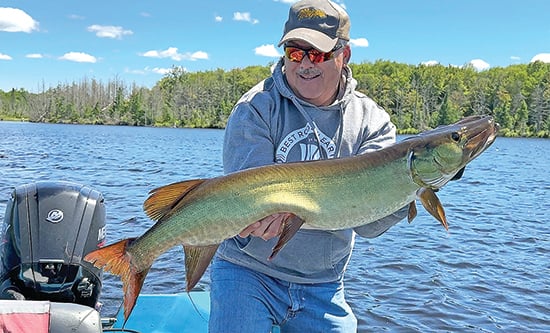
More than 40 years ago when I started fishing for muskies I learned very quickly that some days produced better action than others. Soon I realized it was not simply luck, and that weather usually had the greatest influence on muskie activity.
In most cases, it was post-frontal conditions that turned off muskies. Bright skies with few or no clouds, cool air with little humidity, and wind from the north and eastern sides of the compass are sure signs that a cold front has passed. In the hope of catching muskies more consistently, I learned and developed patterns that often produce in such weather.
Following are eight such ideas that may help the next time you’re confounded by a cold front.
1. Change the presentation: When active muskies will readily chase lures passing several feet from them, anglers often refer to this as their “strike zone.” When fish are not active, their strike zone shrinks. A bait must be closer to them for a longer period of time to entice a bite.
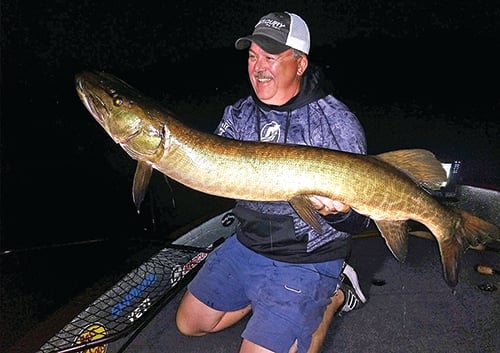
So, rather than casting bucktails or topwaters, post-frontal conditions demand a slower presentation. Subtly twitching a minnowbait like a Slammer Minnow so that it gives off lots of flash, but has very little forward movement, has produced countless muskies for me at these times. The same can be said of slow-cranking a deep diver.
Less can mean more with post-frontal muskies. It usually helps to downsize lures. A fish that’s not feeling hungry may still decide to go for a snack. A steady, “plain Jane” retrieve can be better than lots of rips and twitches.
A couple years ago while filming a TV show after a front had passed, I caught the largest muskie of the shoot by downsizing to a Baby Depth Raider and retrieving it slowly.
2. Let things warm up: A summer night that drops air temps into the 40s usually means the next morning will yield slow fishing. The one exception to this is when a cold night follows an extended period of warm weather, because the suddenly cooler water may turn on the fish. In most cases, however, it’s smart to sleep in and let the air and water warm up a little before launching your boat.
If you still plan to fish early in the day, start by fishing weedbeds in east-facing bays. There’s something about a weedbed catching an early-morning, post-frontal sun that often produces muskies, some of which may be really big. In two of the last three seasons, my largest muskie of the year was caught in this scenario.
3. Wind on rocks: If the lake has rock spots, such as a reef, a rock pile, or a rock wall, be sure to check them following a front if wind is blowing over or against them.
This is an instance when going with a bigger bait is better than downsizing. Wind causes underwater chaos and a large lure better stands out. Slowly retrieve a minnowbait or crankbait so its lip bangs against the rocks, but resist the urge to rip the bait. Doing so may snap off the diving lip.
If there isn’t any wind but the sun is bright, wait until mid-afternoon to check these same spots. Rocks hold the sun’s heat and post-frontal muskies like to snuggle up close to them.
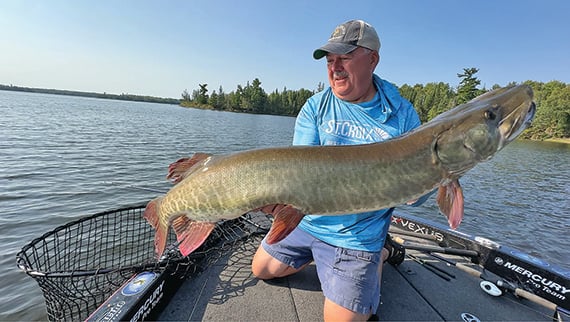
4. Understand sand: Just like rocks, sand bays hold heat and the longer the sun is up, the better.
Midday stops at sandy bays that are shielded from wind can produce quick action. Muskies will gravitate to anything that’s different in the bay – a patch of weeds, a boulder, a fallen tree, or a slightly-deeper pocket or hole – make several casts to any that you find.
5. Wade through weeds: Muskies in bright sun like to bury themselves in thick weedbeds. A lure moving quickly over the weed tops will often be ignored, but probing the pockets between weed stalks may produce a sudden, violent strike. Minnowbaits, diving jerkbaits like a Suick, or a hopped soft plastic will get noticed because they move lots of water. An extended pause when your lure is hanging in a pocket can be key.
MORE MUSKIE COVERAGE FROM OUTDOOR NEWS:
Efforts to revive muskie waters in full swing across Minnesota
An update on Minnesota’s Leech Lake muskellunge study
Mastering muskie fishing’s art of the figure eight
6. Sift the slop: Weeds in only a couple feet of water, often referred to as “slop,” mean ugly fishing. Fish it and you’ll pick lots of vegetation from your baits. However, a muskie that’s moved into such a spot at midday is there to feed. Target such spots that are protected from the wind because the water will often be a couple degrees warmer than the main lake. Protected weedbeds can be especially good before dark.
Fish a single-bladed spinnerbait with single, upward-riding hooks rather than trebles, or a big double-bladed bucktail like Mepps’ Double Musky Flashabou, just under the surface to avoid weeds.
7. Know the moon: Weather always trumps the moon, but when the moon is rising, setting or is overhead or underfoot, it may trigger the one bite that makes your day. When the moon is doing its thing, always be fishing a spot that you know is holding muskies.
8. Fish until dark: Last light is always good, but may be your best bet after a cold front.
I like to fish until dew forms on the gunwales of my boat. How muskies know when dew is forming is a mystery, but when it happens you are done for the day.
Muskies become more challenging than usual after a cold front passes. These eight patterns put smiles on the faces of my clients, friends and family each season, and they can do the same for you.
Pennsylvania’s hunting license sales down so far this year
Hunting license sales are down nearly 4.5% at the end of August, although Pennsylvania Game Commission officials believe there is
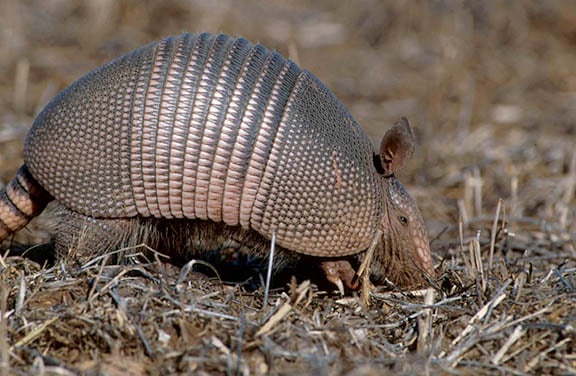
Origin of road-killed armadillo in southwest Ohio a mystery
An armadillo found as roadkill in southwest Ohio has researchers scratching their collective heads wondering from where the non-native mammal
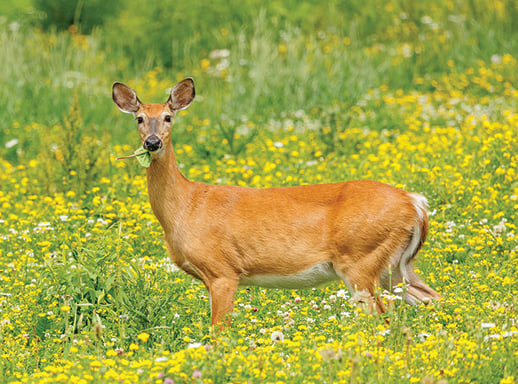
Bowhunt gets started in Ohio with additional opportunity in CWD surveillance area
Hunters in Ohio’s chronic wasting disease (CWD) surveillance area have additional dates this season to pursue white-tailed deer. The Ohio
