




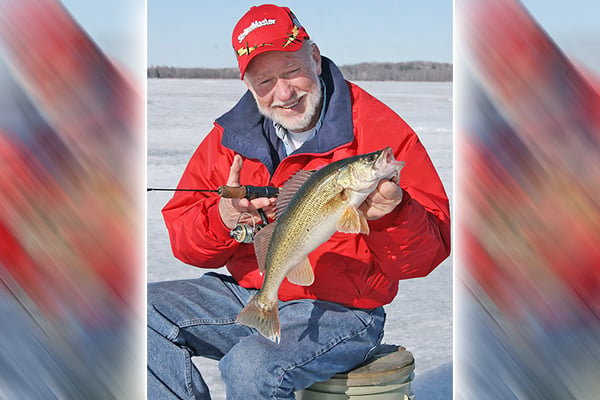
This late into the ice-fishing season anglers discover that walleyes get tight-lipped and tough to catch. Many taking to the ice will transition into crappie and bluegill fishing because they are much easier to find and catch.
But I say don’t give up on walleyes. Catching walleyes during this late stage in the season just means great timing, being in the right spot, on a body of water where there are plenty of fish.
Let’s start with the lake.
When the bite is tough I want to be on a body of water with big numbers of walleyes. I prefer the classic walleye structure like rock piles, long rubble points, sunken islands and sharp drop-offs, but I’ll take a lake with nothing but a well-defined weedline if the walleyes numbers are high.
MORE ICE FISHING COVERAGE FROM OUTDOOR NEWS:
Examining the finer details of tip-up fishing
Hit the road for big trout, other species at these ice-fishing destinations
Ice fishing for Minnesota lake trout… where patience actually pays off
Once on a lake that has plenty of walleyes you have to realize during the late-ice bite the fish will be concentrated on the structure. You are no longer looking for that spot-on-the-spot. You are looking for the spot-on-the-spot-on-the-spot.
You might find a few dozen walleyes on a large piece of structure, but these fish are tucked around a boulder that is only six feet in diameter. On the lakes without the classic walleye structure a big school of walleyes might be tucked into an inside turn on a weedline. Just know, while there are always a few walleyes roaming by themselves, the majority of the fish are concentrated.
Finding these fish means using all the tricks in the books. Detailed mapping with a GPS gets you close, then the sonar gets you closer. If you have a forward-facing sonar, that can get you real close and an underwater camera can verify what you see on the screens. Not all anglers have access to this much technology, so dropping down a lure and catching a few will clarify what’s below the hole.
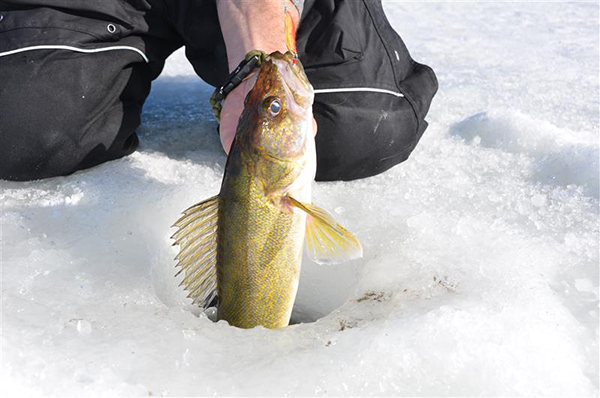
‘Timing is everything’
Once you find the fish, you still have to get them to bite. That said, it’s not always easy to get these finicky walleyes to commit to what you’re trying to feed them.
I’ve discovered that late-season walleyes tend to feed during short windows during the day and sometimes for longer periods during the night, but these feeding periods are never that long and sometimes only happen once during a 24-hour period.
That means timing is everything and you have to be on the ice, fishing, to know when that bite will happen. Fortunately, once those fish tell you what part of the day they intend to feed, they follow that routine for awhile until a big cold front changes their pattern.
Can you coax a bite from these tight-lipped fish? Sure. There will always be a few that cannot resist a perfect presentation and that’s what one strives to deliver.
What the presentation looks like
The perfect presentation might be a plain hook and a minnow. Or it might be a jigging spoon tipped with a minnow head. It might be a horizontal jig tipped with maggots or wax worms. It requires some experimentation to find out.
Fortunately, when on the ice more than one rig can be used. It pays to employ a tip-up so that a plain hook with a shiner minnow can be sent down close to the bottom. The minnow does all the work on this rig, so you want to make sure you have a strong swimmer to entice a bite.
On a horizontal jig you can add a plastic body and some wax worms or maggots. Sometimes just a fathead minnow on the bare jighead hook is all that’s necessary.
My favorite jigging motion on a horizontal jig is what I refer to as, “The Patented Gary Roach Death Quiver” which is just a slight twitching of the rod tip to quiver the jig. It’s effort, but it will be productive.
For the jigging spoon I use solid gold or silver spoons or subtle colors. Tip every barb with a wax worm, maggot or minnow head. Jig this lure to get the walleye’s attention and then let it rest when they move up to the bait.
There’s a lot of satisfaction in figuring out where the walleyes are and how to get them to bite when we’re this late into the season.
In Minnesota after Feb. 22 on inland waters, we are relegated to chasing nothing but panfish, so don’t hop off the walleye bandwagon just because it’s slowing down a little bit.
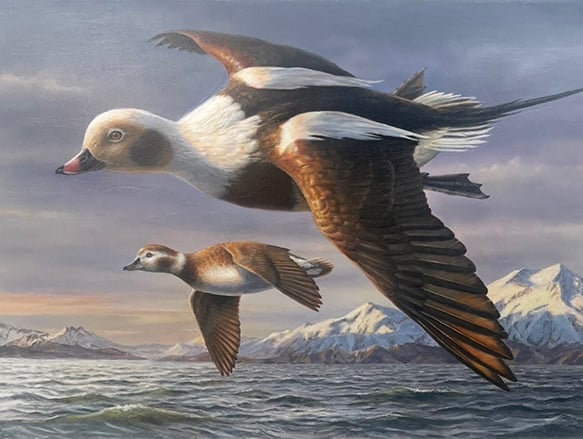
Minnesota artist Bob Hautman wins federal duck stamp contest for fourth time
Minnesota’s own Bob Hautman, from Delano, won the 2026 Federal Duck Stamp Art Contest today with his acrylic painting of
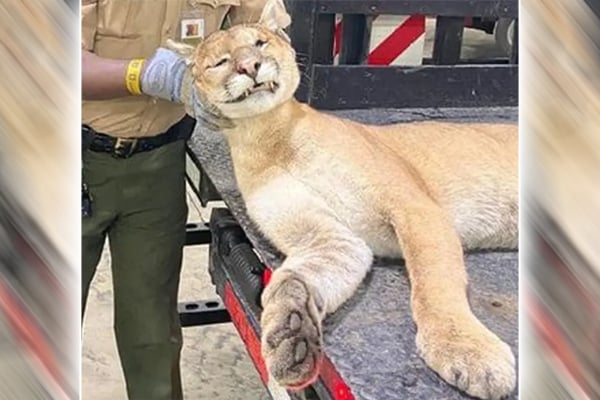
Confirmed cougar makes an even dozen sightings over 25 years
A mountain lion was spotted moving through southern Illinois, and this time wildlife officials believe the big cat crossed west
Illinois bow season opens Oct. 1 with few changes
The DNR has floated the idea of establishing additional Restricted Archery Zones in other parts of the state, but this
