




Michigan Mixed Bag: Bald eagle found with lead poisoning

Eaton Rapids, Mich. — A Michigan animal rehab is nursing a poisoned bald eagle back to health after the bird was brought in critical condition, a television report in early February noted.
The Wildside Rehabilitation and Education Center said on Facebook that it was caring for an eagle – it has been named “Armstrong” WILX-TV explained. The eagle was tested for lead poisoning.
“The lead test results were so high that the machine couldn’t read them,” the rehab center wrote in a post. “We administered medication immediately to try and counteract the poison seeping throughout his body. We gave him fluids to help his body fight, and words of encouragement from our volunteers as they (held) his struggling body.”
The lead poisoning, the center explained, had “saturated” Armstrong’s blood, impacting how well he could breathe and get oxygen to his brain. Photos attached to the post showed oxygen being administered to the eagle to help “calm him down” and get through “a LONG night.”
MORE COVERAGE FROM MICHIGAN OUTDOOR NEWS:
Deadline nears for public input on management of Michigan’s Interlochen State Park
How has a one-buck limit impacted the deer herd on Michigan’s Drummond Island?
Michigan’s 2026 Black Lake sturgeon season ends in 48 minutes
UP Deer Habitat Improvement Grant Program Increasing Amount Awarded This Year
Lansing — The application period for the Upper Peninsula’s Deer Habitat Improvement Partnership Initiative competitive grant program is now open.
New for 2026 the total DHIPI program budget has increased to $200,000. The maximum and minimum grant requests have also increased respectively to a maximum of $25,000 and a minimum of $5,000. The required match remains at 25%. Further, applicants can now bundle multiple project proposals under one application instead of applying separately for each proposal, provided they stay below the maximum grant value.
“Because of the past success of past partner projects, our budget doubled this year, enabling us to increase our influence to enhance deer habitat across the Upper Peninsula,” said Bill Scullon, DNR Wildlife Division field operations manager and administrator for the grant initiative.
“There are three primary goals applicants should strive to meet,” Scullon said. “The projects should produce tangible deer habitat improvements, build long-term partnerships between the DNR and outside organizations and showcase the benefits to the public.”
Project applications must be received electronically or postmarked by March 6. Successful applicants will be notified by March 27.
DNR to Livestream Michigan Natural Resources Commission Meetings
Lansing — Beginning with the Wednesday, Feb. 11, meeting of the Michigan Natural Resources Commission, the Michigan DNR plans to livestream all NRC meetings in an effort to make it easier for the public to learn about the work of the commission and stay engaged on topics of interest.
The commission meeting will start at 9:30 a.m. in Rooms M119-121 on the West Campus of Lansing Community College, 5708 Cornerstone Drive, in Lansing. The draft meeting agenda is available online; please note that the draft agenda could change leading up to the meeting.
NRC meetings take place monthly throughout the year. The majority are hosted in the greater Lansing area, but efforts are made to routinely travel to the Upper Peninsula, the northern Lower Peninsula and other regions of the state.
DU Marks 89 Years In Conservation
Memphis, Tenn. — Thursday, Jan. 29 marked the 89th anniversary of Ducks Unlimited, the world’s most extensive wetlands and waterfowl conservation organization. In 1937, during the height of the Great Depression and one of the worst droughts in history, a small group of waterfowlers and community leaders set out to save North America’s waterfowl populations and hunting heritage. Their foresight led to the founding of Ducks Unlimited and an unending mission to conserve the wetlands and other habitats that sustain abundant populations of waterfowl and other wildlife for future generations.
DU’s proud hunting heritage continues, as most members are waterfowlers. Through the support of these dedicated sportsmen and women and the tireless efforts of volunteers, partners and supporters, DU has protected or restored more than 19 million acres of habitat across North America in the areas most important to ducks and geese.
DU is the world’s largest nonprofit organization dedicated to waterfowl and wetlands conservation.
SUBSCRIBER CONTENT
Read this article now.
Create a free Outdoor News account.
Create a free account below to get instant access to this article, thousands of Outdoor News stories, and our digital editions. Your 1-month trial starts the moment you sign up.
No credit card required
No credit card required
Subscriber? Login Here.
Share on Social
Hand-Picked For You
Minn Kota introduces one seamless fishing system powered with Humminbird Imaging
French tip: muskies in summer, slabs during winter on this southeast Minnesota water
Minnesota’s Outdoor Calendar
Minnesota Cuffs & Collars: Assistance needed to rescue hunting dog
A quick chat with Jim and Will Pattiz, brothers behind morethanjustparks.com
Winners chosen for Minnesota’s pheasant and wild turkey 2027 stamps
Related Articles
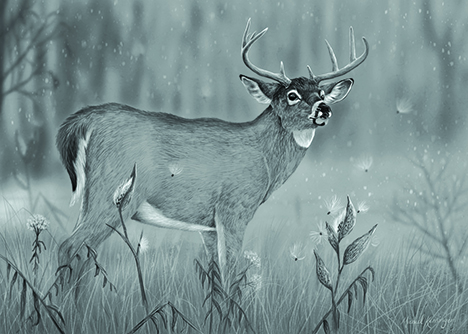
Best time to target that big buck? Don’t wait for the rut
Rut-crazed bucks may be easier to encounter, but for a specific buck, early season may be better.
There’s no
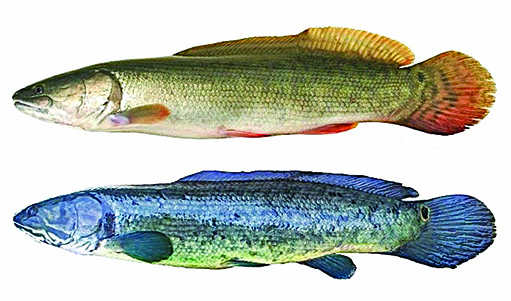
What’s in a fish’s name? A lot, it turns out
Fisheries biologists and other naturalist for centuries have subscribed to one of two camps – splitters and lumpers. It is
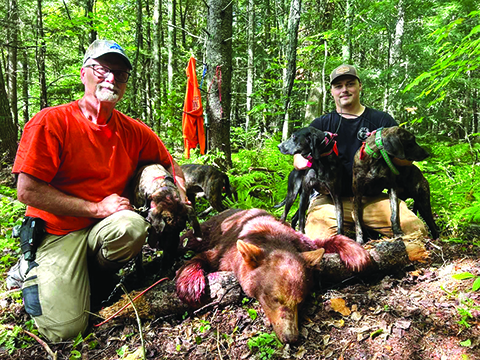
Kristin Ojaniemi: Story of a rare color-phase bear from Michigan’s Upper Peninsula
It’s not too often you hear of a bear with fur other than black being seen or even harvested here
