




Key points from the story:
- Corner-crossing remains a hot legal topic after the U.S. Supreme Court declined to hear a Wyoming case, leaving a 2025 Tenth Circuit Court of Appeals ruling in place. By declining to hear the appeal, SCOTUS turned the Tenth Circuit Court decision into law in six states.
- Broader clarity is unlikely anytime soon, as testing the issue elsewhere would require a new prosecution or civil lawsuit, potentially in another federal circuit, and even then the Supreme Court’s eventual involvement and outcome remain uncertain.
Bozeman, Mont. — The hunting media is abuzz with talk about corner-crossing.
On Jan. 5, when Sen. Martin Heinrich, a Democrat from New Mexico, visited the MeatEater podcast to discuss conservation and public lands, the topic of corner-crossing quickly emerged.
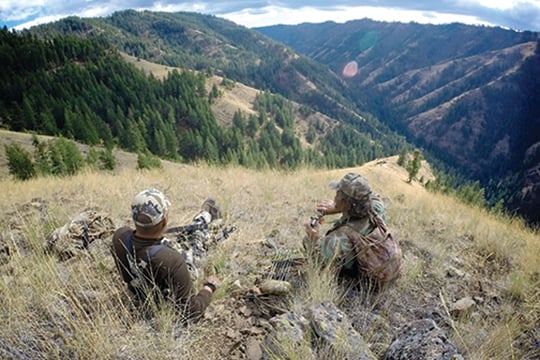
Two days later, Outdoor Life published a piece in which journalist Christine Peterson joined lifelong Wyoming resident David Willms for a corner-crossing journey up Elk Mountain, which served as ground zero for the original conflict between four Missouri hunters and Wyoming landowner Fred Eshelman in 2021. (The group of hikers eventually reached a crooked survey pin, a downed tree, and enough uncertainty about how to cross legally that they turned around and went home.)
Because the U.S. Supreme Court declined to take up the corner-crossing case in October, questions about corner-crossing still swirl: whether it’s legal writ large, where that legality does and does not apply, and when more clarity on the matter will arise.
At the heart of the hubbub are two legal documents: a 49-page opinion from the 10th Circuit Court of Appeals siding with the Missouri hunters, published in March of 2025, and the federal Unlawful Inclosures Act (UIA), passed 140 years earlier.
The Tenth Circuit Court of Appeals handles appeals from federal district courts in Wyoming, Colorado, Utah, New Mexico, Oklahoma, and Kansas. From there, the only court to appeal to is the U.S. Supreme Court. By declining to hear the appeal, SCOTUS turned the Tenth Circuit Court decision into law in those six states, making it legal to step from one corner of federal public land to another while momentarily hovering in the airspace of adjacent private land.
 But even to say that “the act of corner-crossing is legal” is a stretch, Willms – associate vice president for public lands at the National Wildlife Federation – tells Outdoor News. That’s because the only version of corner-crossing the court ruled legal is the version the Missouri hunters used.
But corner-crossing from federal land to state land, or putting one accidental footstep on adjacent private land, or even dropping one candy wrapper over the barrier, could be grounds for a whole new legal battle.
The Tenth Circuit rested much of its opinion on the UIA. Passed in February of 1885, the UIA prohibits private entities from roping off public lands, asserting a right to “the exclusive use and occupancy” of those lands without a proper claim, or preventing others from entering public lands by using “force, threats, intimidation … or any other unlawful means.”
The UIA even clarifies that, if approached by members of the public with reasonable certainty of a UIA violation, U.S. district attorneys are legally required to sue whatever entity commits that violation on behalf of the United States.
MORE COVERAGE FROM OUTDOOR NEWS:
Northeast Minnesota whitetails sporting radio collars as part of new study
Public invited to comment on Minnesota DNR’s proposed harvest limits for native rough fish
In siding with the Missouri hunters, the Tenth Circuit pointed out that the landowner’s argument “ignores that the reciprocal of preventing the right to exclude is to permit access” and “if a checkerboard landowner cannot impede access to public lands, then there is impliedly an access right.”
But whether the UIA protects public access to the checkerboard hasn’t been tested anywhere outside of the Tenth Circuit – and while rumors of monkey-wrenching a new case swirl, so do nerves over how that case might play out.
As Willms points out, it would take “a sheriff willing to issue a trespass charge, a county attorney willing to prosecute it, a jury willing to convict it, then an appeal, or a landowner willing to spend the money to file a civil suit for trespass” to replicate the circumstances from the first case.
Then, even if another case were to make it through a different Circuit Court of Appeals (Montana, Idaho, Nevada, and all other Western states are in the Ninth Circuit), the Supreme Court might finally decide to take the issue up – and then, the outcome is uncertain.
So is the feasibility of corner-crossing one’s way across the Tenth Circuit.
“In theory, this decision unlocks millions of acres,” Willms says. “But I’m not sure that it does in practice. Others who have corner-crossed in other places have had mixed experiences. Either it was easy or they couldn’t find the pin to save their lives.”
Even though the group didn’t summit Elk Mountain, Willms still celebrated the trek across a landscape that has been near to his heart since he was a kid.
“It might look like I was being provocative [by climbing this specific mountain],” he said. “But I was actually just climbing the mountain I’ve really wanted to climb since I was 8 years old.”
Pennsylvania’s hunting license sales down so far this year
Hunting license sales are down nearly 4.5% at the end of August, although Pennsylvania Game Commission officials believe there is
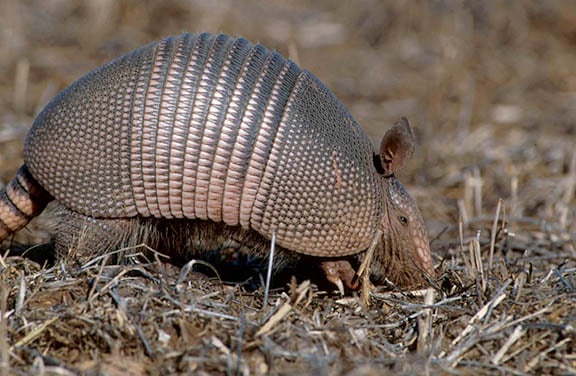
Origin of road-killed armadillo in southwest Ohio a mystery
An armadillo found as roadkill in southwest Ohio has researchers scratching their collective heads wondering from where the non-native mammal
Bowhunt gets started in Ohio with additional opportunity in CWD surveillance area
Hunters in Ohio’s chronic wasting disease (CWD) surveillance area have additional dates this season to pursue white-tailed deer. The Ohio
