




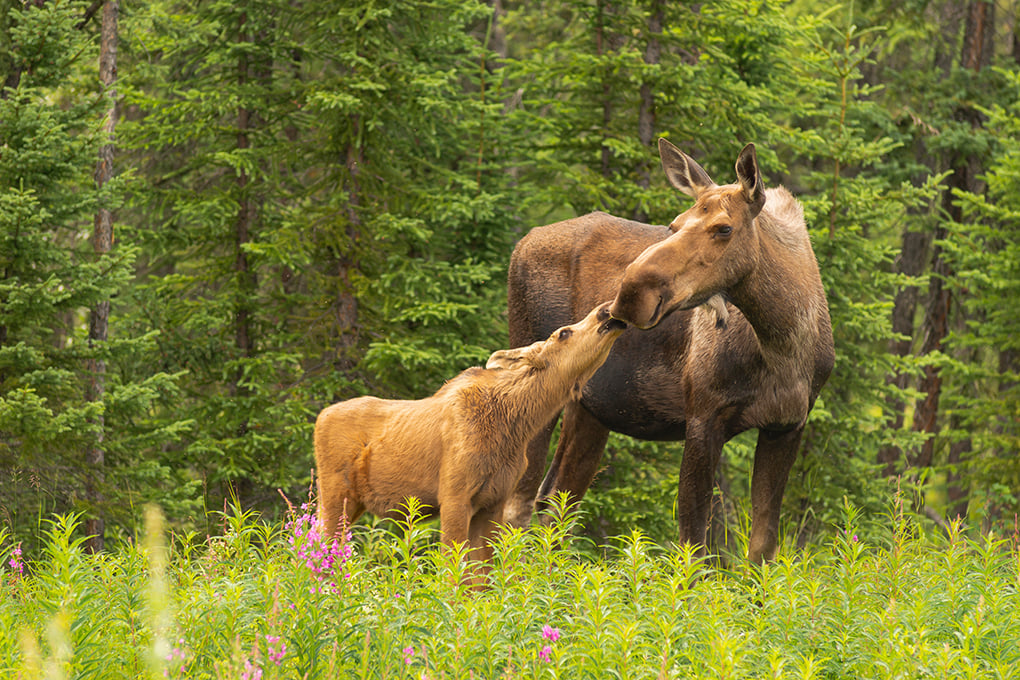
St. Paul — A five-year study to help state and tribal wildlife managers better understand what kills young Minnesota moose, along with their pregnancy rates and age of first reproduction, habitat use, and a better estimate of calf survival, is set to begin this winter.
The moose study, in northeastern Minnesota, is a collaborative effort of the Minnesota DNR, the 1854 Treaty Authority, and the Grand Portage Band of Lake Superior Chippewa.
“We are covering all of the moose range in Minnesota (with this research) because the 1854 ceded territory is essentially all of the moose range in Minnesota,” Seth Moore, director of natural resources for the Grand Portage band, said of the significance of state and tribal biologists working together on the study. “This collaboration is huge. This is the first time that tribes in the state have co-led a major project like this.”
A total of just over $2 million for the project was provided by the Minnesota Environment and Natural Resources Trust Fund as recommended by the Legislative-Citizen Commission on Minnesota Resources. Partner agencies will contribute in-kind funding as well.
MORE COVERAGE FROM MINNESOTA OUTDOOR NEWS:
Here’s how to pursue underrated ‘salmonids’ through the ice
Minnesota DNR sets winter regulations on Lake Mille Lacs, keeping walleye limit at three
Moore, Michelle Carstensen (wildlife health group leader, Minnesota DNR), Morgan Swingen (wildlife biologist with the 1854 Treaty Authority) and Tom Irvine (executive director of the National Parks of Lake Superior Foundation) will help lead the study.
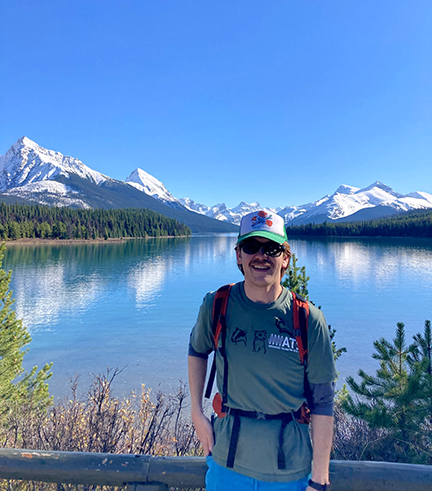
Adam Mortensen, a 26-year-old master’s student at the University of Minnesota-Duluth, recently started as a moose biologist with the project. He will be a key component in the field, studying one of the most culturally important species in Minnesota.
“I want to provide the best science that I can do in this position,” Mortensen said. “I’m excited for the opportunities I will get to become a more well-rounded professional biologist through this.”
Mortensen’s position is administered by the National Parks of Lake Superior Foundation and paid for by the LCCMR and Grand Portage band. The NPLSF will help enlighten and educate the public as the project progresses.
“Since we are a 501c3 nonprofit organization, we will be creating ways for the public to financially support aspects of the project that aren’t covered by LCCMR or Grand Portage direct funding,” Irvine said. “Things like outfitting the moose biologists with GoPro cameras and the latest handheld GPS/satellite technology.”
A soon-to-be-available Northern Moose Alliance website will help keep the public informed of the research.
“We hope to provide a constant stream of interesting information about the work going on within the project and the people doing the work,” Irvine said. “So many times, studies like this are commissioned but the public never knows about the work. We hope to bring the public along on this journey to improve the future of the moose population.”
About the study
The Minnesota DNR and 1854 Treaty Authority portion of the study will include an attempt to collar 80 juvenile moose (8 months old) each year for three years.
Many of the questions researchers want to answer are related to reproduction, so collar distribution will skew toward females (60) more than males (20). Moose fecal pellets will be collected and examined to determine the age at which collared cows first become pregnant.
“You can collect fecal samples throughout the duration of pregnancy, and a female moose will have differing levels of progesterone in (its) system, which will be deposited in their pellets,” Mortensen said. “We’re trying to tackle the drivers of the moose population, birth and death, looking at it from both sides.”
Prior research by the Grand Portage band has shown that moose can be captured and collared safely during their first winter.
Current Grand Portage Band moose research dates back to 2010, and the band will continue to collar 50 moose per year through that annual program.
In addition, the band will collar 30 cow moose per year (90 total over three years) to contribute to this project.
“Those 30 adult moose for this project will be the cow moose that have yearlings that are collared, so that we can learn, 1) when juvenile moose leave the maternal moose; 2) to understand how the adults and juveniles interact on the landscape; and 3) to assist in finding new juvenile moose in subsequent seasons, as successful maternal moose tend to have repeated rearing success.”
Winter ticks, brainworm infection and predators are known to be primary killers of moose from prior research. This new study will help managers get a wide-ranging, better understanding of young moose ages 8 months to 3 years old.
“Previous moose research in Minnesota really focused on adult survival and neonate (newborn) calf survival,” Moore said. “But a critical time in the life of moose are the juveniles that survive their first year of life, but have not yet reproduced. Our aim is to determine survival rates and age of reproduction of young moose.”
Researchers will utilize new tools such as thermal technology during aerial surveys to passively examine how many moose are giving birth, the number of calves born, and how many of those calves are surviving.
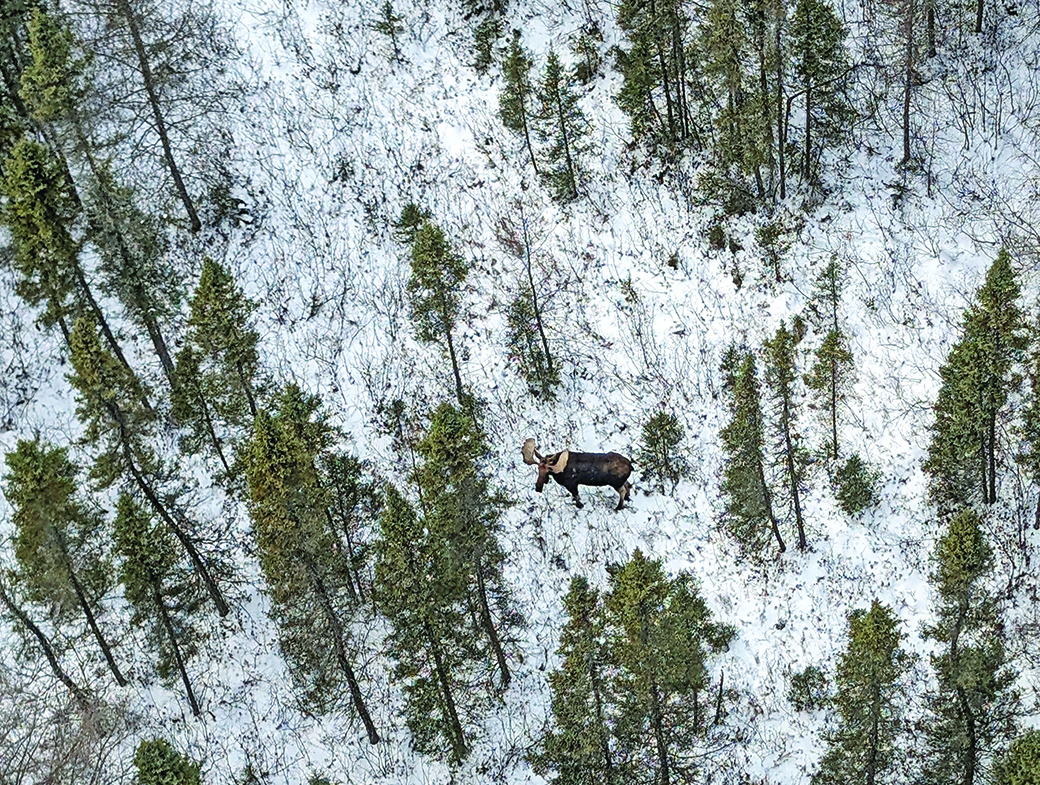
Importance of the research
According to the DNR’s 2025 population survey, there are approximately 4,040 moose in the state. There was a steep decline from a population estimate of approximately 8,000 in 2009, but numbers appear to have stabilized around 3,700 animals in recent years.
Researchers say the species still remains at risk in the state.
“I think broadly in Minnesota moose appear to have stabilized,” Moore said. “It looks like here in Grand Portage we may be seeing a little bit of an uptick in the population. Our last year’s helicopter survey was the second highest population estimate we’ve had in 20-some years.”
Moore said deer numbers have been lower in recent years, reducing the transmission of brainworm from whitetails to moose. The Grand Portage band has put an emphasis on bear management through harvest in order to reduce predation on moose calves, and habitat work to remove older forest has also regenerated more of the landscape and allowed for new growth.
“Moose really need young forest to thrive,” Moore said. “It’s much higher in nutrition, and most of our northern boreal species that people are interested in also need young forests.”
Results from this upcoming study will help managers identify habitat use of moose over the entirety of the species’ range that should be helpful in developing management strategies to be used to help restore the moose population.
“I’m really interested in what does moose spatial distribution look like?” Mortensen said.
“How much overlap is there between neighboring females? How much overlap is there between mother and offspring pairs once they’re past a year old and, in theory, more independent? Are females going back to the same places every year to give birth? I’m interested in those landscape-scale aspects of moose movement.”

Pennsylvania Mixed Bag: Docks removed early at Lake Wallenpaupack
The Pennsylvania Fish & Boat Commission recently announced that public boat docks at the Mangan Cove Access on Lake Wallenpaupack,
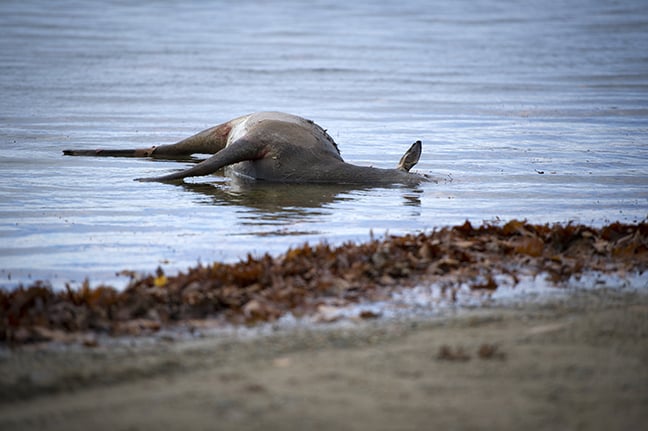
EHD in Michigan’s deer herd concentrated to four counties so far
The Michigan DNR has confirmed epizootic hemorrhagic disease in four counties so far in 2026, with plenty more tests pending
Dan Small Outdoors Radio: Show 2138
Indiana hunter scores a huge black bear in northern Wisconsin. Jeff heads to Cass Lake, Minn. for a Masters Walleye
